
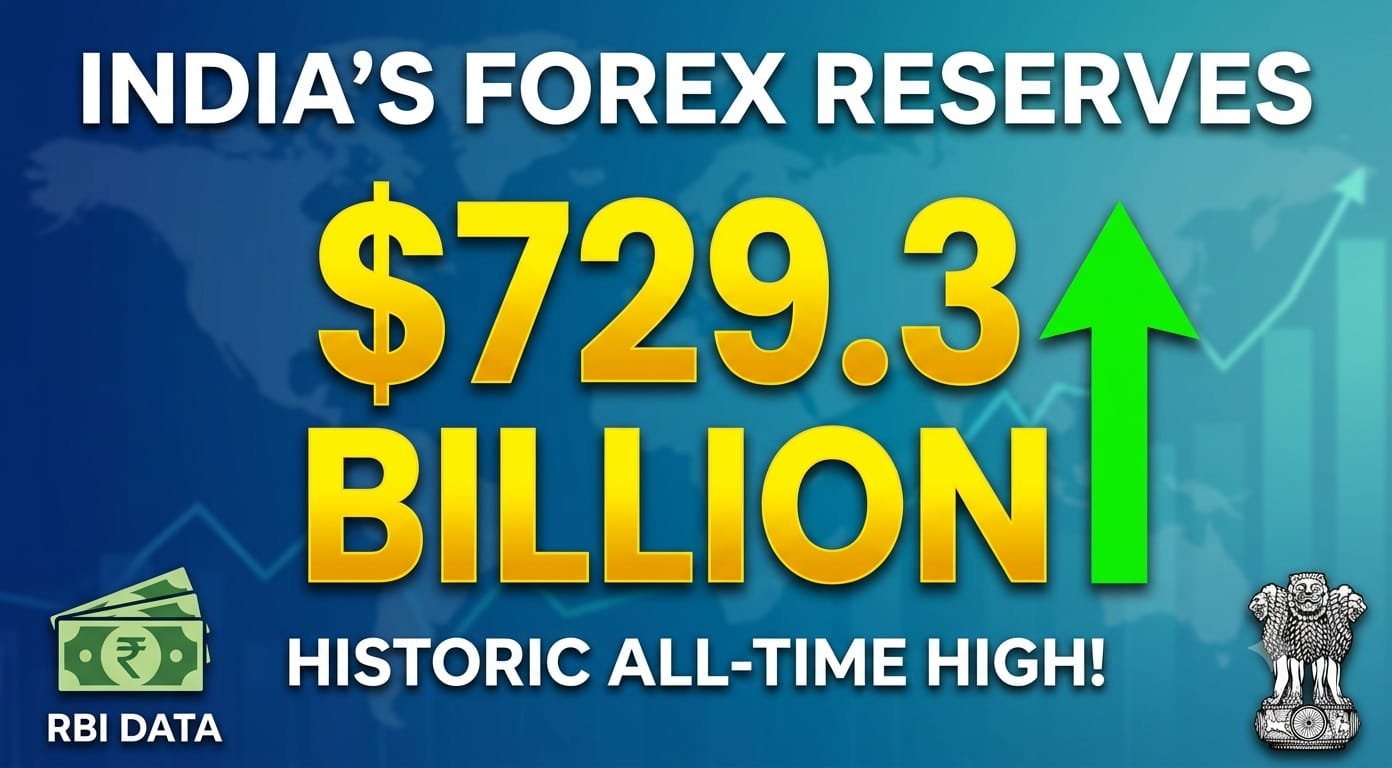
India’s foreign exchange reserves have touched a fresh all-time high, reaching 729.3 billion dollars in the week ended August 21, 2026, according to the latest figures released by the Reserve Bank of India . The reserves grew by 12.4 billion dollars within just one week, surpassing the earlier record of 728.5 billion dollars that was set in late February this year, just before tensions in West Asia had triggered a temporary decline .
This jump did not happen suddenly. It came after a difficult phase during which the reserves had slipped to as low as 666.9 billion dollars in the week ended June 26, mainly because the central bank had to intervene in the currency market through dollar sales amid the West Asia crisis .
Since then, a strong recovery has been observed, largely credited to a concessional swap window that the Reserve Bank introduced on June 5 to attract capital inflows from overseas.
This special facility has already mobilised 72.8 billion dollars in inflows as of August 21, with expectations that total inflows could reach between 90 and 100 billion dollars before the window closes on August 31.
Foreign currency assets, which form the biggest chunk of the total reserves, rose by 9.48 billion dollars to reach 591.33 billion dollars during the reported week . Since this component is expressed in dollar terms, its value also reflects changes in the worth of other major currencies held in the reserves, such as the euro, pound and yen.
A closer look shows that these assets have now risen continuously for eight weeks in a row, adding nearly 51 billion dollars in just two months, a signal of renewed strength in capital inflows.
Out of the total increase seen in the latest week, around 6.1 billion dollars is believed to have come from actual dollar purchases made by the Reserve Bank, while the rest is linked to revaluation gains arising from currency and asset price movements.
Gaura Sen Gupta, chief economist at IDFC First Bank, has been quoted explaining that the rise in reserves was partly due to revaluation effects and partly due to direct dollar buying by the central bank.
Gold reserves have also added to this record accumulation. The value of gold holdings increased by 2.8 billion dollars to reach 114.22 billion dollars during the same week, supported by a rise of about 5.18 percent in gold prices, which climbed to 4,603 dollars per ounce over the period. This shows that alongside currency inflows, the rising value of gold has played its own supporting role in pushing the overall reserve figure higher.
In terms of practical importance, this record buffer now covers more than eleven months of the country’s goods imports and equals about 94 percent of the external debt outstanding at the end of March 2026.
Such a comfortable cushion gives the central bank stronger capacity to manage volatility in the rupee and to absorb any external economic shocks that might arise in coming months. In rupee terms, the entire reserve stockpile now stands at close to 69.81 lakh crore rupees, based on the exchange rate prevailing on August 21.
This milestone essentially tells a story of resilience, where the country moved from a period of decline caused by geopolitical tension to a phase of record accumulation within just a few months, largely aided by timely policy measures from the Reserve Bank of India.
As the concessional swap window nears its closing date of August 31, further inflows could still be added to this already historic total before the facility winds down.

