
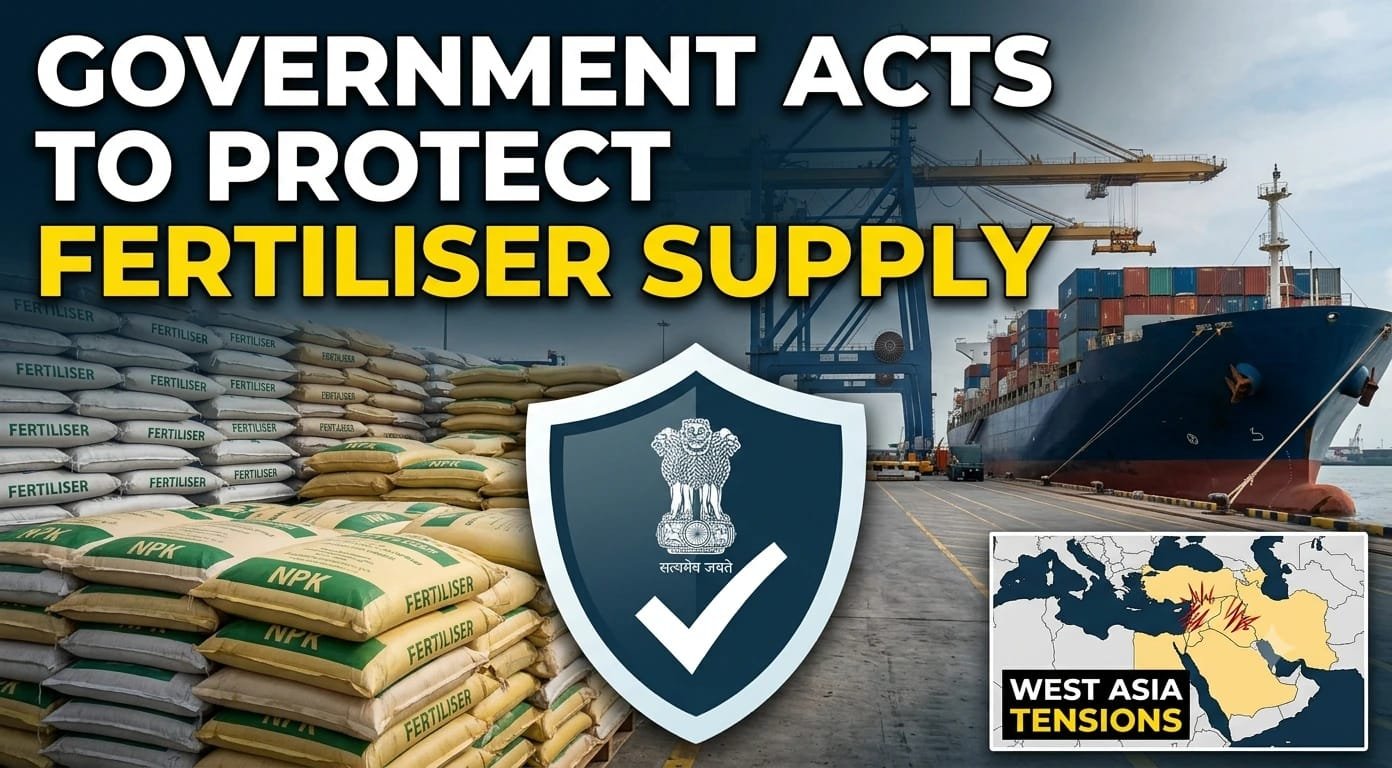
The government steps up monitoring, emergency coordination, and supply planning to protect the rabi season and support citizens affected by the West Asia conflict.
Prime Minister Narendra Modi has reviewed the worsening situation in West Asia and directed the government to make sure fertilizer supply remains steady for the coming rabi season.
The government is treating the issue as both an economic and security matter because the conflict may affect fuel, fertilizer, shipping, and the safety of Indian citizens abroad. In a Cabinet Committee on Security meeting, the Prime Minister asked departments to act quickly, stay alert, and keep an uninterrupted flow of essential goods so that farmers do not face shortages at a critical time.
The meeting focused on practical steps, not just discussion. Officials were told to strengthen information sharing, emergency assistance, and counselling support for seafarers and their families. A special coordination system is being created so that developments in the region can be monitored regularly and corrective action can be taken without delay.
This matters because several Indian seafarers work in conflict-affected waters, and the government wants to reduce risks to both Indian and foreign-flagged vessels. It also indicates that the Prime Minister stressed the need to protect Indian citizens and the diaspora from the wider effects of the crisis.
A major part of the discussion was the supply of fertilisers, liquefied natural gas, liquefied petroleum gas, and other petroleum products. The government has said that procurement sources for LPG have already been diversified, and overall stock and supply conditions remain adequate.
It was also noted that enough crude oil is available for public sector refiners to run at more than 100 percent utilisation, which helps keep production of petrol, diesel, and related products stable. The government is also working to expand piped natural gas connections, improve industrial substitution of LPG, and strengthen gas distribution through the National Gas Grid and city gas systems. These measures are meant to build resilience in case the conflict continues for a longer period.
The fertiliser issue is especially important because the rabi season depends on timely availability of inputs. The government reviewed how much fertilizer would be needed and discussed alternative supply options so that farmers do not face disruption.
By asking for steady supply arrangements now, the administration is trying to avoid a repeat of shortages that could hurt crop planning, farm productivity, and prices. This suggests that the government is not waiting for the crisis to deepen, but is planning ahead with a mix of supply management, logistics support, and policy coordination.
The broader message from the meeting was that India must remain prepared on several fronts at once. Energy security, transport safety, agricultural supply, and citizen protection were all treated as linked priorities.
The Prime Minister also said that all available measures should be used to ensure continuity in essential supplies and to safeguard national interests. In simple terms, the government wants farmers to get fertiliser on time, consumers to keep receiving fuel and gas, and Indian nationals in affected regions to stay protected.
This response shows how a conflict far from India can still have a direct impact on daily life at home, and why quick, coordinated action matters when uncertainty rises.

