
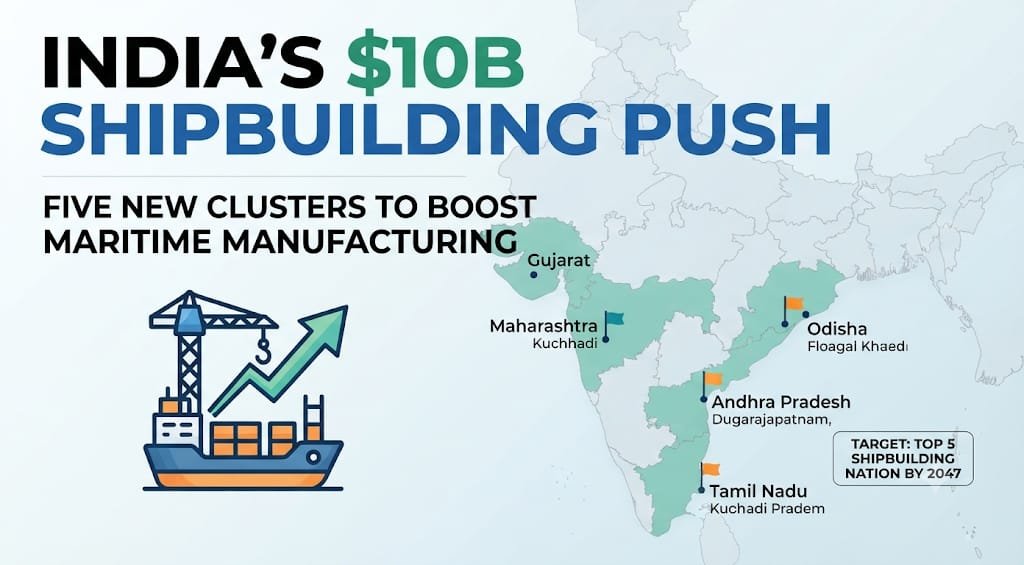
India is seeking nearly $10 billion in investment across five planned shipbuilding clusters, bringing fresh attention to an industry that connects factories, ports, trade and employment. The proposed developments are part of a larger ambition to place India among the world’s top 10 shipbuilding nations by 2030 and among the top five by 2047.
Union Minister for Ports, Shipping and Waterways Sarbananda Sonowal outlined the plans at the India Shipbuilding Investment Conclave 2026 in New Delhi on Monday. He invited international shipbuilders, shipping companies and financiers to participate in India’s growing maritime manufacturing sector. His message focused on bringing investment and expertise into domestic shipbuilding while expanding opportunities to supply ships to overseas markets.
The five proposed clusters would be developed at Dugarajapatnam in Andhra Pradesh, Kuchhadi in Gujarat, Dighi in Maharashtra, Kendrapada in Odisha and Thoothukudi in Tamil Nadu. These are planned as greenfield developments, meaning new facilities built from the ground up. The nearly $10 billion figure represents investment being targeted, rather than money already secured or spent on construction.
The scale of domestic demand forms an important part of the proposal. Sonowal cited a requirement for more than 400 vessels, representing an investment opportunity of nearly $24 billion. This demand could provide a substantial market for shipbuilders considering new facilities in India. However, the estimated domestic opportunity and the investment sought for the five clusters describe different parts of the overall plan.
The minister also pointed to an active shipbuilding order pipeline worth more than $1.7 billion. It includes over 150 vessels, with export orders accounting for more than 80 per cent of the total order value. This distinction matters because the export share refers to the value of orders, not necessarily the number of ships being built for international customers.
For coastal communities, the proposed clusters could mean opportunities beyond work inside shipyards. Sonowal said the developments would support manufacturing, technology, employment and exports. Their progress would depend on cooperation between the central government and state governments, particularly in making land available, securing approvals and providing policy support. These practical requirements will be important in turning proposed locations into functioning industrial centres.
International participation was another feature of the conclave. Representatives from 30 international shipyards attended, including South Korea’s three largest shipbuilders: HD KSOE, Samsung Heavy Industries and Hanwha Ocean. Their participation brought major global companies into discussions about India’s shipbuilding plans. Attendance, however, should not be confused with a confirmed investment commitment from each company or a final agreement to establish facilities.
Ten international delegations were scheduled to visit the proposed cluster locations on November 17. Those visits would take discussions beyond the conference venue and towards the places identified for development. Separately, Cochin Shipyard and Netherlands-based Damen Shipyards signed a memorandum of understanding, adding another international partnership development to the wider shipbuilding push.
The central aim is to connect India’s demand for vessels with stronger domestic production and a larger presence in export markets. The proposals set out investment targets, potential locations and industry interest. Their eventual impact will depend on whether that interest becomes committed funding, approved projects, operating shipyards and sustained employment over the coming years.

