
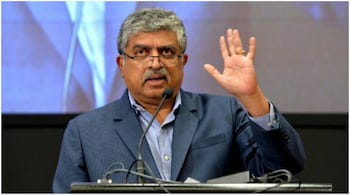
The government has set up a high-powered task force on examination reforms under Nandan Nilekani, with the aim of making the exam system cleaner, more transparent, and more trustworthy.
This step matters because exams are not just papers and results; they decide college seats, careers, and the confidence of millions of students, so even one leak or error can create stress, anger, and deep disappointment.
The mandate given to the task force is both wide-ranging and specific in its intent. The government has asked the panel to undertake a comprehensive review of the entire examination lifecycle, including question paper setting, secure transmission, conduct of exams, evaluation processes, and declaration of results.
The objective is to identify structural weaknesses, procedural gaps, and technological vulnerabilities that may compromise the integrity of public examinations.
In addition, the committee has been formally tasked with recommending a robust framework that integrates technology with administrative reforms. This includes suggesting measures for end-to-end digital monitoring, strengthening data security protocols, improving coordination among agencies, and establishing clear accountability mechanisms.
The emphasis is not only on preventing leaks or malpractice but also on creating a resilient, scalable, and future-ready examination system that can handle large volumes while maintaining fairness and credibility.
The new panel has been asked to suggest both technology-based and structural changes, which means it will not only look at software or digital tools, but also at the way exams are planned, managed, and checked.
Why is this being done now? The recent debate around exam leaks and irregularities has again raised questions about whether the current system is strong enough to protect students and ensure fairness. When a public exam is seen as weak, students start doubting the system, parents lose trust, and honest effort begins to feel less valuable.
The task force is expected to respond to this trust problem by recommending practical solutions that reduce human error, improve security, and make the process harder to misuse.
Nandan Nilekani is a fitting choice for this role because he is widely known as a technology leader who has worked on large public systems before. He is the co-founder and chairman of Infosys, and he also served as the founding chairman of the Unique Identification Authority of India, better known for Aadhaar, where he helped build a large digital identity system at national scale.
He has also worked on digital public infrastructure and has been involved in ideas that connect technology with public service, which is why many people see him as someone who can think beyond routine administration. In simple words, he is not only a business name; he is someone who has spent years solving big, system-level problems using technology.
A little more about his profile helps explain why his name carries weight. Nandan Nilekani studied at IIT Bombay, co-founded Infosys, and later became one of the best-known Indian technocrats in public policy and digital governance.
He has been associated with major reforms and digital projects, and he has often been described as a bridge between the private sector and public administration. His experience is important here because exam reform is not just an education issue; it is also a systems issue, where data, design, process control, and public trust all matter together.
The task force itself includes experts from different fields, which is a strong signal that the government wants a broad solution rather than a narrow one. That approach makes sense because exam problems are usually not caused by one single reason.
They can involve poor coordination, weak monitoring, paper handling failures, digital loopholes, or even misuse by organized groups, so a mixed team can look at the issue from several angles. In a country where competitive exams affect huge numbers of young people, even small improvements can make a major difference in fairness and confidence.
Now the question arises: what could change if the panel succeeds? Students may see tighter exam security, better use of technology, faster response systems, and a more reliable process from registration to results. Parents may feel more confident that hard work will be rewarded fairly. Education authorities may also gain a stronger framework for handling future exams with less panic and less controversy.
The bigger idea is simple: if the exam system becomes more transparent, then merit becomes stronger, and trust begins to return.
This also sends a wider message. When a serious problem keeps repeating, the solution often needs both experience and fresh thinking. By choosing Nandan Nilekani, the government has placed a technology-minded reformer at the center of a sensitive public issue.
For students, this is not just an administrative announcement; it is a signal that the system may finally be ready for a deeper repair. For anyone who cares about fair opportunity, this panel is being watched closely because its work may shape how exams are conducted for years to come.

