
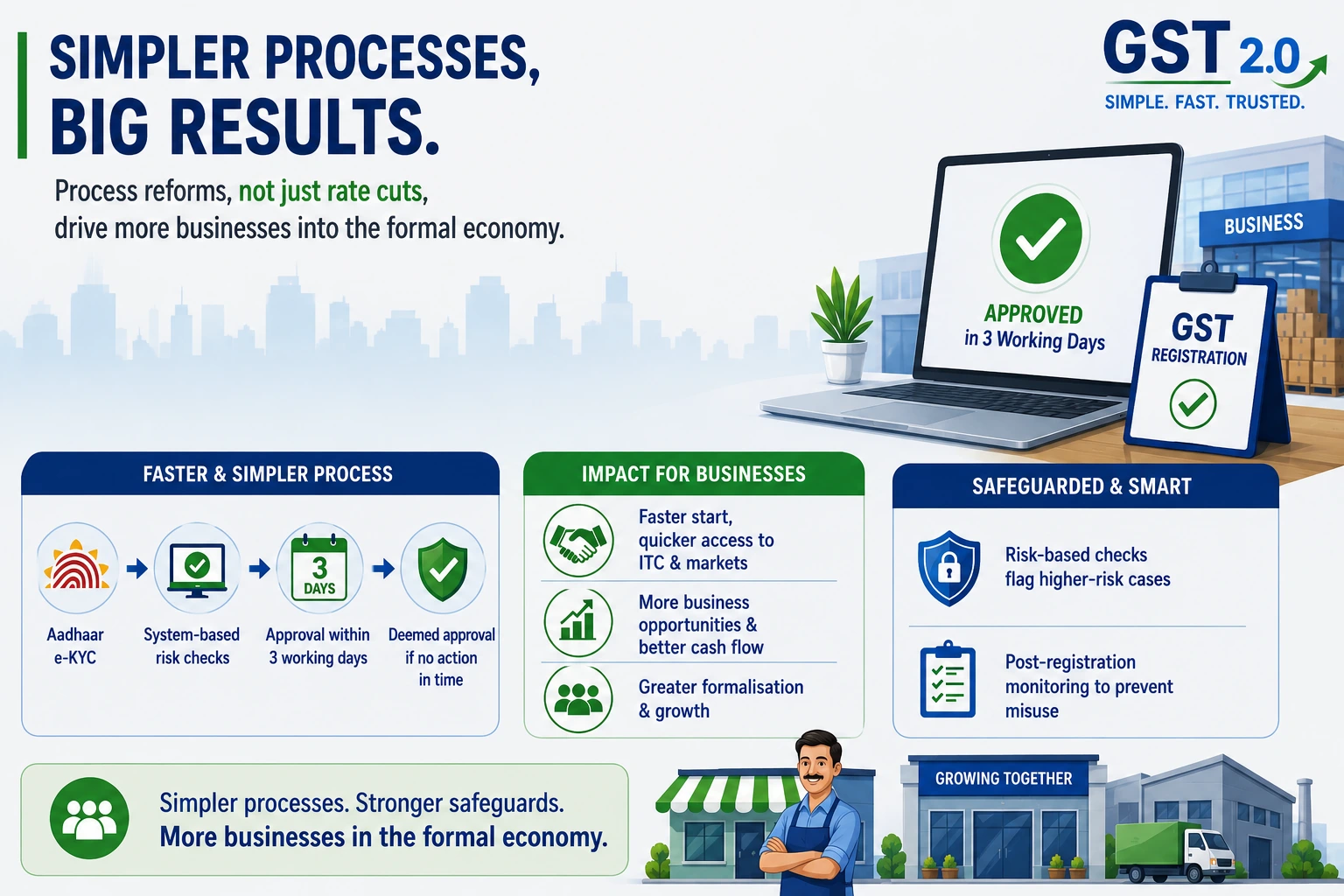
Simplified rules and automated approvals have driven nearly eight lakh more GST registrations in six months, highlighting how process reforms, not just rate cuts, are bringing informal activity into the formal tax system.
A clear rise in GST registrants over the recent six-month period reflects more than a numerical increase; it points to practical changes in how registration is granted and how small businesses enter the formal tax system.
Reforms rolled out under the broader GST 2.0 agenda introduced faster, technology-driven routes for low-risk applicants and a simplified track that aims to approve eligible registrations electronically within three working days, which directly shortens the time and paperwork traditionally needed to register.
These changes focused on process ease such as Aadhaar-based e-KYC, system-based risk checks, and a “deemed approval” if officials do not act in time and not solely on any rate cuts, and that distinction helps explain why registrations jumped sharply over half a year.
The simplified approach also includes optional tracks for very small taxpayers who either limit or do not pass on input tax credit, so many new enterprises find the onboarding route both faster and less burdensome.
Practical effects of the process reforms are visible in everyday business behavior. Faster electronic approvals reduce the waiting period between business start-up and formal operations, allowing quicker access to input tax credit and smoother participation in supply chains that demand GST compliance.
Reduced human interface and clearer document norms cut opportunities for arbitrary demands and help reduce dependence on intermediaries, which lowers compliance cost and encourages proprietors and micro enterprises to register rather than remain informal.
The introduction of risk-based digital checks means most genuine applicants are fast-tracked while the system flags higher-risk cases for manual scrutiny, balancing ease with safeguards against fraudulent registrations and fake tax-credit chains.
This shift also affects broader economic signals. Higher registration counts can reflect improved formalisation of small and micro firms, improved tax net coverage, and faster integration of sellers into digital marketplaces and institutional supply chains.
For many small sellers, simpler registration translates into better business opportunities, greater visibility to buyers, eligibility for B2B contracts, and more predictable cash flows because refunds and returns processes are being modernised in parallel.
However, the growth in numbers should be seen alongside quality checks: automated approvals work best when backed by reliable data linkages (PAN, bank records) and adequate post-registration monitoring to prevent misuse.
Challenges remain even as the system becomes more efficient. Some applicants still require Aadhaar or in-person verification at facilitation centres, and a minority of businesses that want to pass through larger input tax credits may face stricter checks or different procedural requirements, such as security deposits or physical verification under the emerging-business category.
Ensuring sufficient staffing at help desks, timely resolution of recurring issues, and effective risk-detection will determine whether the simplified process sustains trust and compliance over time . In addition, communication and training for ground-level officials and taxpayers are essential so that the procedural simplifications deliver real, frictionless onboarding rather than shifting bottlenecks to other stages of compliance.
A simple illustration helps connect the change with everyday impact: where a small trader earlier faced multiple visits, paper submissions, and weeks of waiting, the reformed pathway allows verification through digital checks and a three-day electronic approval for the bulk of low-risk cases, converting idle waiting time into productive activity and faster market entry . This change is particularly meaningful for micro and small enterprises that operate on thin margins and cannot afford long delays before generating taxable sales.
The recent surge of nearly eight lakh registrations in six months therefore reflects an institutional shift toward more accessible, technology-backed tax administration rather than just a cosmetic increase in numbers.
By easing the route to formalisation while keeping targeted safeguards, the reforms are helping many smaller firms choose formal registration and reap its business benefits, providing robust monitoring and taxpayer support to keep pace with automation.
The procedural reforms that streamlined GST registration especially automated three-day approvals for low-risk applicants, Aadhaar-enabled e-KYC, and risk-based processing have translated into a sizeable and meaningful rise in registrations over six months; this outcome demonstrates that easing processes, not just changing rates, can bring a large number of small businesses into the formal economy and improve their ability to trade and grow, so long as safeguards and support systems remain strong and responsive.

