
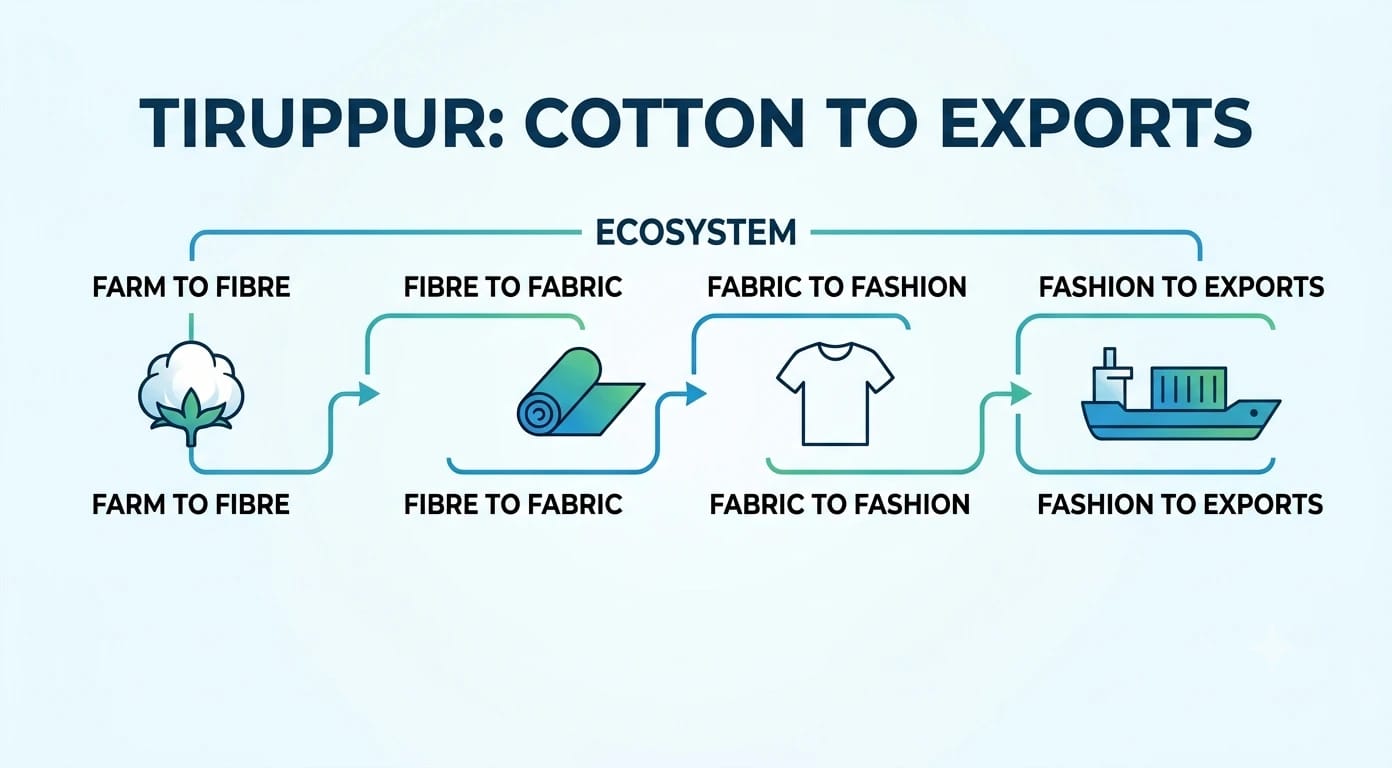
PM MITRA is becoming a clear example of how one policy initiative can slowly shape a full business ecosystem. The idea behind this scheme was not only to announce parks, but to build large textile clusters where the entire value chain could work in one connected space.
That is why the scheme was designed around the farm to fibre and fibre to fashion vision, so that raw material, processing, production, and final market delivery could all grow together . In simple words, the scheme was meant to create an environment where business does not stay scattered, but starts moving in one direction with better scale, speed, and strength.
This idea was first introduced with the approval of 7 PM MITRA parks in different willing states, and the focus was on world-class textile infrastructure, common facilities, and private investment support . The scheme was built with the thought that a strong textile industry needs more than factories; it needs roads, utilities, land, worker support, and a place where related businesses can stay close to each other . That is how a policy can become a structure for growth. When such a structure is created, small and large units begin to connect, and that connection turns into an ecosystem.
The image and the report together show that this ecosystem idea is now becoming visible in Tiruppur. Tiruppur has long been known as a major knitwear hub, and the latest report shows that it recorded exports of ₹46,000 crore in FY26, its highest ever . The same report says this happened despite tariff pressure and global uncertainty, which makes the number even more meaningful . It also mentions that the city’s export growth is supported by a strong industrial base and more than one million people connected with the sector . This is not just export growth; it is the result of a long chain of production, labour, logistics, and market trust working together.
PM MITRA fits into this story because it supports exactly this kind of cluster-based strength. The scheme was meant to bring spinning, weaving, processing, and garment manufacturing into one integrated location, and according to the reports it aims to streamline the whole textile value chain in a single place .
That is why the farm to fibre and fibre to fashion concept matters so much. It means that value is added at every step, instead of leaving each step isolated from the next one. When this happens, business becomes easier to build, easier to scale, and easier to export.
Tiruppur is a good example of how such a model can work in real life. A strong cluster already existed there, and policy support can make that cluster more organised and more competitive . In such a place, one company creates demand for another, one machine shop supports a garment unit, one supplier helps another exporter, and one logistics chain helps the whole region move faster.
This is how an ecosystem grows. It does not grow in one straight line; it grows through connections, shared confidence, and repeated business activity.
The scheme also shows that policy is not only about announcements, but about results that can be counted. PM MITRA offers development support, competitiveness support, and a public-private partnership structure so that parks can become active industrial spaces rather than empty land .
According to the reports the scheme has a total outlay of Rs. 4,445 crore for the period 2021-22 to 2027-28, and that each park is expected to generate 3 lakh direct and indirect jobs across the textile value chain . According to some reports during the year 2026 the parks would create 1 lakh direct and 2 lakh indirect jobs each, showing the scale of ambition behind the project .
That makes the policy more practical and more useful for business. In the textile sector, where competition is global and speed matters, such support can help local manufacturers become more efficient and more export-ready . The Tiruppur export figure shows that this kind of ecosystem thinking is already producing visible strength .
A more important point is that the PM MITRA idea connects economic policy with everyday life. When a textile cluster becomes stronger, more workers get employment, more small businesses find orders, and more local suppliers get regular demand .
The Tamil Nadu park update also shows how this works on the ground, with the Virudhnagar PM MITRA park reporting completed environmental clearance, completed layout approval, water and power supply progress, and MoUs worth Rs 1,200 crore already signed . This is how a policy stops being only a government plan and starts becoming part of the market. It creates movement in the region, and that movement becomes business value. That is why the result is not only industrial; it is also social and economic.
In the end, PM MITRA stands for more than a park scheme. It stands for a new way of thinking, where one policy initiative builds a complete chain of value, confidence, and growth . The farm to fibre and fibre to fashion idea is not just a slogan here; it is a working model that is beginning to show results in exports and ecosystem creation .
Tiruppur’s record performance makes that result easier to see. It shows that when policy is designed around clusters, infrastructure, and connection, business does not remain a plan on paper. It becomes a living system that creates work, builds scale, and reaches the global market with greater strength .

