
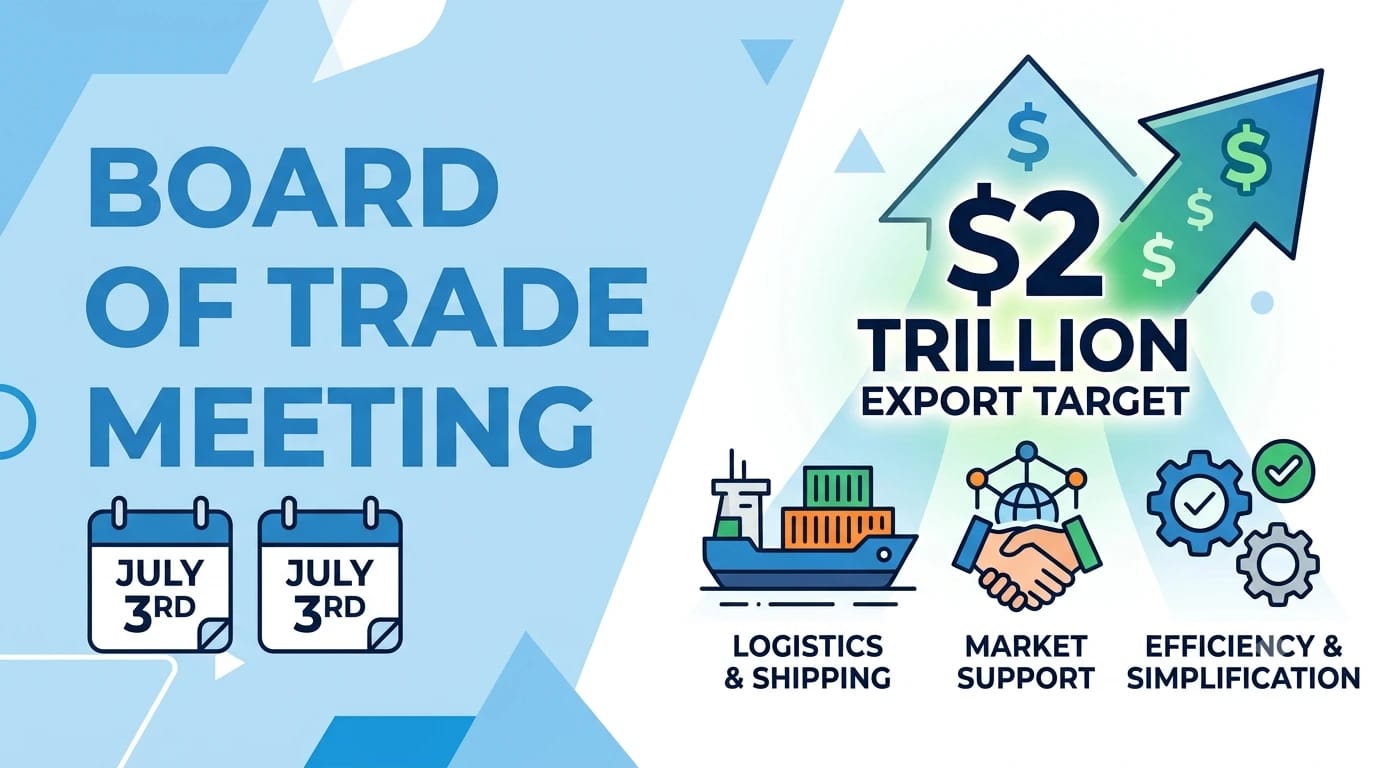
A major trade meeting is set to take place on 3rd July, and the main focus will be on how to raise exports to the $2 Trillion mark. The discussion comes at a time when businesses are facing changing global demand, higher competition, and rising pressure to improve efficiency.
The meeting is expected to bring together senior officials, industry leaders, and trade stakeholders to examine what can be done to make exports stronger, faster, and more competitive. The overall mood around the meeting is serious but practical, because the aim is not only to talk about growth, but also to find clear ways to support it.
The need for such a meeting is easy to understand. Export growth does not depend only on factory output or business ambition. It also depends on shipping, logistics, customs work, trade rules, and the ease of getting goods to world markets.
When these parts work well, businesses can move products with less delay and lower cost. When they do not, even good products can lose value in the global market. The coming discussion is expected to look at these small but important points in a direct way, because they often decide whether a business can expand or struggle.
One of the important themes linked to the meeting is the wish to simplify trade processes. Exporters often deal with delays, paperwork, and changing compliance rules, and these can reduce confidence. A smoother system can help more firms take part in foreign trade, especially small and medium businesses that may not have large teams to handle complex procedures.
The meeting is also likely to review ways to improve market access so that goods can reach more countries with fewer barriers. That kind of support matters because trade today is shaped not only by price, but also by speed, reliability, and trust.
Another key concern is cost. Business costs have a direct effect on competitiveness, and higher transport, logistics, or input costs can weaken export performance. If goods become too expensive to move or produce, buyers in overseas markets may turn elsewhere.
That is why the discussion is expected to include practical ideas for lowering friction in the system. Better infrastructure, more efficient ports, improved coordination, and clearer trade rules can all help. These may sound like technical details, but in real life they decide how smoothly the trade engine runs.
The meeting also appears to reflect a larger policy goal: turning export growth into a shared national effort rather than a narrow business issue. When exports rise, the effects can spread across manufacturing, farming, transport, packaging, and services. Jobs can grow, supply chains can become stronger, and more firms can find space in global markets.
This is why trade policy often matters beyond the export sector itself. It affects the wider economy and shapes how confident businesses feel about investing, hiring, and expanding.
At the same time, the target itself is very ambitious, and that makes the discussion even more important. A large target can inspire action, but only if the steps behind it are realistic. Clear policy support, steady coordination, and regular follow-up are needed for such goals to move from paper to practice.
The meeting may therefore be seen as more than a routine gathering. It is a chance to align the expectations of government and industry and to make sure both sides work with the same direction in mind.
In the end, the meeting is about more than trade numbers. It is about building an export system that works with less delay, less cost, and more confidence. If that happens, the benefits can reach far beyond official targets. Businesses may find new markets, workers may find more opportunities, and the economy may gain a stronger place in global trade.
The 3rd July discussion will matter because it brings attention to a simple truth: export growth becomes possible when policy, planning, and practical support move together in the same direction.

