
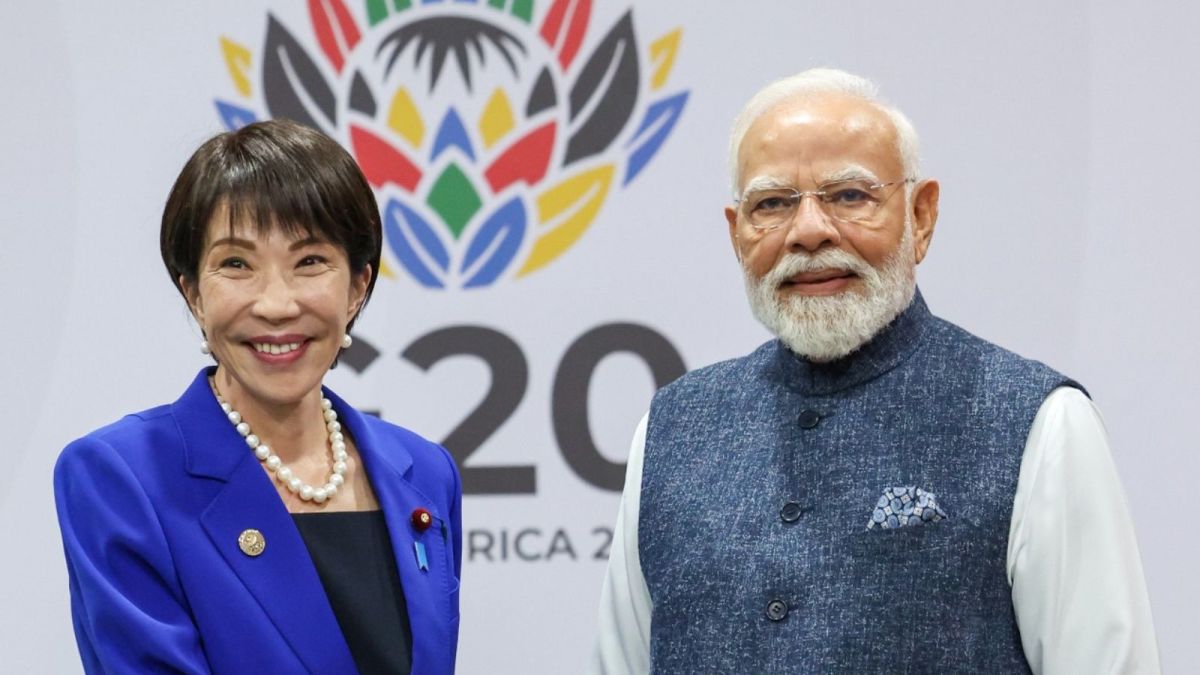
Japan’s renewed interest in India is not just about diplomacy; it is about practical needs in a world where supply chains are uncertain, energy markets are volatile, and technology competition is intensifying.
The latest Modi-Takaichi summit comes at a time when both countries are looking for dependable partners to secure growth, resilience, and long-term stability.
For Japan, India has become more attractive because it offers scale, talent, and a large consumer market at a moment when companies are trying to diversify away from overdependence on a few manufacturing hubs.
The summit discussion is expected to cover critical areas such as LNG supply security, critical minerals, semiconductors, artificial intelligence, and broader economic security. That makes the relationship far more than symbolic; it is increasingly tied to business continuity and industrial strategy.
India, meanwhile, sees Japan as a reliable source of capital, technology, and long-term industrial partnerships. Japanese companies have already played an important role in sectors like automobiles, infrastructure, and clean energy, and the new wave of engagement could deepen those links further.
The presence of business leaders alongside the Japanese prime minister signals that this summit is not only about government-level announcements but also about unlocking private investment and project execution.
A major reason this visit matters is energy security. India still depends heavily on imported energy, especially LNG, while Japan is also exposed to global supply risks.
Reports suggest both sides may move toward a joint task force on LNG stockpiling and information-sharing, which would help them prepare for future disruptions in global energy markets. In simple terms, both countries want to reduce the shock if prices jump or shipping routes become unstable.
Technology cooperation is another central theme. India and Japan are expected to build on earlier understandings around semiconductors, AI, and emerging technologies, reflecting a shared interest in reducing dependence on vulnerable supply chains.
This matters because chips, digital systems, and advanced manufacturing now sit at the heart of modern economic power. If India and Japan can work together here, they can create stronger industrial ecosystems and open new opportunities for companies in both countries.
The summit also carries strategic meaning in the Indo-Pacific. Japan views India as a key partner in maintaining a free and open regional order, while India benefits from Japan’s diplomatic weight, industrial strength, and investment capacity.
In today’s environment, where geopolitics increasingly shapes trade and technology, this partnership is becoming a safeguard against instability rather than just a friendly bilateral tie.
For ordinary people, the impact may eventually show up in more visible ways: better infrastructure, stronger manufacturing, more resilient energy supplies, and new jobs linked to investment and technology transfer. That is why the Modi-Takaichi summit matters beyond headlines. It reflects a simple truth that both countries are learning quickly: in an uncertain world, trusted partnerships are becoming a necessity, not a choice.

