
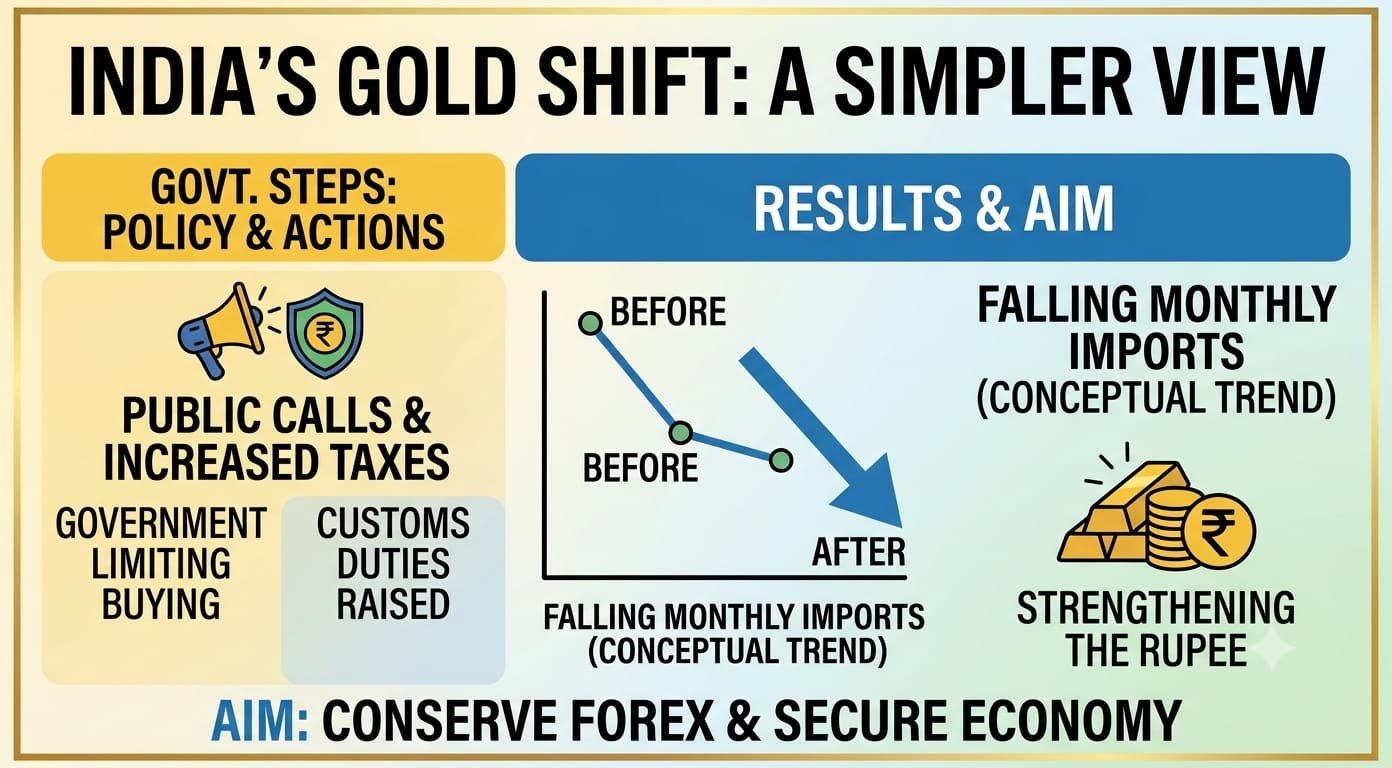
A noticeable change has been taking place in how gold is being bought and brought into India, driven by a mix of public messaging and policy moves. Prime Minister Narendra Modi has repeatedly asked people to avoid buying gold unless it is truly necessary, with the aim of reducing the country’s import bill and putting some of the estimated 31,000 tonnes of household-held gold into circulation.
This appeal first came in May 2026 and was renewed in early September 2026, each time highlighting the need to conserve foreign exchange and support the rupee.
Following the May appeal, the government also raised the customs duty on gold and silver from 6% to 15%, making imported gold significantly more expensive. The new structure includes a 10% basic customs duty and a 5% agriculture infrastructure and development cess, up from 5% and 1% earlier. This move was intended to cool demand, save dollars, and protect India’s foreign exchange reserves during a period of global stress linked to the West Asia conflict.
India’s gold imports did fall in the months after the May appeal. Imports declined nearly 4% year-on-year in May to 29.4 tonnes from 30.6 tonnes in the same month a year earlier. The fall then became sharper, with imports dropping 20% in June and 23.7% in July, according to data by Metals Focus, which partners directly with the World Gold Council as its primary external research provider.
As per estimates from the All India Gem and Jewellery Domestic Council, the number is likely to fall by 30% in August to around 45 tonnes, compared with 64.2 tonnes in the same month last year. The India Bullion & Jewellers Association expects the latest appeal to contribute to a roughly 15% decline in gold imports in September.
Despite these drops in volume, India’s gold imports hit a record $71.98 billion in FY26, up 24% from the previous year, even as import volumes fell 4.8% to 721 tonnes. This paradox reflects higher global prices and the fact that even smaller volumes can translate into larger dollar values when prices are elevated.
The higher tax burden has had a direct effect on demand at the retail level. Gold demand in India slipped about 70% in the fortnight after the duty hike, falling to about 7.5 tonnes from around 25 tonnes a year earlier, according to industry estimates. The effective tax burden on gold, including goods and services tax, has risen to 18.45% from 9.18% after the duty increase. This has made gold significantly more expensive across the supply chain, from bullion dealers to bridal families.
At the same time, there are signs that the government is reconsidering the duty structure. The Gems & Jewellery Council chairman Rajesh Rokde told ET Online that discussions are ongoing about a possible cut in gold and silver import duties after the higher rates failed to curb imports and instead contributed to a rise in the grey market. The centre sharply increased customs duties on gold and silver to 15% from 6% in May to contain pressure on foreign exchange reserves and the external account during the West Asia conflict.
The broader context includes a cultural affinity for gold that runs deep. India’s attempt to protect the rupee has collided with one of the country’s strongest cultural habits buying gold. After Prime Minister Narendra Modi urged citizens to avoid gold purchases for a year, the government raised gold import duty from 6% to 15% to reduce pressure on foreign exchange reserves and the current account deficit.
Industry bodies have also suggested alternative approaches. The gems and jewellery sector has proposed unlocking existing household gold through a Gold Monetisation Scheme, which could reduce imports and strengthen the economy without hurting the domestic jewellery industry. The appeal aims to conserve foreign exchange amid the West Asia crisis, but industry leaders have urged the government to reconsider the decision given the potential adverse impact on the jewellery sector.
In simple terms, the story is about balancing economic prudence with cultural practice. The government’s dual approach a public appeal and a tax hike has led to measurable drops in monthly import volumes, even as the dollar value of imports remains high due to price factors. The ongoing discussion about duty cuts reflects the complexity of managing demand, curbing the grey market, and supporting a large domestic industry that employs millions.
India’s gold import numbers are being actively managed through both persuasion and policy, with visible month-on-month declines since May 2026. The next few months will show whether the combination of public messaging, duty adjustments, and alternative schemes like gold monetisation can bring imports down further without causing undue strain on the jewellery trade.

