
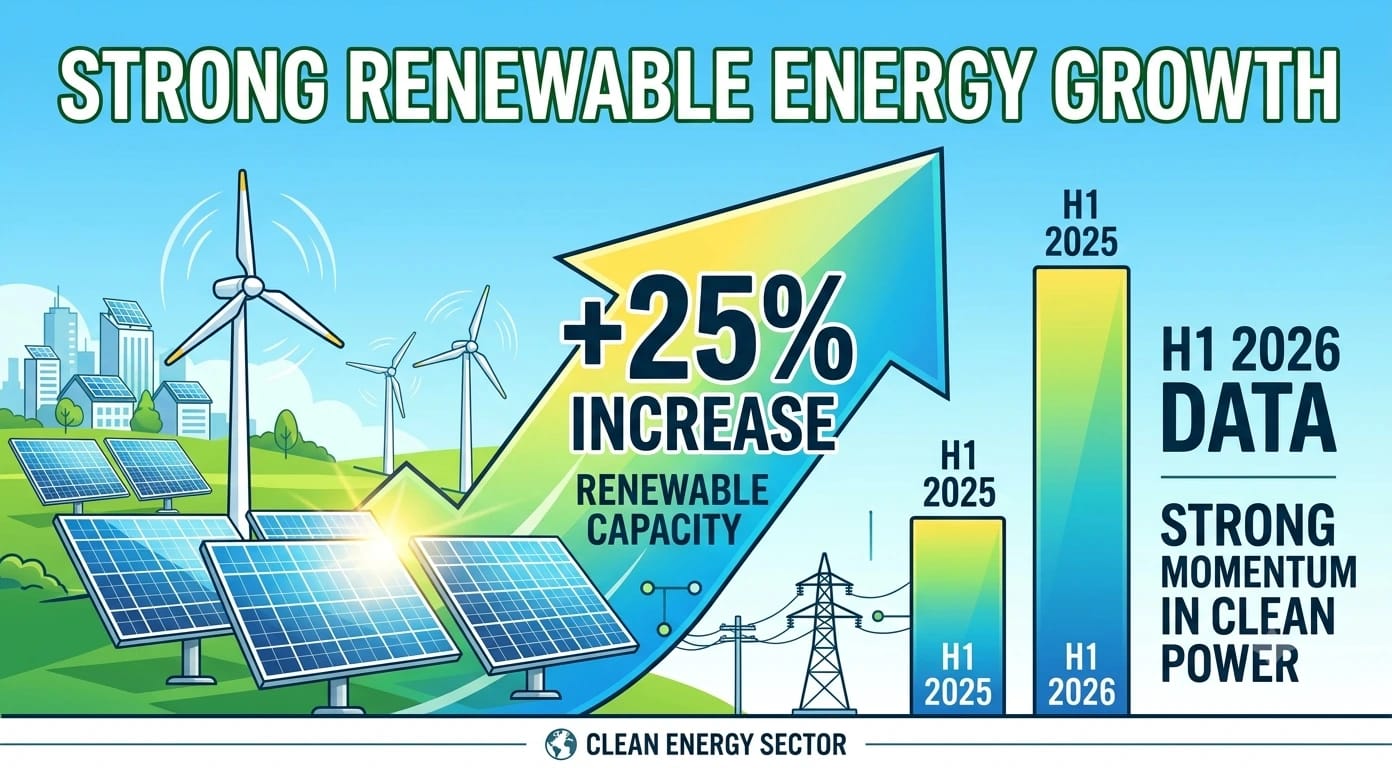
The first half of 2026 has brought an encouraging sign for the clean energy sector, with renewable energy capacity additions rising sharply and showing that the shift toward cleaner power is gathering real strength. The latest data shows that new renewable capacity additions increased by 25 percent in India compared with the same period last year, making this one of the most important developments in the power sector so far this year.
This rise is not just a number on paper. It reflects growing confidence, faster project movement, and the clear message that clean energy is becoming a much bigger part of the overall power story.
During the January to June period, around 13.3 gigawatts of renewable energy capacity were added, compared with nearly 10.6 gigawatts in the same period a year earlier. This increase shows that the sector is moving ahead at a healthier pace after facing delays and uneven progress in earlier phases.
A stronger pipeline, better execution, and rising interest in clean power projects appear to be helping this growth continue. The overall trend suggests that renewable energy is no longer seen only as a future goal, but as a present need that is being taken seriously.
Solar power remains the biggest reason behind this rise. Large utility-scale projects, along with growing rooftop and distributed installations, helped push overall capacity additions higher. Wind energy also added to the progress, but solar continued to lead because it is easier to scale, quicker to install, and has become more cost-effective over time.
This pattern shows why solar has become the main engine of clean energy growth and why it continues to attract strong attention from both developers and policymakers.
Policy support has also played an important role in this story. Clear targets, regular auctions, and a stronger push for project development have helped create a more supportive environment for renewable energy expansion.
When the policy direction remains stable, companies feel more confident in investing and moving projects forward. That confidence matters because large energy projects need time, planning, and long-term financial commitment before they begin producing results.
At the same time, this growth carries a wider economic meaning. Rising renewable capacity can help strengthen the power system, reduce pressure from conventional fuel dependence, and support long-term energy security.
As electricity demand keeps increasing across homes, industries, transport systems, and digital infrastructure, cleaner energy sources are becoming more important for meeting future needs in a sustainable way. In that sense, renewable growth is not only about the environment; it is also about building a stronger and more reliable economic foundation.
Still, the path ahead is not completely smooth. Land access, transmission readiness, grid connectivity, and energy storage remain key challenges that can slow the full use of newly installed capacity.
In simple terms, building projects is one part of the task, but making sure that electricity flows efficiently to where it is needed is equally important. Without stronger infrastructure support, fast capacity growth may not fully translate into equally strong power delivery.
Even with these challenges, the first half of 2026 has clearly delivered a positive message for the clean energy sector. A 25 percent rise in renewable capacity additions shows that momentum is improving and that the sector is moving with greater confidence and scale.
With policy support and infrastructure gaps being addressed in time, this growth could become even stronger in the months ahead, giving the energy transition deeper meaning and a more solid direction.

