
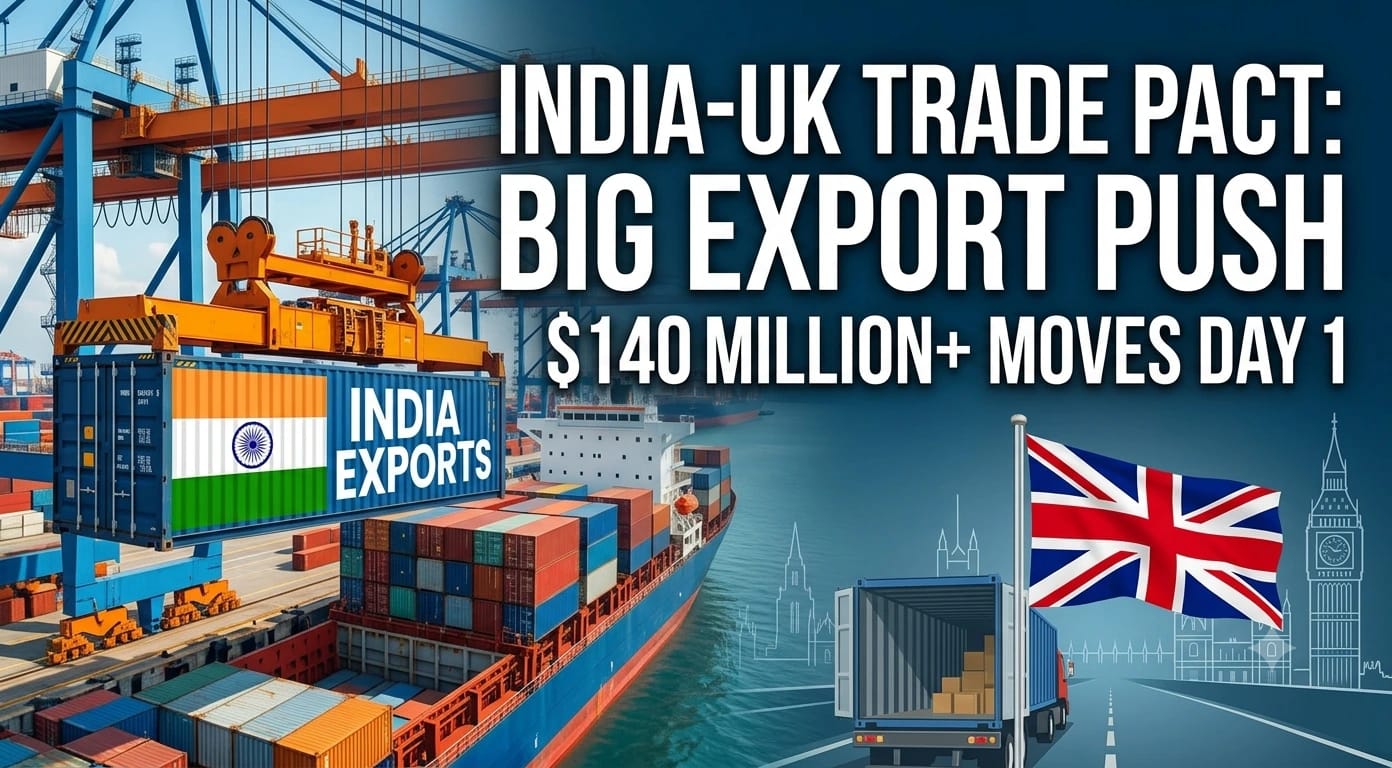
The India-UK trade pact has begun with a strong start, as more than 50 export consignments worth over $140 million were flagged off on the first day of implementation.
These shipments moved through more than 20 ports, airports, inland container depots, special economic zones, and factories, showing that the agreement is already active across many parts of the export system.
The goods included electronics, pharmaceuticals, gems and jewellery, textiles, apparel, handicrafts, engineering goods, and marine products.
This matters because the new agreement opens the door to easier access for exporters. Under the pact, many goods from India can enter the UK with lower or zero duty, which reduces cost and improves competitiveness.
That gives Indian firms a better chance to sell in a market where price often decides who gets the order. For small and medium exporters, even a small tariff cut can make a big difference in winning new buyers.
The agreement is especially important for labour-heavy sectors such as textiles, garments, leather products, gems and jewellery, and marine goods. These sectors support a large number of jobs, so higher exports can help factories, workers, and supply chains.
If orders rise, the benefit does not stop at exporters alone; it can spread to transporters, packaging units, warehouse workers, and port services as well. In simple terms, one export order can support many other businesses around it.
The first-day shipments also show how wide the impact of this trade deal can be. The consignments were sent from key export hubs such as Mundra, Nhava Sheva, and Chennai, along with air cargo centres in Mumbai, Kolkata, and Hyderabad.
This means the agreement is not limited to one region or one sector. It is reaching multiple production and logistics centres, which is a positive sign for trade diversification.
Another key point is that the pact is expected to give nearly 99% of exports duty-free access to the UK market. That is a big opportunity for businesses that want to expand beyond the domestic market.
For many exporters, the biggest challenge is not making goods but finding stable demand at a fair price. When duties fall, the final selling price becomes more attractive, and that can make a product easier to place in foreign markets.
At the same time, this deal also puts pressure on exporters to improve quality, packaging, compliance, and delivery speed. A trade agreement can open the gate, but businesses still need to perform well once they enter. Buyers in the UK will expect timely shipping, proper certification, and reliable standards.
So the real test will be not only the first-day enthusiasm, but also how consistently exporters use this new access in the coming months.
The simplest way to understand this is to see it as a trade door opening wider. Goods are moving out faster, cost barriers are coming down, and exporters now have a stronger chance to compete in a major overseas market.
If Indian firms respond well, the deal can support more production, more jobs, and more earnings from exports. That is why the first day is being seen as more than just a headline; it is the start of a new trading phase.

