
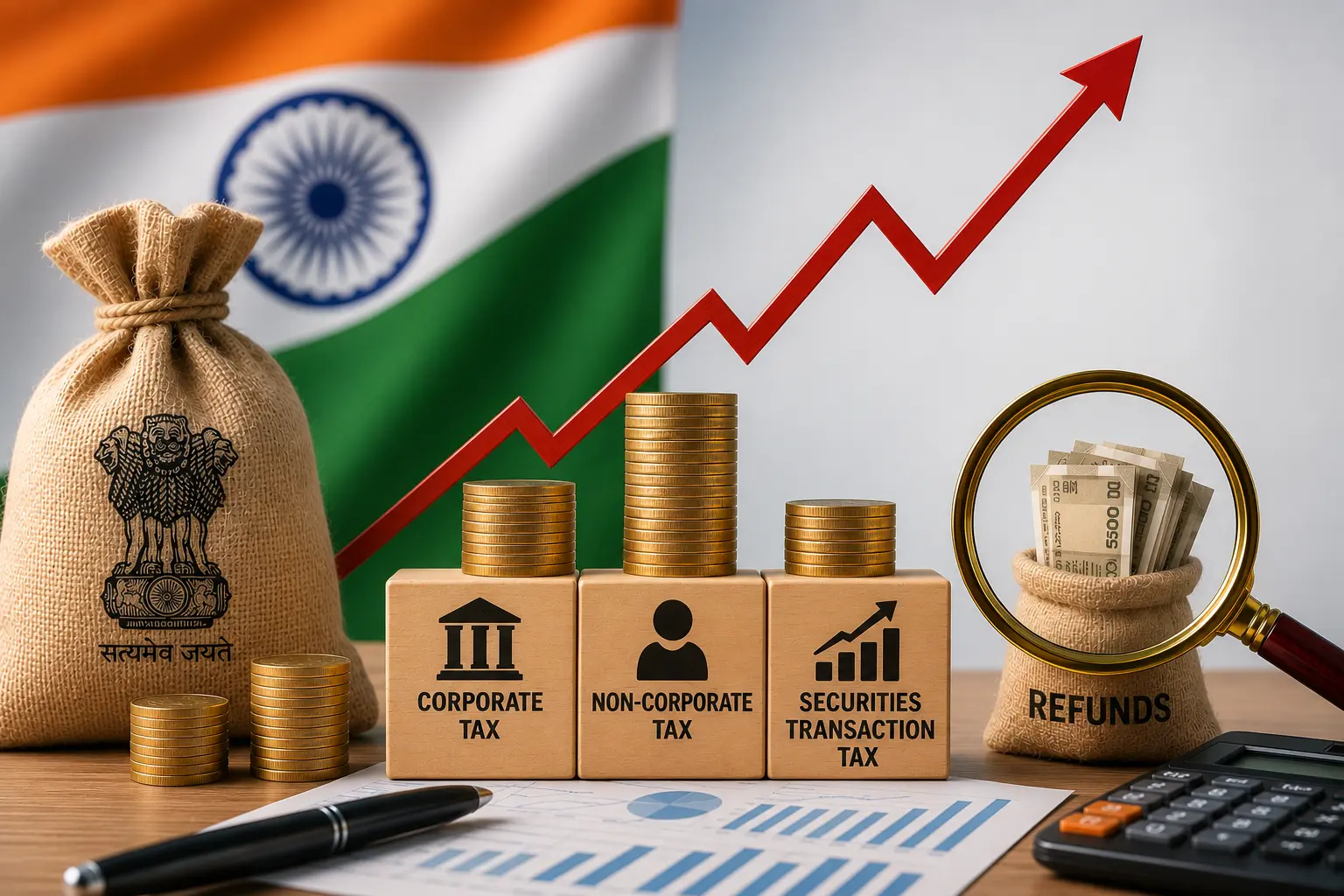
Corporate tax, non-corporate tax, and securities transaction tax all show healthy growth as refunds also increase. Direct tax collections have started FY27 on a strong note, giving a clear sign that economic activity is moving at a healthy pace.
According to provisional government data, net direct tax collections reached ₹6.51 lakh crore by July 13, which is 16.4% higher than the same period last year. In simple words, this means more money is coming into the government from taxes paid by companies, individuals, and other taxpayers.
The bigger picture, this is usually seen as a positive sign for business earnings, market activity, and tax compliance.
The main driver of this growth was corporate tax. Net corporate tax collections rose 22% to ₹2.40 lakh crore, showing that many companies are earning better and paying more tax than before.
Non-corporate tax collections, which include taxes paid by individuals, HUFs, firms, and other entities, also rose 11.66% to ₹3.85 lakh crore. This matters because it shows the tax base is not growing in only one area; both business income and personal or other income sources are contributing. If one thinks of tax collection like a three-legged stool, corporate tax, non-corporate tax, and market-linked taxes are all helping it stand more firmly.
A major surprise in the data was the sharp rise in securities transaction tax, or STT. STT collections jumped 47.85% to ₹26,429 crore, which points to heavier trading in the equity market and stronger market participation.
Gross direct tax collections, before refunds, also increased 16.11% to ₹7.74 lakh crore. At the same time, refunds rose 14.57% to ₹1.22 lakh crore, which means more taxpayers received money back from the system during this period. So, even after higher refunds, net collections still remained robust.
This early performance is important because it gives the government a good start for the financial year. The Budget has set a direct tax target of ₹26.97 lakh crore for FY27, which is higher than last year’s actual collection of ₹23.40 lakh crore. Hitting that target will depend on whether the current pace continues in the coming months.
In practical terms, strong tax receipts can help support public spending on roads, rail, welfare schemes, defence, and infrastructure without putting too much pressure on borrowing. For everyday people, it also reflects how business activity, job income, investment, and market trading are feeding into the larger economy.
The tax collection is not just a government number; it is a mirror of how the economy is moving. When companies earn more, when people file and pay taxes properly, and when market activity rises, collections improve.
Now, the question is if collections are already this strong in July, what does that mean for the rest of the year? The answer will depend on earnings growth, compliance, refunds, and the broader pace of business across sectors

