
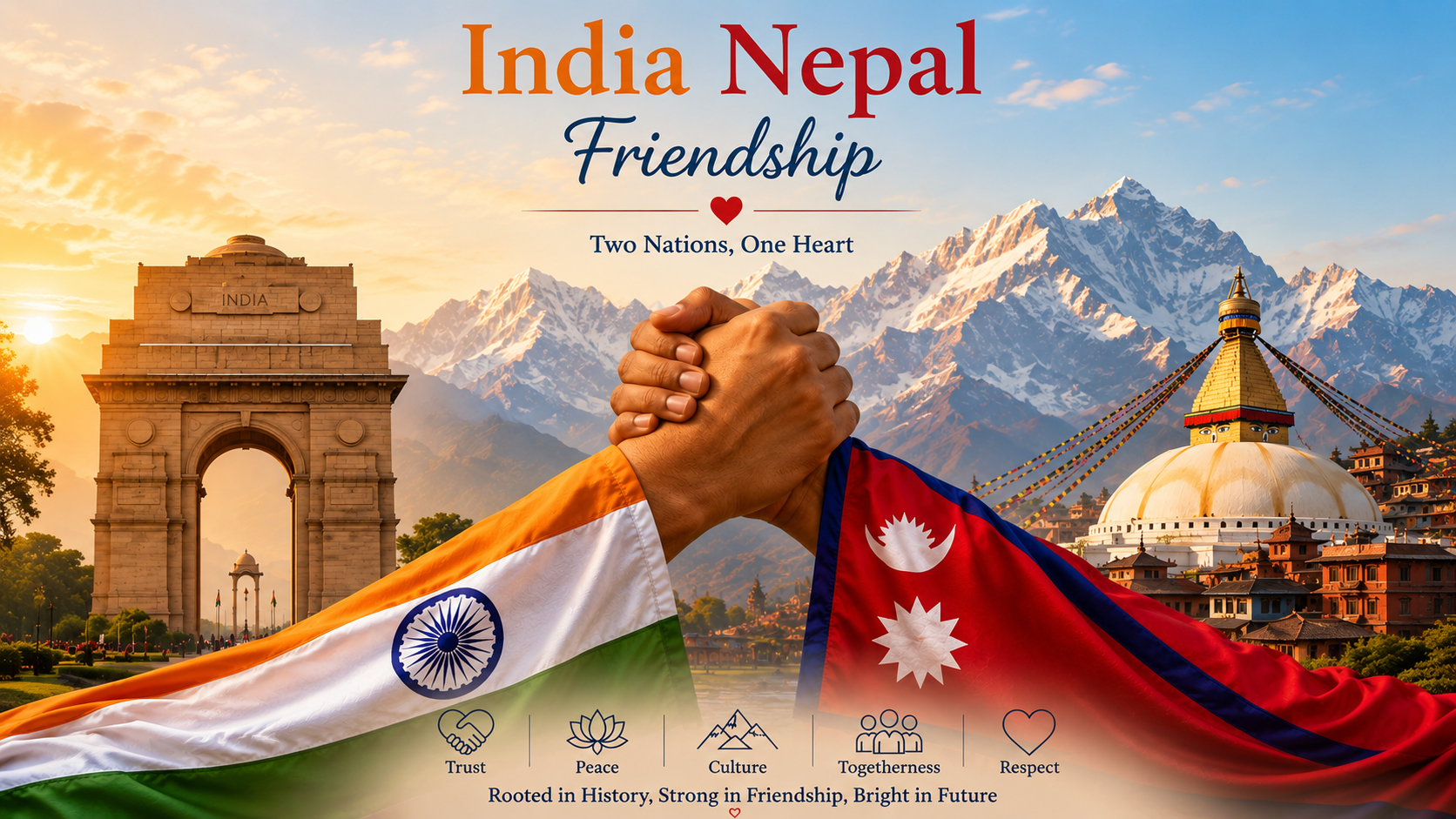
The June 5-7, 2026, visit of Nepal’s Foreign Minister Shisir Khanal to India, the first ministerial-level visit from Prime Minister Balen Shah’s government, since it assumed office in March 2026, marked an important moment in India-Nepal relations.
Coming amid political transition in Kathmandu, unresolved border disputes, and intensifying strategic competition between India and China in the Himalayan region, the visit served both symbolic and substantive purposes. It provided an early indication of the foreign policy priorities of Nepal’s new leadership, while reaffirming the importance of India in Kathmandu’s economic and strategic calculations.
The visit was significant because it represented the first major diplomatic engagement between New Delhi and Nepal’s new government, which emerged following the political upheaval of 2025. Led by the Rastriya Swatantra Party (RSP), the Shah administration has sought to distinguish itself from Nepal’s traditional political elite by emphasizing good governance, accountability, and economic transformation. During the visit, Khanal repeatedly described the government as a “new political reality” focused on development rather than ideological or geopolitical rivalries.
For India, the visit offered an opportunity to engage the new leadership and assess its policy orientation. Nepal remains a priority partner under India’s “Neighbourhood First” policy. Bilateral talks between Khanal and External Affairs Minister S. Jaishankar reviewed the full spectrum of relations, including development cooperation, connectivity, trade and transit, energy, and people-to-people ties. The discussions also covered regional and multilateral issues, reflecting the growing breadth of the bilateral partnership.
Importantly, the visit produced several concrete outcomes. The two sides welcomed the completion of internal procedures for bringing into force the India-Nepal Mutual Legal Assistance Agreement (MLAA) in Criminal Matters, which will strengthen cooperation in investigating and prosecuting cross-border crimes. India also formally handed over 72 health facilities and 12 cultural heritage projects completed under its post-2015 earthquake reconstruction assistance programme, underscoring New Delhi’s continued developmental role in Nepal.
The visit additionally highlighted the growing digital dimension of bilateral relations. The launch of the Peer-to-Peer (P2P) linkage between India’s Unified Payments Interface (UPI) and Nepal’s National Payments Interface (NPI) will facilitate cross-border remittances and financial transactions, benefiting millions of citizens with economic ties across the open border. The signing of a Memorandum of Understanding between Digital India Bhashini and Kathmandu University to develop a “Voice First” language translation platform further reflected efforts to expand cooperation in emerging technology sectors.
These initiatives align closely with the strategic priorities of the Shah government. Nepal’s new leadership faces strong public expectations regarding economic growth and governance reforms. Achieving these objectives requires investment, connectivity, technological cooperation, and access to larger markets. Given Nepal’s geography and economic dependence, constructive relations with India remain indispensable. Khanal’s emphasis on “development diplomacy” suggests a deliberate attempt to shift bilateral engagement away from recurring political controversies and towards practical cooperation capable of generating tangible economic benefits.
At the same time, Kathmandu continues to assert its position on sensitive sovereignty-related issues. Border disputes involving Kalapani, Lipulekh, and Limpiyadhura resurfaced recently following Nepal’s objections to the Kailash-Mansarovar Yatra route through Lipulekh. However, Khanal’s clarification that Nepal seeks resolution through existing bilateral mechanisms, rather than third-party mediation, reflected a pragmatic effort to prevent disputes from overshadowing broader cooperation. This approach is particularly significant given recent concerns in New Delhi regarding statements by Prime Minister Shah on the boundary issue.
The broader regional context further enhances the significance of the visit. Over the past decade, China has expanded its political and economic footprint in Nepal through infrastructure projects, connectivity initiatives, and diplomatic engagement. Beijing’s growing presence has provided Kathmandu with greater strategic flexibility and bargaining power. Nevertheless, Nepal’s economic realities continue to favour India. The overwhelming majority of Nepal’s trade passes through Indian territory, energy cooperation with India is expanding, and the open border sustains deep social, cultural, and economic interdependence.
For New Delhi, therefore, the challenge is not merely to counter Chinese influence but to remain Nepal’s most reliable development partner. The emphasis during Khanal’s visit on connectivity, digital integration, legal cooperation, reconstruction assistance, and energy collaboration mirrors India’s strategy of strengthening long-term interdependence through practical initiatives rather than geopolitical competition alone.
Overall, Khanal’s visit signalled a pragmatic recalibration in India-Nepal relations. While longstanding disputes remain unresolved, both sides demonstrated a willingness to prioritise development, connectivity, and economic cooperation. The visit reaffirmed India’s importance to Nepal’s development ambitions and suggested that Kathmandu’s new leadership intends to pursue a balanced yet pragmatic foreign policy, one that seeks economic transformation at home while carefully navigating an increasingly competitive regional environment.
Author: Afsara Shaheen – Research Associate, Institute for Conflict Management

