
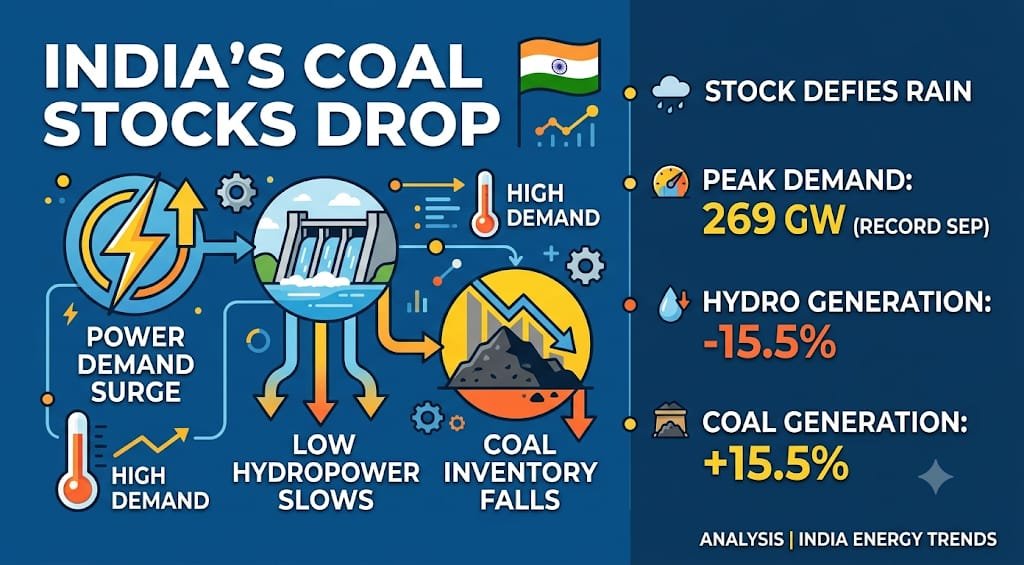
India’s coal stocks at power plants have fallen by nearly 24 percent in September, even as some areas saw rain and a slight cooling effect. The drop happened because electricity demand stayed unusually high while hydropower generation weakened due to deficient rainfall and El Niño–influenced weather.
With rivers running lower, hydropower plants could not produce as much energy as usual, so the system leaned more heavily on coal-based thermal plants to meet the gap.
This shift explains why coal consumption rose sharply even though the season was moving past the typical summer peak. The situation was not a sign of shortage in intent but a reflection of how the grid balances supply when one source underperforms and demand remains firm.
Peak power demand in September touched 269 gigawatts on September 10, which was the highest ever recorded for the month and just one gigawatt below the year’s peak seen in May. Such sustained high demand meant that thermal plants had to run harder and longer. By September 27, coal stocks at domestic coal-based power plants stood at 19.2 million tonnes, which was 64 percent below the required stock level of 53.7 million tonnes.
Compared with the same date last year, when stocks were at 43.1 million tonnes, this year’s level was down by about 55.5 percent. At least 72 out of 168 domestic coal-based plants were also reported to be at critical fuel-stock levels, meaning their inventory fell below 25 percent of the normative stock they are expected to maintain for uninterrupted generation.
The unusual demand pattern came alongside a notable decline in hydropower output. Between September 1 and September 26, hydropower generation fell by 15.5 percent compared with the same period in 2025, dropping to 16,483.18 million units from 19,505.93 million units. In the same window, coal-based generation rose by 15.5 percent to 96,718.83 million units from 83,736.47 million units a year earlier.
Since April 2026, coal-based generation reached 676,633.25 million units, a 10.7 percent increase over the corresponding period in 2025. The numbers show a clear substitution effect: when water flow in rivers is lower, hydropower plants produce less, and thermal plants pick up the load to keep supply stable.
Monsoon-related disruptions also affected coal mining and evacuation activities, which added pressure on inventory levels at several plants. While overall mining output was lower, coal supply to the power sector did see some increase.
About 112 captive coal-fired power plants were asked to operate at maximum capacity from October 1 to December 31. There are positive indications that the pressure may ease in the coming weeks. The India Meteorological Department has forecast heavy rainfall at isolated places in several parts of the country, which could help reduce cooling demand and improve water availability for hydropower.
Experts noted that the invocation of Section 11 should be seen as a proactive step to mitigate potential supply shortages and preserve system reliability. With peak demand remaining elevated but manageable, and with additional thermal capacity available through captive plants, the grid had an extra cushion during tight periods.
The broader picture suggests resilience rather than crisis. Coal stocks declined because the system chose to draw down inventory to meet demand while other sources underperformed. Emergency measures were deployed early, before shortages could translate into outages. Hydropower’s dip was linked to weather patterns, not structural failure, and rainfall improvements were expected to support a gradual recovery.
Thermal plants responded by raising output, and policy steps ensured that captive capacity could be mobilized quickly. These actions together indicate that the power ecosystem was adapting to an unusual demand surge with practical tools, keeping supply reliable while waiting for seasonal conditions to normalize.
In simple terms, this is all about balance. When rivers ran low and the sky stayed warm, people continued to use electricity at high levels. Hydropower could not generate as much, so coal-based plants worked harder. Stocks fell because they were used to fill the gap.
The government asked captive plants to run at full capacity to add more power to the system. Rain was expected to return in patches, which should cool demand and help hydropower recover. The steps taken were precautionary and aimed at stability, reflecting a system that could respond quickly when conditions changed.

