
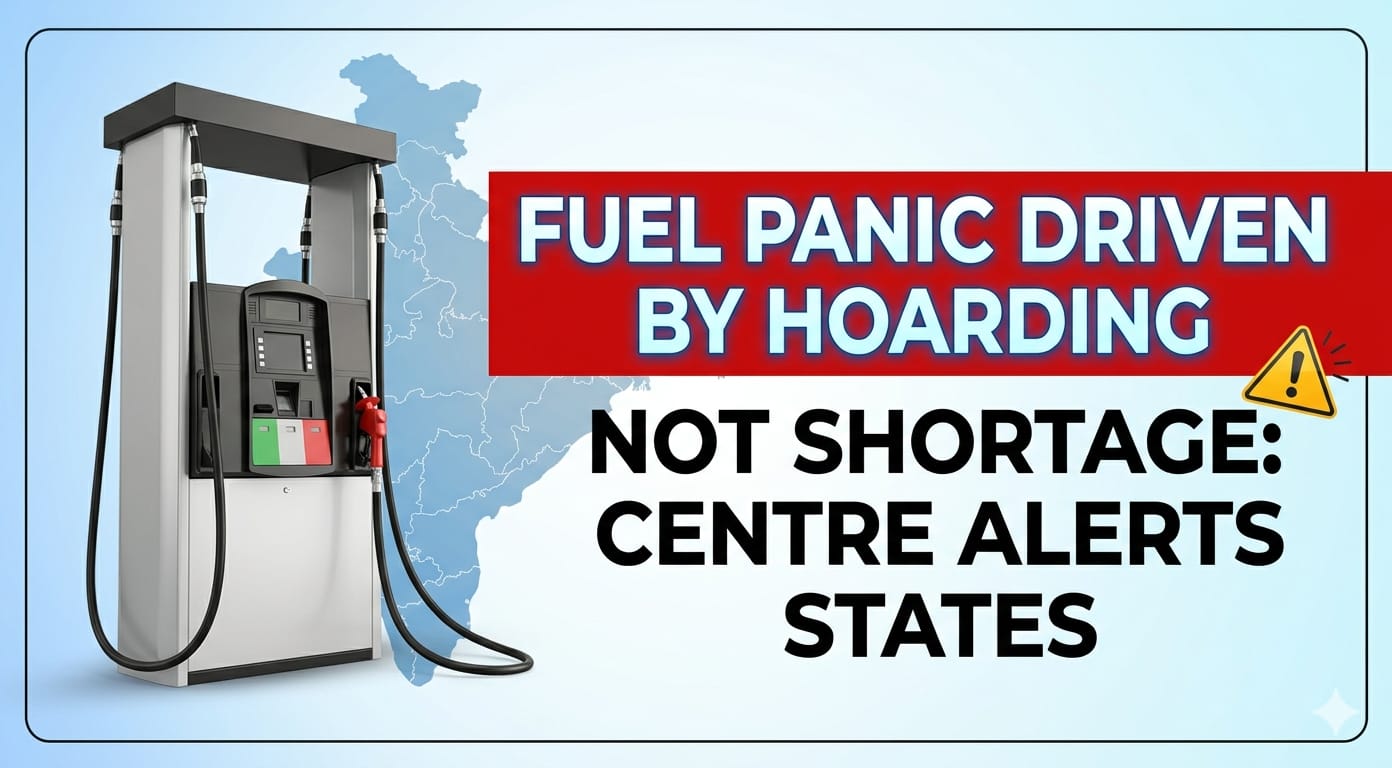
The government has stepped in to closely monitor fuel supplies across the country after reports of panic buying and temporary shortages at petrol pumps in some regions. If you have recently noticed long queues or heard people worrying about fuel availability, you are not alone.
The Centre has already held discussions with all states and union territories, asking them to keep a close watch on the situation and ensure there is no hoarding or mismanagement of petrol and diesel stocks. The government is trying to send a clear message that there is no overall shortage, but local disruptions are creating concern on the ground.
At the heart of this issue is a sudden rise in fuel demand, especially diesel. In several areas, demand has jumped by as much as 20 to 30 percent. One major reason behind this surge is a shift in buying behavior. Bulk consumers such as truck operators, state transport buses, and even telecom tower operators are now purchasing fuel from regular petrol pumps instead of their usual bulk supply channels.
This shift is happening because of a significant price difference. Diesel available at retail pumps is cheaper compared to market-linked bulk prices, with a gap of nearly Rs 40 per litre. Naturally, large buyers are trying to save costs, which is putting unexpected pressure on retail outlets.
At the same time, private fuel retailers are selling petrol and diesel at higher prices than government-owned oil marketing companies like Indian Oil, Bharat Petroleum, and Hindustan Petroleum.
Because of this, many consumers prefer public sector petrol pumps, increasing crowding and demand at these outlets. Add to this the seasonal agricultural demand, especially during harvesting periods, and the pressure becomes even more intense in rural and semi-urban areas.
Despite these challenges, the government maintains that fuel stocks at the national level are sufficient. The real problem lies in last-mile delivery. Petrol pumps typically keep stock for two to three days, and when demand suddenly spikes beyond expectations, it becomes difficult to replenish supplies quickly.
This leads to temporary dry-out situations at certain outlets. When one pump runs out of fuel, rumours start spreading in nearby areas, triggering panic buying. People rush to fill their tanks, even if they don’t urgently need fuel, which further worsens the situation.
This chain reaction has already been observed in parts of Gujarat, Maharashtra, and Uttar Pradesh. However, officials emphasize that these are isolated cases and not a nationwide crisis. Oil marketing companies are actively monitoring supplies and working to restock outlets as quickly as possible.
Measures such as better tanker movement planning, round-the-clock monitoring, and improved coordination between depots and petrol pumps are being implemented to handle the surge.
Another important factor behind the current situation is global oil price volatility, especially due to tensions in West Asia. While international prices have increased, government-owned companies have not fully passed on the cost to retail consumers. This has kept petrol and diesel prices relatively lower at public pumps, but it has also widened the gap between retail and bulk prices. As a result, demand continues to shift toward retail outlets, creating imbalance in the supply chain.
Indian Oil, which operates the largest network of fuel stations in the country, has clarified that only a very small number of its outlets are facing temporary disruptions. The company also reported strong growth in fuel sales this month, with petrol demand rising by 14 percent and diesel by around 18 percent compared to last year. This clearly shows that consumption is increasing rapidly, even though supply remains adequate overall.
The government’s current focus is to prevent panic and ensure smooth distribution. By involving state authorities and increasing real-time monitoring, the aim is to quickly address local shortages before they escalate.
For consumers, the key takeaway is simple: there is no need to panic. Fuel is available, and the situation is being actively managed. However, the situation also highlights how pricing differences and supply chain gaps can quickly create stress in essential services, even when there is no actual shortage.

