
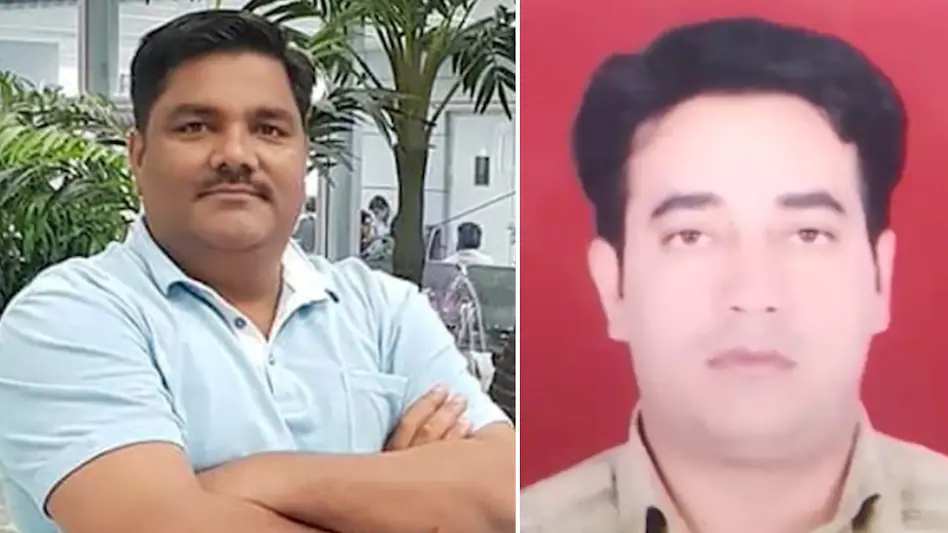
In January 2020, riots targeting Hindus broke out in NorthEast Delhi. Using Citizenship Amendment Act as a trigger, violent mobs took to the streets and the capital saw large scale violence. Over 50 people died during the riots, and among them was the young Intelligence Bureau officer Ankit Sharma. Ankit Sharma’s body was found in a drain with 51 wounds on his body.
Now, over 6 and a half years later, former Aam Aadmi Party (AAP) councillor Tahir Hussain has been sentenced to life imprisonment for the brutal murder. The verdict marks the culmination of one of the most high-profile criminal cases following the communal violence.
Tahir Hussain Hussain was born in Uttar Pradesh in 1969. Before he joined politics, he was involved in businesses and has been living in Northeast Delhi’s Mustafabad. Hussain entered politics through the Aam Aadmi Party and served as a municipal councillor from Nehru Vihar in Northeast Delhi.
During the anti-Citizenship Amendment Act (CAA) protests and the riots that erupted in February 2020, his name emerged as one of the principal accused in several cases of rioting, murder, arson and criminal conspiracy. The AAP suspended him after he was named in Ankit Sharma’s case and he was subsequently expelled from the party. He later joined the AIMIM and contested elections while remaining in judicial custody.
The most serious case against Hussain related to the murder of 26-year-old Intelligence Bureau officer Ankit Sharma. Sharma had gone missing on February 25, 2020, during the peak of the riots. His body was recovered from a drain the following day near Chand Bagh. The post-mortem examination revealed 51 external injuries, including multiple wounds from a sharp weapon. The prosecution argued that Sharma was abducted by a violent mob, brutally assaulted and murdered before his body was dumped in the drain in an attempt to destroy evidence.
During the trial, the prosecution relied on eyewitness testimony, forensic evidence and electronic records to establish Hussain’s role. According to the court, the evidence demonstrated that Hussain was not merely present at the crime scene but actively participated in and facilitated the attack. Tahir Hussain tried to claim that he was not even present there, but the evidence suggested otherwise.
The court convicted him and four co-accused for the murder of Ankit Sharma on 13 July 2026, being found guilty of Sections 302 (murder), 365 (kidnapping or abduction with intent to secretly and wrongfully confine), 153A (promoting enmity between different groups), 147 (rioting), 148 (rioting armed with deadly weapon), 149 (unlawful assembly), and 188 (disobedience to an order duly promulgated by a public servant) of the IPC.
The prosecution had sought the death penalty, describing the murder as exceptionally brutal and premeditated. However, the court ultimately imposed life imprisonment. Following the verdict, Hussain announced that he would challenge both the conviction and the sentence before the Delhi High Court.
The murder of Ankit Sharma became one of the defining cases of the 2020 Delhi riots, symbolising the extreme violence witnessed during the communal clashes. The life sentence awarded to Tahir Hussain represents a significant milestone in the judicial process surrounding the riots and underscores the courts’ determination to hold those found guilty accountable under the law.

