
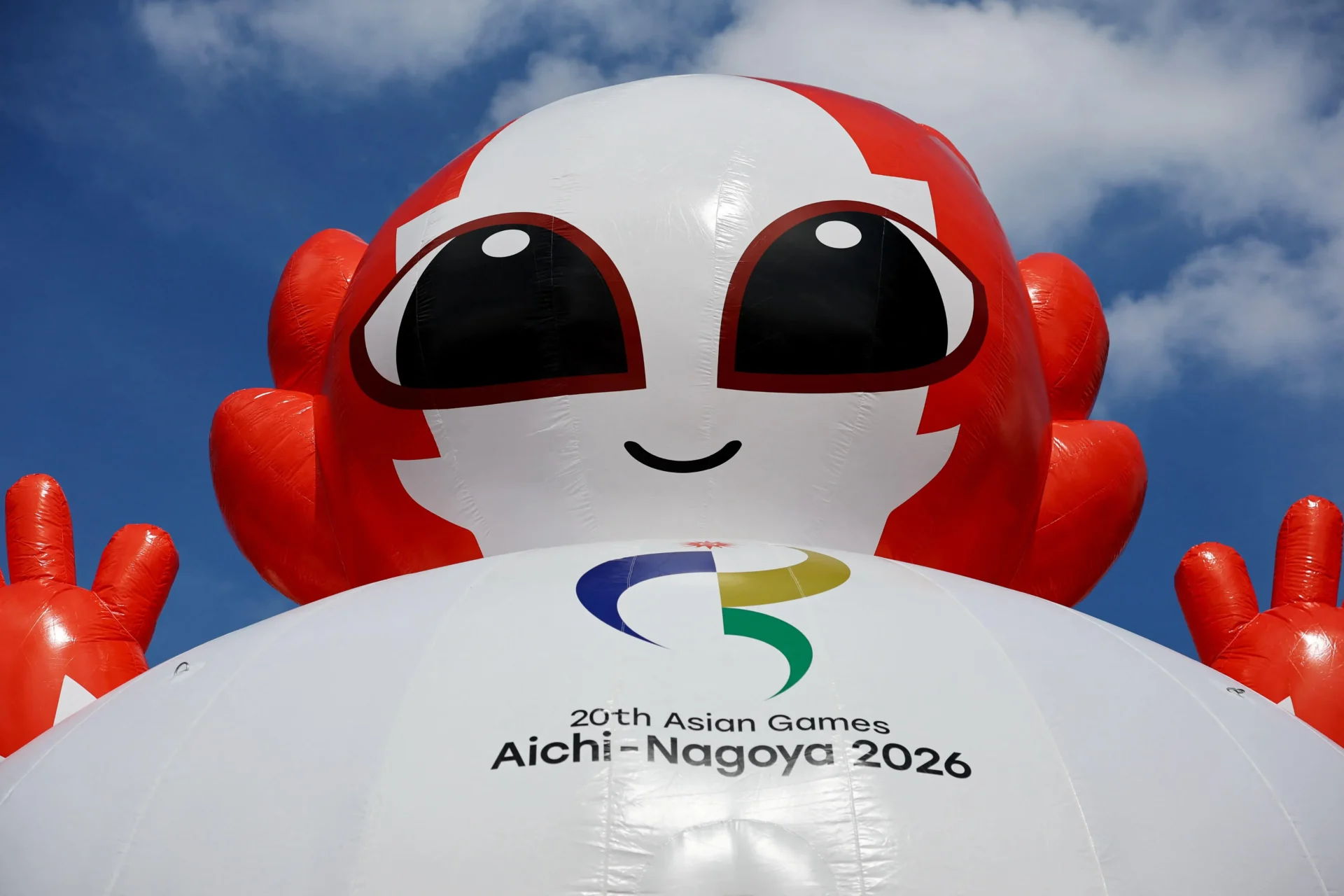
The 2026 Asian Games in Aichi-Nagoya were expected to showcase Japan’s organisational efficiency. Instead, even before the opening ceremony, the event has been hit by a series of logistical problems involving accommodation, transport, food, and even national anthems.
One of the biggest controversies has been the decision not to build a traditional Athletes’ Village. Instead, around 17,000 athletes and officials have been provided accommodation across hotels, temporary containers, and a cruise ship. Organisers said the approach was intended to reduce costs and avoid creating an underused facility after the Games. However, the arrangement has generated complaints from several delegations.
For some athletes, the problems began immediately after landing in Japan. Delegations faced lengthy waits at the airport because accreditation and transport systems were unable to process some athletes properly. Reports said some athletes were stranded for several hours, while some waited as long as 14 hours for arrangements to be completed.
Accommodation problems added to the frustration. There were reports of athletes waiting for rooms, incorrect allocations and situations in which coaches, athletes and even male and female members of teams were assigned together. Indian athletes and officials were among those affected, with some teams also reporting long journeys between their accommodation and competition venues.
Food has also become part of the controversy. Athletes from some delegations have complained about the quantity and quality of meals being provided. Images and accounts circulating from the Games have raised questions over whether catering arrangements are adequate for elite athletes who require carefully planned nutrition during competition.
Then came an extraordinary diplomatic and sporting blunder. Before a men’s hockey match involving South Korea, organisers mistakenly played the North Korean national anthem instead of South Korea’s anthem. In terms of the blunders, this can be classified as the biggest one. The stadium announcer subsequently apologised, calling it a mistake. South Korea went on to win the match 5-0, but the incident created considerable embarrassment because of the longstanding political tensions between the two Koreas.
Transport has produced further problems. South Korea’s football team was reportedly taken to the wrong venue, while other delegations experienced delays and long journeys. These disruptions matter because athletes need predictable schedules for training, recovery and competition.
The organisers have defended the unusual accommodation model, arguing that the huge number of participants and the addition of new sports created unexpected logistical pressure. The Olympic Council of Asia has also defended the decision to avoid constructing a permanent athletes’ village.
But the accumulation of incidents has created an uncomfortable narrative around the Games. For a country known internationally for precision, punctuality and efficiency, stranded athletes, room allocation problems, food complaints, transport failures and an anthem mix-up are particularly damaging.
The sporting competition may ultimately dominate the headlines, but the early organisational problems have already become a major part of the Aichi-Nagoya Asian Games story, and have dented Japan’s reputation as being a country with great efficiency and discipline. There has been no efficiency or discipline on display thus far, hope for the sake of the games, this gets better.

