
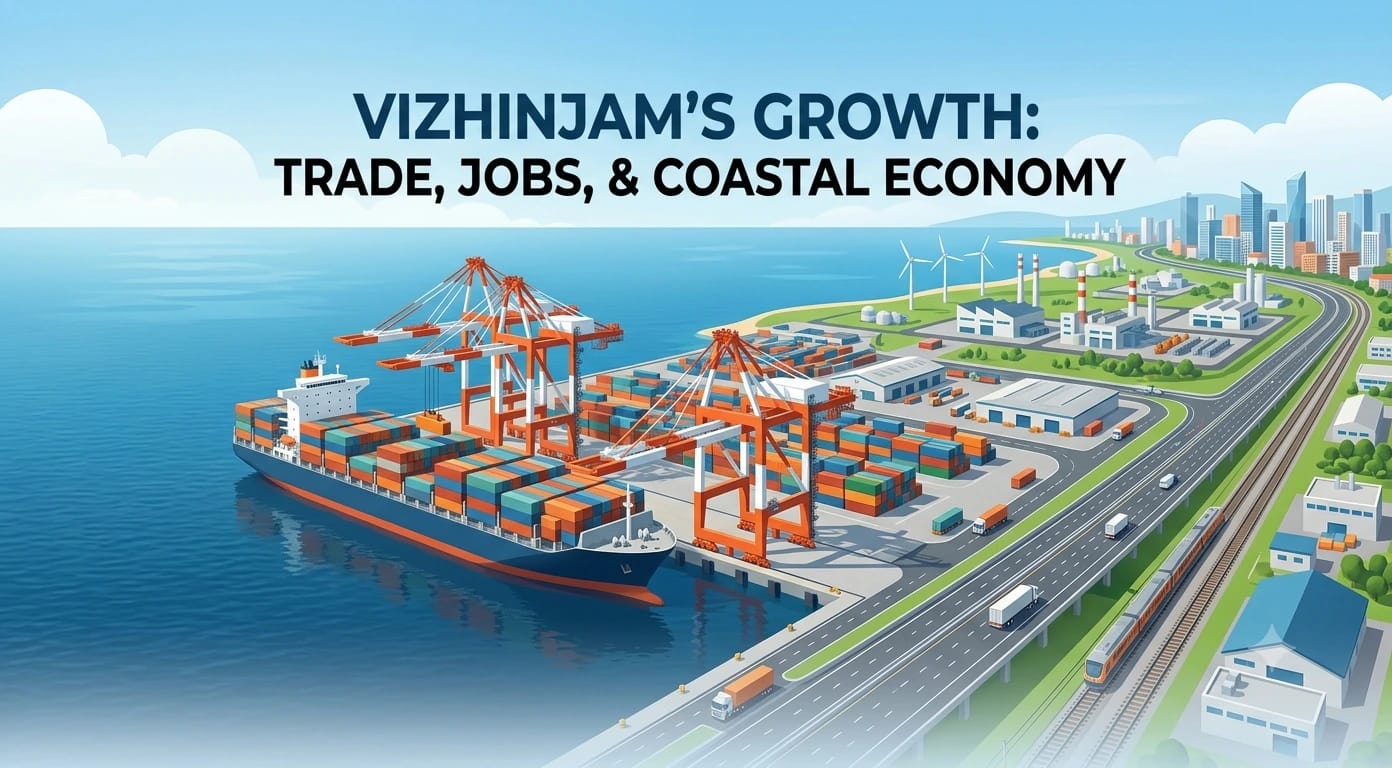
Vizhinjam Port’s latest milestone offers a clear example of why a new deep-sea port can matter so much. The port handled its 1,000th vessel in less than two years, with trial operations beginning in July 2024 and full commercial operations starting in December 2024.
That pace is important because it shows how a modern port can quickly become active, trusted, and useful for global shipping lines. A port that grows fast usually signals better connectivity, stronger trade flow, and rising confidence from businesses that depend on smooth cargo movement.
This kind of success also helps explain the value of a similar project in Bengal. A first deep-sea port there could give the eastern coastal belt a stronger place in sea trade, especially because deep-water ports can handle larger vessels more efficiently than older, shallower terminals.
In simple terms, bigger ships mean fewer transfers, faster movement, and lower handling costs. When that happens, exporters, importers, factories, and transport companies all gain from shorter delays and better shipping options.
The economic effect can be wide and practical. A large port does not only move containers; it creates work in construction, cargo handling, trucking, warehousing, customs support, repair services, and other daily operations.
Around such a port, new business activity often grows in a natural way, since shops, storage units, workshops, and transport services start serving the people and companies linked to the port. This is why port development is often seen as more than an infrastructure project; it becomes a base for long-term local income and steady employment.
Vizhinjam shows another useful lesson: speed and scale can arrive together when planning is strong. According to some reports, the port crossed more than 2 million TEUs within 18 months and handled many large vessels, including ultra-large container ships.
That matters because global shipping now depends heavily on efficiency, and ports that can receive big ships often become attractive stop points on major routes. For Bengal, a first deep-sea port could serve a similar purpose by improving access to international shipping and strengthening trade links with nearby regions and overseas markets.
Another reason such a port matters is infrastructure growth outside the port gate. Roads, rail links, and freight corridors usually need upgrades so goods can move smoothly from the port to factories, markets, and storage centres.
That wider network often improves travel and transport for nearby communities too, not just for cargo. When roads and railways are better planned around a port, the whole region becomes easier to connect, easier to invest in, and easier to develop over time.
A first deep-sea port also carries strategic value. It can reduce dependence on older ports and help the region become a stronger logistics hub, especially for industries that need reliable cargo movement.
Bengal’s proposed first deep-sea port at Tajpur has earlier been described as a project with employment and trade potential, including support for seafood export and industrial growth in nearby districts. In plain language, a port can act like a gateway, bringing outside trade in and sending local products out more efficiently.
The larger message from Vizhinjam is simple. A modern deep-sea port can turn a coastal location into a place of movement, business, and opportunity in a very short time. It can support trade, create jobs, improve roads and transport links, and raise the economic profile of the whole region. That is why the arrival of a new deep-sea port is not just about ships and cargo; it is about building a stronger future for the coastline and the communities around it.

