
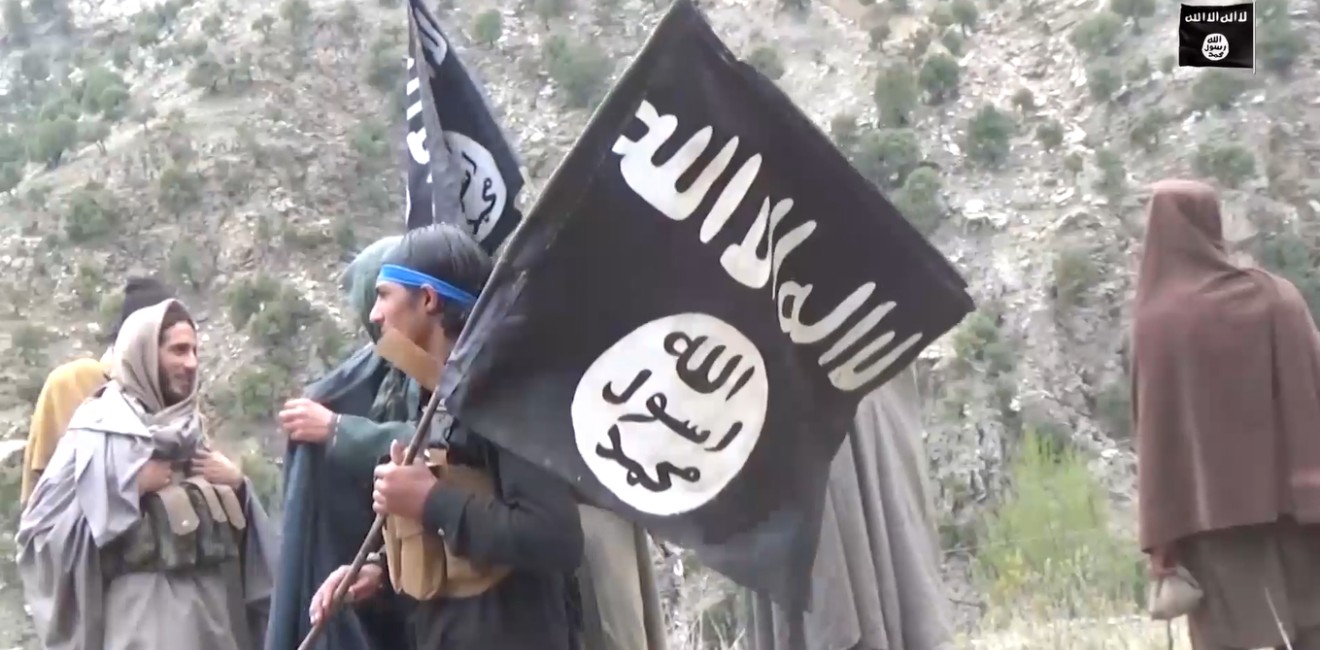
The arrest of a Turkish citizen linked to ISIS membership in Pakistan and reports about ISIS hideouts once again raise questions about Pakistan’s security situation.
Turkey’s National Intelligence Agency has announced that it has arrested a member of ISIS from the ‘Afghanistan-Pakistan’ regions and transferred him to Turkey.
Turkish intelligence has not specified the exact location of the arrest of this person. Pakistan and the Taliban government have also not officially said anything in this regard so far. It is worth noting that Turkish intelligence had previously arrested a Turkish citizen in the same region on charges of having links with ISIS and transferred him to his home country.
Turkish media, quoting officials of that country, reported that the newly arrested person, named ‘Uyghur Bahadir’, after leaving Turkey, joined ISIS in 2024 and was active in the training camps of this group in the Afghanistan-Pakistan region.
Ghor Bahadur traveled from Turkey to Islamabad International Airport in (2024–25), later traveling to Mastung, Balochistan, and then to Orakzai. According to informed sources, he has been arrested in Pakistan, mirroring the cases of other ISIS operative. Who were previously captured in the country? These cases point to the presence of ISIS hubs in Pakistan.
According to the Turkish news, based on investigations by Turkey’s National Intelligence Agency, Uyghur Bahadir, who was known as “Abdullah” within ISIS, had gone from Turkey to the border regions of Afghanistan and Pakistan.
After it was discovered that he had performed various duties in several ISIS-related camps in this region, an operation to arrest him was launched. Uyghur was transferred to Turkey after his arrest.
The report states that in his initial statements, he shared information about “training by ISIS, assigned missions, and ISIS’s organizational activities in the Afghanistan and Pakistan region.”
Reports have said that Uyghur Bahadir had recruited another Turkish person named Ozgur Altun to ISIS. Ozgur Altun, who was known by the organizational name “Abu Yasir al-Turki”, was arrested in early 2025.
Turkish officials said at the time that he was responsible for recruiting Turks to ISIS. He told during investigation that, I had come to this region from Turkey and had been active in various ISIS camps. He also provided information regarding other members of ISIS and organizational activities. Turkish officials say that as a result of these investigations, plans for possible ISIS attacks in Turkey have been thwarted.
It is worth noting that the head of the Turkish intelligence agency, Ibrahim Kalin, had traveled to Kabul on September 16 and met with a number of senior officials of the Taliban government.
Turkey has established close ties with the Taliban and has previously played a mediating role in conflicts between Afghanistan and Pakistan.
Increasing activities of ISIS-Khorasan in Pakistan, growing concern among neighboring countries. Reports related to the activities of ISIS-Khorasan in Pakistan, its alleged networks, and its presence in border areas have increased the concern of security agencies in the region. Reports of the presence of ISIS-affiliated elements, suspected hideouts, and arrests have continued to emerge in some areas of Balochistan and Khyber Pakhtunkhwa.
Especially for other countries in the region, including Afghanistan, Iran, India, and China, this matter has become important, because the ISIS-Khorasan network is not limited to one country and the effects of its activities can also reach across borders.
After the toughest operation by the Afghanistan government after 2021, their activities had shifted to Pakistan.
In June 2026, various news agencies mentioned the arrest of Ahmad Kazanji, citing a report from Turkish media. According to the report, he had been preparing propaganda material in the Turkish language for ISIS Khorasan in the mountainous areas of Balochistan. The areas of Mastung, Kalat, Khuzdar, Bolan and Sibi were linked to alleged camps and organizational structure.
In June 2025, According to Turkey’s official news agency, in an operation by Turkish intelligence, a key Turkish member of ISIS, Ozgur Altun, was arrested from Pakistan’s border. According to Turkish authorities, he was playing a role in the network for transferring ISIS fighters from Europe and Central Asia to the region. These incidents make it important to question to what extent the network, recruitment, training, and propaganda structure of ISIS in Pakistan has spread. evidence of presence in Balochistan and Khyber Pakhtunkhwa.
In the June and October 2026 reports of the European Union Agency for Asylum (EUAA), two separate ISIS-affiliated branches inside Pakistan are mentioned. On the other hand, according to EUAA, the presence of ISIS-Khorasan in Pakistan has been reported especially in Bajaur in Khyber Pakhtunkhwa and some areas of Balochistan. In addition, there are reports of its sympathizers and contacts also in the urban areas of Punjab.
An important point in this matter is that not every ISIS attack can be attributed to ISKP. It is necessary to understand the activities of ISKP and ISPP in Pakistan separately, especially in Balochistan where distinguishing between the two has sometimes been described as difficult. But the hideouts of both have been reported in Balochistan and Khyber Pakhtunkhwa.
A sensitive aspect of this matter is the allegations related to Pakistan’s security and intelligence policy.
Officials of the interim government of Afghanistan have in the past repeatedly taken the position that some safe havens of ISIS-Khorasan exist in Pakistan and that operations against Afghanistan are planned from there. Some former Afghan diplomats and analysts have also pointed out alleged centers of ISIS in Balochistan and raised questions about networks existing inside Pakistan.
By- Laiba yousafzai

