
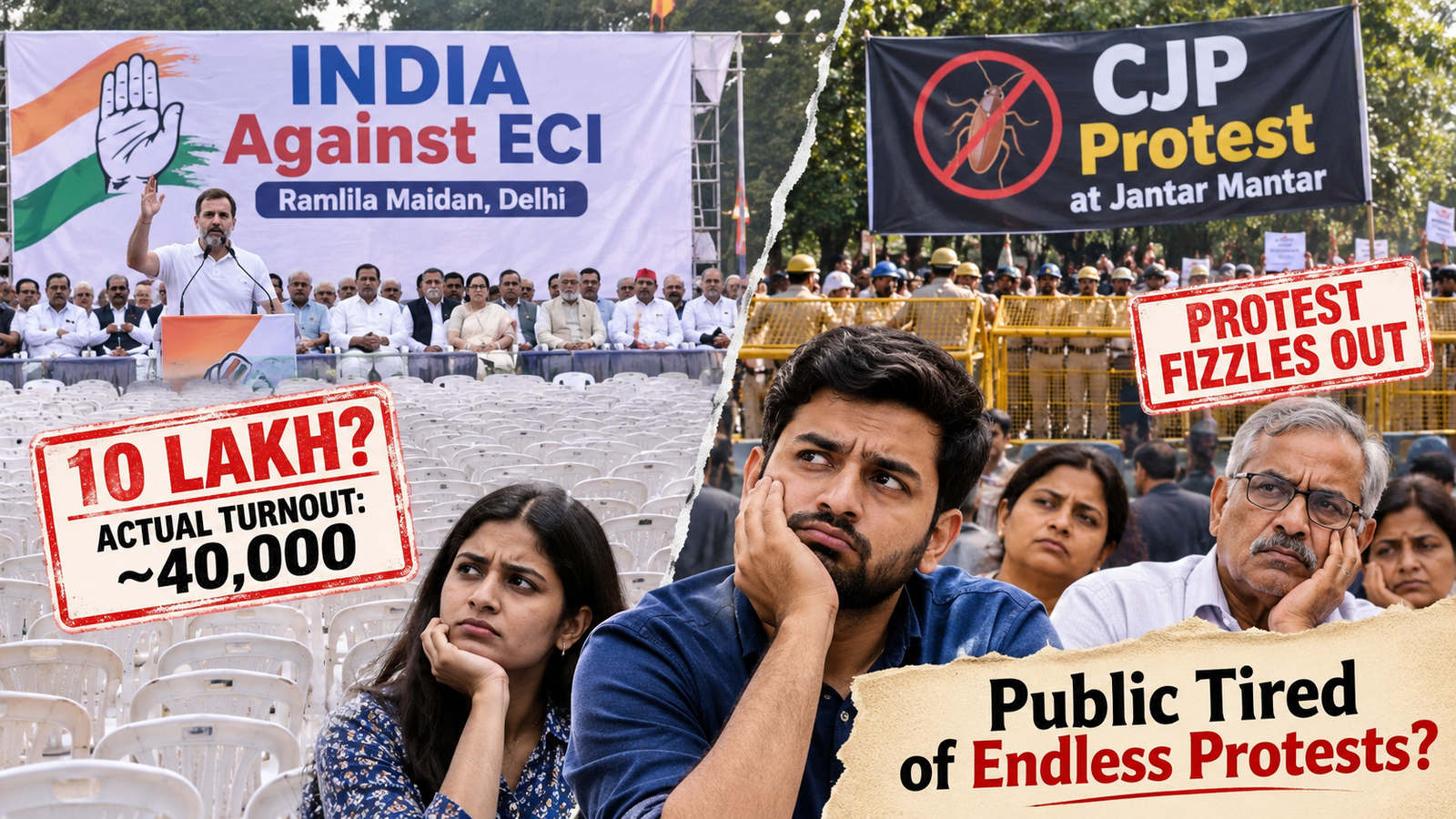
India’s political opposition and protest movements may need to confront themselves with an uncomfortable question – Are ordinary Indians running out of patience with the seemingly endless cycle of protests, demonstrations, marches and political sloganeering?
The Congress-led INDIA bloc’s November 1 rally at Delhi’s Ramlila Maidan was advertised as a massive show of strength against the Election Commission of India (ECI). Congress leaders projected a turnout of 10 lakh people, with Rahul Gandhi and other Opposition leaders preparing to make the gathering a major political spectacle.
However, the actual turnout fell considerably short (and we are being generous here) of that ambitious target. Thousands did gather, and the rally was attended by prominent Opposition leaders, but reports put the crowd at around 35,000–40,000. The BJP also highlighted empty chairs and claimed that substantial portions of the venue remained vacant. Congress, meanwhile, of course maintained that the rally was a major success.
The episode raises questions about whether political parties are overestimating public enthusiasm for their protest campaigns.
The Cockroach Janta Party (CJP)-led demonstrations against Chief Election Commissioner Gyanesh Kumar have also faced difficulties translating online mobilisation into sustained street participation. Its October 10 protest was disrupted by extensive police restrictions and preventive detentions, with thousands reportedly detained across Delhi. The planned gathering at Jantar Mantar failed to materialise as protesters were stopped at multiple locations. But if people really wanted to join the protest, they would have reached the venue no matter what, but nobody reached.
Does this mean Indians are tired of protesting?
There is now a legitimate question about protest fatigue. When every political disagreement becomes a street confrontation, every institutional dispute becomes a demand for someone’s resignation, and every political setback is presented as an existential threat to democracy, the public will become increasingly selective about which causes deserve its attention.
Protests are an essential democratic right. But they also need credible objectives, convincing evidence and a clear roadmap for achieving change.
Perhaps the bigger challenge for India’s political opposition and protest movements is not arranging another demonstration or announcing another march. It is convincing ordinary citizens that participating will actually make a difference.
Democracy needs protests, but it also needs public trust. And that cannot be manufactured through slogans, crowd estimates or social media campaigns.

