
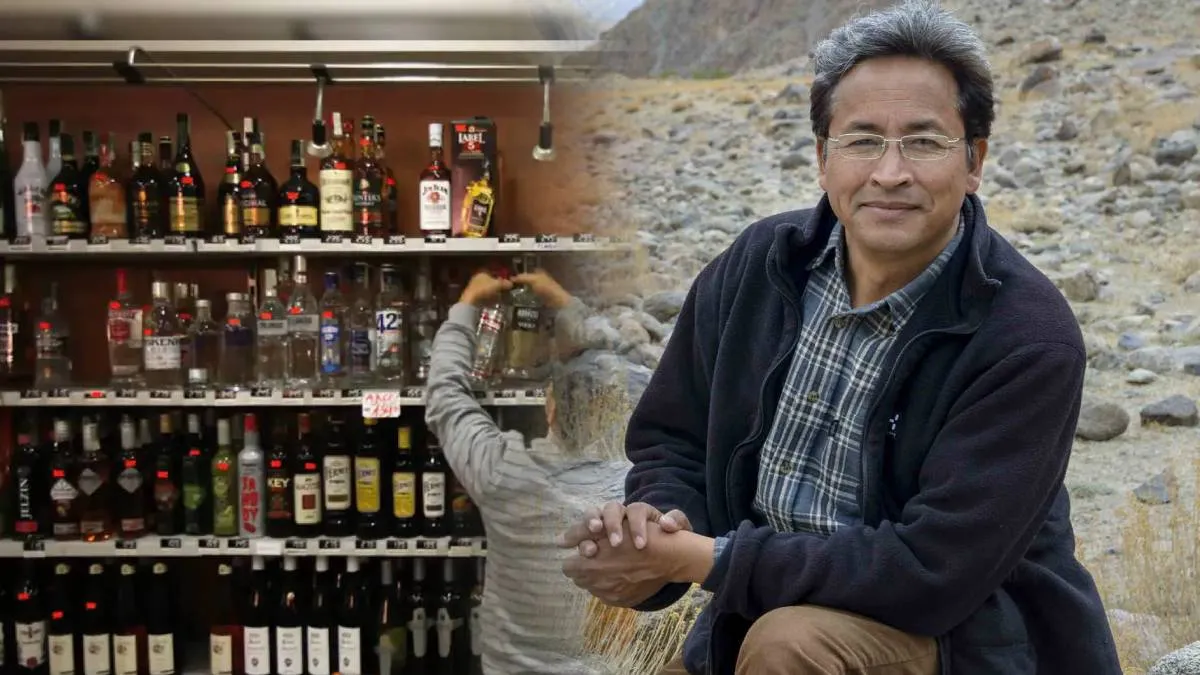
Sonam Wangchuk sat with women demanding a dry Ladakh on 28 October. On the same visit, he pitched tax-exempt breweries.
That contradiction is now at the heart of a sharp counter-attack from the All Ladakh Liquor Traders Association, which has accused the climate activist of double standards on alcohol.
At NDS Memorial Park in Leh, where women from religious organisations had been on dharna for seven days, Wangchuk called Ladakh’s traditional brews part of its heritage and a “healthier” option worth promoting. He urged the administration to help local youth set up modern microbreweries using local wheat, with tax exemptions. Shop-sold liquor, he said, should be priced high enough to put people off. He called it a “middle way”.
The traders, however, are not buying it. At a press conference reported on Saturday, they said Wangchuk backs a dry Ladakh while speaking warmly of chang. They asked why liquor alone was being singled out when drugs, cigarettes and meat were not, accused him of selective activism, and told him to stop interfering with their livelihoods.
“Not one community’s trade”
The association said liquor trading is a legally licensed business run by Muslims, Buddhists, Christians and Hindus alike. It should not be painted as one community’s trade, they said. They added that they would accept total prohibition if the same yardstick were applied to meat, cigarettes and drugs.
Several new licensees have sunk lakhs into licences, stock and premises, and some have operated for less than a month. The traders admitted fights and serious injuries near some outlets, but said premises have CCTV and law and order is the police’s job. They also asked whether a homemade apple wine sold as “Ule Topo” holds a licence, and why the administration has not acted.
Adding a sharp twist to the traders’ accusations is the specific mention of “Ule Topo” (Uleytokpo) – a riverside hamlet along the Indus River that happens to be environmentalist Sonam Wangchuk’s birth village and ancestral home. Famous in tourism circles for the Ule Ethnic Resort (run by Wangchuk’s extended family), the village has long been known for producing locally crafted, un-monitored fruit and apple wines under the same name. By directly calling out “Ule Topo” wine at their press conference, the liquor traders effectively turned the lens back on Wangchuk’s own backyard, thereby questioning why homemade local brews produced in the activist’s home village operate smoothly without administrative action or commercial licenses, while their own legally licensed businesses are singled out and targeted under the banner of moral prohibition.
They want a financial impact assessment before any decision, no new levies without consulting hotels, tour operators, taxi unions and traders, and awareness drives in place of bans.
How the row grew
The outburst follows a week in which women’s wings of religious bodies across faiths met Chief Secretary Ashish Kundra on 27 October to demand total prohibition. Kundra called for wider consultation and a “middle path”, citing tourism and jobs.
Wangchuk has been among the loudest critics of the administration’s liquor policy. At a press conference at Ladakh Bhavan in Delhi on 22 October, he alleged alcohol was being forcibly promoted, with bars near homes and schools. On X, he accused LG VK Saxena of “firing alcohol cannons” in the name of fighting drug abuse.
The administration called his claims “baseless” and a “deliberate campaign of misinformation”. It said only one liquor shop operates in the UT, and that the 2026–27 excise policy was withdrawn on 26 August after protests, including a Ladakh-wide shutdown on 23 June.
Responding in Leh, Wangchuk said that even if he had been wrong, the administration should explain why religious women’s groups were staging repeated protests. He called the indiscriminate opening of bars and wine shops “a mistake”, rejected the argument that liquor outlets help fight drug abuse, and told the Centre to stop “playing games” with Ladakh.

