
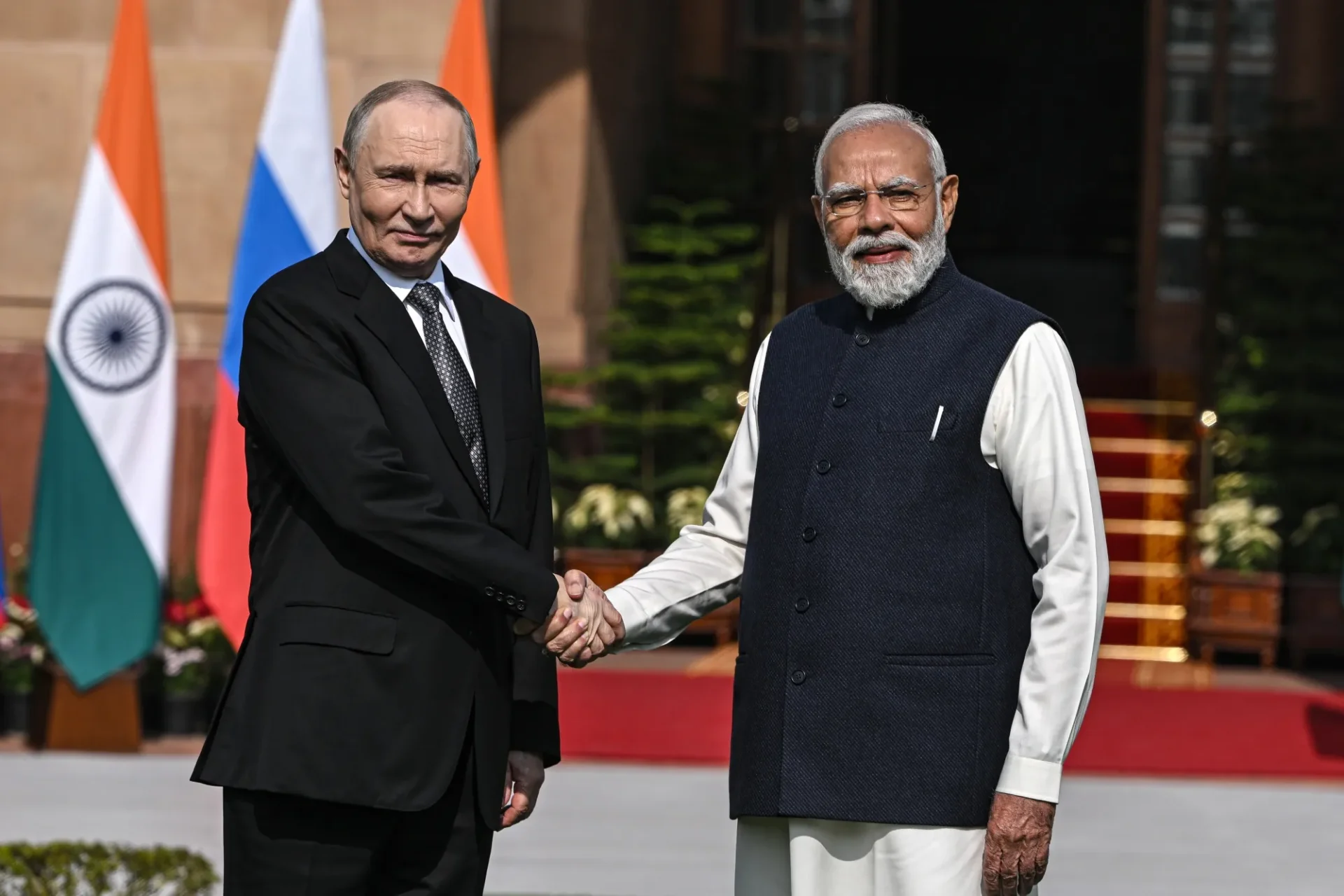
Indian Prime Minister Narendra Modi met Russian President Vladimir Putin on Monday, August 31, on the sidelines of the Shanghai Cooperation Organisation (SCO) Summit in Bishkek, Kyrgyzstan. The ongoing Russia-Ukraine war, bilateral ties, energy and trade were expected to dominate discussions.
The meeting comes at a crucial time for India-Russia relations, as New Delhi continues to maintain its longstanding strategic partnership with Moscow while simultaneously expanding its engagement with the United States, Europe and other major powers. The two leaders are also expected to continue their discussions at the upcoming BRICS Summit in New Delhi in September in a couple of weeks.
A key focus of the Bishkek talks was the Ukraine conflict. Prime Minister Modi reiterated India’s consistent position that dialogue and diplomacy remain the way forward. He urged the Russian President Putin to work towards ending the hostilities, stressing that prolonged warfare has wider consequences for humanity and global stability.
The talks are also significant from an economic and energy perspective. Russia remains an important partner for India in areas ranging from defence and nuclear energy to hydrocarbons and other strategic sectors. With global energy markets facing continuing uncertainty, stable energy supplies from Russia remain an important component of India’s economic calculations.
The meeting also highlights the importance New Delhi attaches to preserving its strategic autonomy. India has maintained communication with Moscow despite intense pressure from the West over buying Russian oil and has made clear that its foreign policy decisions are guided primarily by its own national interests.
The Modi-Putin meeting took place against the larger backdrop of the SCO Summit, where India, Russia, China and other member states are discussing regional security, connectivity, trade and geopolitical challenges. The gathering provides India with an opportunity to engage simultaneously with major powers while strengthening its influence in the wider Eurasian region.
The Bishkek meeting therefore carries significance beyond the India-Russia relationship. It underlines India’s effort to remain an independent and influential player in a rapidly changing global order, balancing strategic partnerships while continuing to advocate dialogue and peace.

