
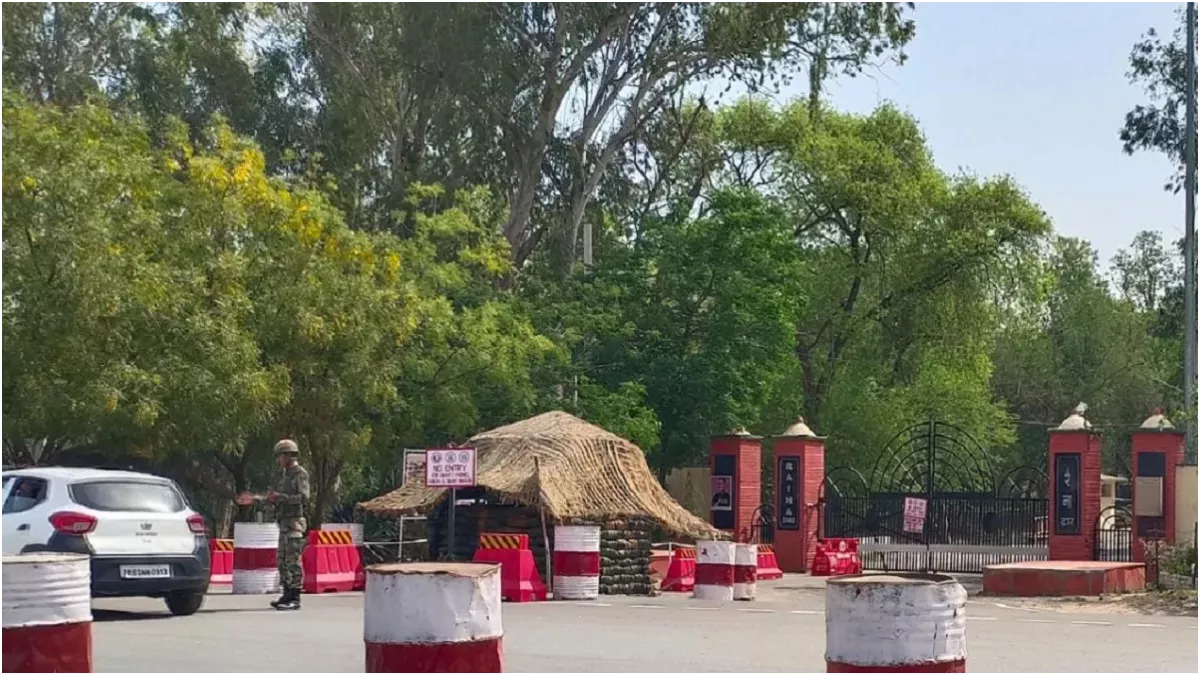
Throughout 2026, Punjab has seen a series of low-intensity attacks that security agencies connect to hybrid networks blending organized crime and extremist objectives. Petrol bombs and comparable devices have been used against clinics, political offices, and other soft targets, alongside strikes near security infrastructure. The June 22 attack on a clinic in Bathinda, in which two individuals hurled a petrol-filled bottle into the premises, stands as one documented example. Further incidents occurred in the following weeks, including a petrol bomb attack on a district political office in late July, as well as earlier episodes involving grenades and improvised devices. Investigative findings and public claims have repeatedly associated these actions with the Khalistan Liberation Army and related groups, with Pakistan-based Shehzad Bhatti frequently identified as a central handler directing local participants. Agencies have noted his involvement in a notable share of the year’s reported low-intensity cases.
The operational model is deliberately designed to minimize risk for the foreign handlers while maximizing disruption on the ground. Instructions travel through encrypted channels and social media. Financial support arrives via informal transfer systems or narcotics-related proceeds. Local recruits are expected to carry out the visible acts- throwing the device, filming the scene, and transmitting proof of completion. The individuals drawn into these roles are often young, economically vulnerable, and active online. In the Bathinda episode, a college student with no prior criminal record allegedly organized the attack after contact with a foreign number, paying two acquaintances small sums and receiving an advance himself. Parallel recruitment patterns have surfaced in other dismantled modules across the state and neighbouring regions. The objective extends beyond any single explosion: it seeks to normalize a climate of uncertainty, to plant the idea that participation carries status or reward, and thereby to influence a wider circle of young people.
Experience demonstrates that the promised rewards rarely materialize. What follows instead is rapid detection, arrest and formal prosecution. In the Bathinda investigation, multiple young men were taken into custody within a short period. Some tried to escape, adding further charges and injuries to their situation. Comparable outcomes have marked other cases linked to the same networks- arrests after attacks near hospitals, police stations, or railway infrastructure, followed by NIA chargesheets that name both the local executors and the Pakistan-based absconder. Earlier modules associated with Babbar Khalsa International and related outfits produced the same results: lengthy prison terms, destroyed educational trajectories, limited future employment and lasting social stigma for the families involved. The handlers continue to operate from abroad; the local youth bear the full weight of the legal and social consequences.
These distant figures are best understood as instruments rather than independent actors. Assessments by security agencies describe them as pawns within a broader ISI-supported effort to radicalize Indian youth, sustain low-level instability, and thereby create obstacles to effective administration and development. The use of civilian and soft targets amplifies the psychological effect while allowing the operators to claim a degree of deniability. Recruitment begins with seemingly minor requests- recording a location, transporting material or simply staying in contact- and gradually escalates. Social media platforms remain the primary entry point, enabling handlers to identify and approach individuals facing financial or personal difficulties, including, in some documented instances, teenagers and minors.
The practical lesson for young people is therefore straightforward. Participation almost invariably ends in custody, court proceedings and family hardship. Alternative paths offer genuine prospects. Punjab’s agricultural base continues to reward innovation and hard work. The expanding startup environment creates space for enterprise. Sporting success provides visible proof of what disciplined effort can achieve. At the 2026 Commonwealth Games in Glasgow, the Indian contingent earned 39 medals. Punjab athletes contributed to that tally, securing medals that reflected years of sustained training. These accomplishments stand in clear contrast to the short-lived and ultimately empty promises of foreign-directed activity.
Vigilance and informed choice remain essential. Unsolicited online contacts that offer money or a sense of belonging should be treated with suspicionand reported appropriately. Families and community networks can help by remaining attentive to sudden changes in behaviour or unexplained resources. The documented record for recent years shows that those who cross the line into these activities pay a steep personal price while the distant organizers remain insulated. Punjab’s young people possess the talent and the opportunity to pursue agriculture, entrepreneurship and sport instead. With clear awareness of the consequences and a steady focus on constructive goals, they can continue to reject these external pressures and contribute to a stable, forward-looking future for the region.

