
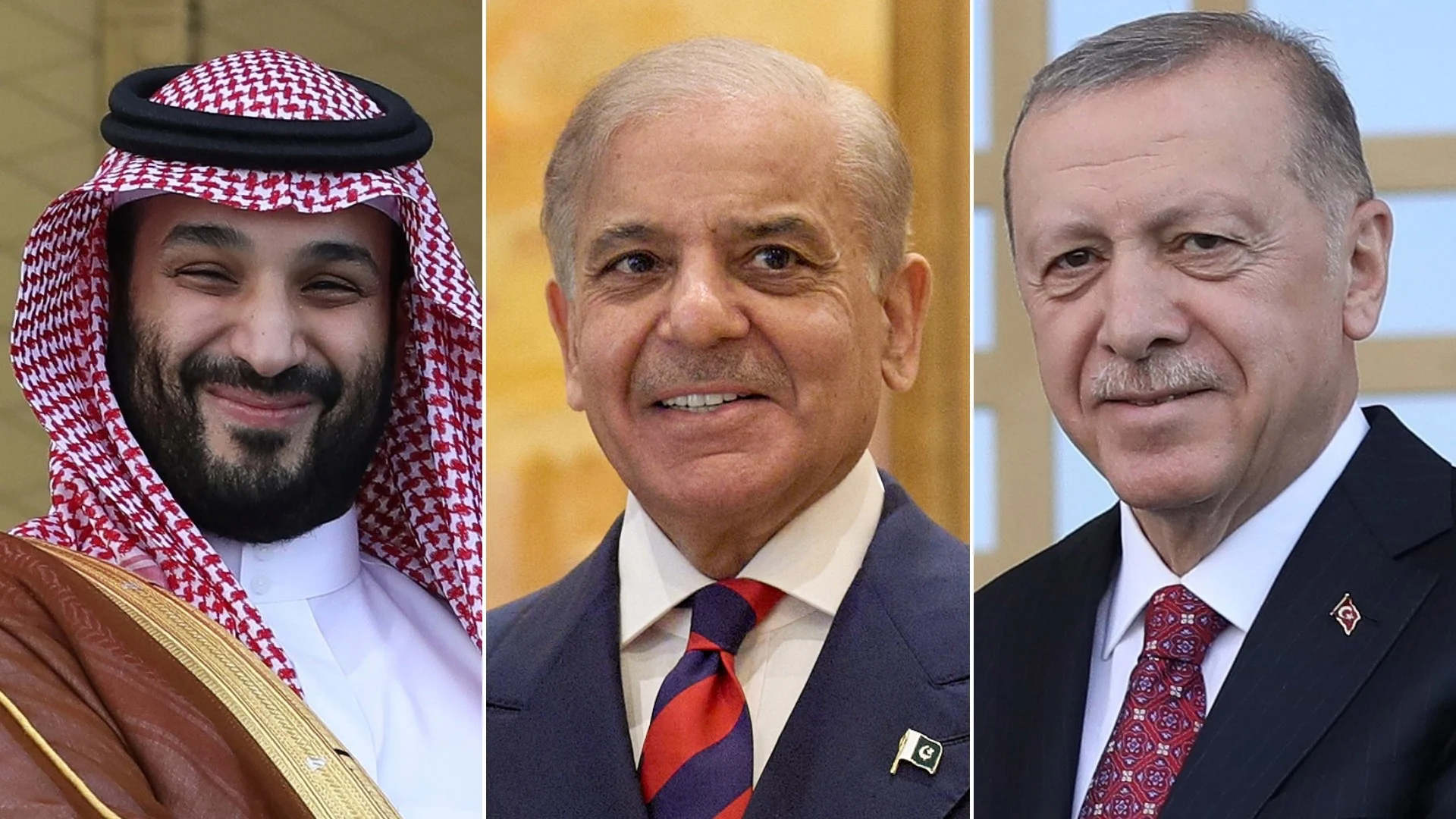
Pakistan, Saudi Arabia, and Turkey have signed a trilateral defence agreement aimed at strengthening military cooperation and collective security amid the ongoing conflict in West Asia. Signed in Mecca by Saudi Crown Prince Mohammed bin Salman, Turkish President Recep Tayyip Erdoğan and Pakistani Prime Minister Shehbaz Sharif, the pact states that an armed attack on any one of the three countries will be treated as an attack on all.
The three governments have maintained that the agreement is purely defensive and is not directed against any specific country.
The agreement comes against the backdrop of heightened tensions involving Iran in the region, attacks on Gulf energy infrastructure, and continued threats to maritime security in the Strait of Hormuz, which have now extended to the Red Sea. This pact between the 3 Sunni majority states reflects a growing desire to build an independent security framework against the Shia majority Iran and its proxies. This also looks like an attempt to reduce reliance on external military guarantees.
Iran has reacted cautiously but critically to the development. Tehran has expressed concern that any new military bloc could further militarise the region and complicate efforts to restore stability following the war in the region. Iranian officials have repeatedly warned neighbouring countries against joining security arrangements that could be perceived as hostile to Iran, while continuing to advocate diplomacy to resolve regional disputes.
Despite these concerns, Pakistan, Saudi Arabia and Turkey have insisted that the Mecca Joint Defence Agreement is intended to deter aggression, enhance intelligence sharing, strengthen defence cooperation and improve joint preparedness against common security threats. Officials from the three countries have emphasised that the pact complements ongoing diplomatic efforts to reduce tensions in the Middle East rather than replace them.
The agreement is expected to reshape the regional security landscape and could encourage deeper defence coordination among like-minded countries. However, its long-term impact will depend on how relations between Iran and its neighbours evolve and whether diplomatic engagement succeeds in preventing further escalation across West Asia.

