
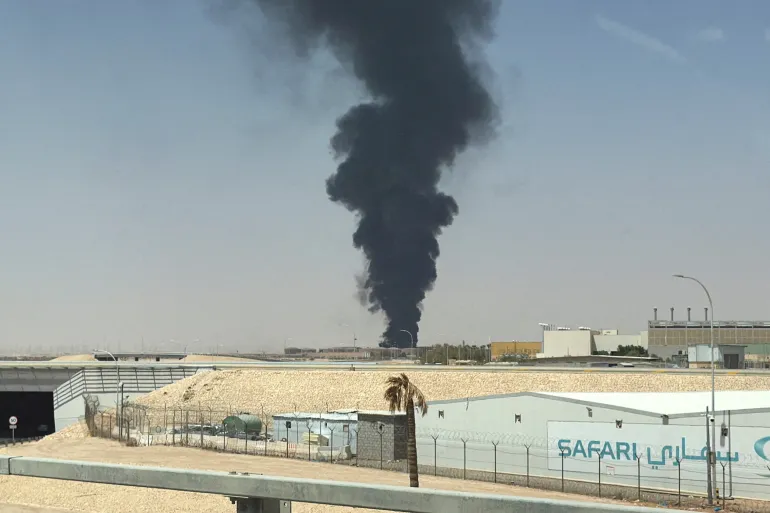
Yemen’s Houthi rebels have emerged as one of the most significant threats to security in the Middle East. Their missile and drone attacks on Saudi Arabia, including the deadly October 10 strike on Riyadh’s King Khalid International Airport, have brought the conflict into sharp focus. Saudi authorities reported that the airport attack killed 12 people and injured 309.
But who exactly are the Houthis? Why are they fighting Saudi Arabia, and what role does Iran play in their military campaign?
Who are the Houthis?
The Houthis, officially known as Ansar Allah, are an armed political and religious movement that emerged from Yemen’s Zaidi Shia Muslim community in the 1990s. Their name comes from Hussein Badreddin al-Houthi, an early leader of the movement. Today, his brother, Abdul-Malik al-Houthi, leads the group.
The movement initially opposed Yemen’s government, accusing it of corruption, marginalisation of northern communities and excessive dependence on the United States and Saudi Arabia. Over time, it evolved from a regional insurgency into a powerful armed organisation with ballistic missiles, drones and the ability to threaten international shipping.
In 2014, the Houthis seized Yemen’s capital, Sanaa, and subsequently expanded their control across large parts of the country. Their advance prompted a Saudi-led military intervention in 2015 to support Yemen’s internationally recognised government. The conflict has since caused a devastating humanitarian crisis and left Yemen deeply divided.
Why are the Houthis Iran’s proxies
Iran is the Houthis’ principal external military supporter. Tehran has provided the movement with weapons, training and technical assistance, helping it develop increasingly sophisticated missile and drone capabilities. US Defence Intelligence Agency assessments have documented the use of Iranian-origin weapons in Houthi attacks across the region.
This is why the Houthis are commonly described as Iran-backed proxies. They form part of the wider network of armed groups aligned with Tehran, often called the “Axis of Resistance”, which includes Hezbollah in Lebanon and other Iran-aligned organisations in the Middle East.
The strategic advantage for Iran is significant. By supporting an armed movement on Saudi Arabia’s southern border, Tehran can place pressure on a major regional rival without necessarily engaging Saudi forces directly through Iran’s own military.
However, calling the Houthis mere Iranian puppets would oversimplify the relationship. The movement has its own leadership, political ambitions and domestic agenda. Analysts distinguish between Iran’s considerable military assistance and the question of whether Tehran directly orders individual Houthi operations. The Houthis also deny being controlled by Iran.
Why is Saudi Arabia a target
Saudi Arabia and Iran have competed for regional influence for decades. Their rivalry has played out in Yemen, where Riyadh supports the internationally recognised government while Tehran backs the Houthis.
The Houthis have attacked Saudi airports, oil facilities and other strategic infrastructure using drones and missiles. These attacks threaten civilian lives, disrupt aviation and place pressure on Saudi Arabia’s economic infrastructure.
The group’s geographical position also gives it leverage over maritime trade. Yemen lies near the Bab el-Mandeb Strait, a vital passage connecting the Red Sea with the Gulf of Aden. Threats to shipping in this area can disrupt international trade and energy supplies.
The conflict has intensified again in October 2026, as Saudi-backed Yemeni forces attempt to recapture territory from the Houthis and Saudi Arabia has resumed military operations against the group.
What does this mean for the region?
The Houthi conflict is no longer simply a domestic power struggle in Yemen. It is connected to the wider confrontation between Iran and its regional adversaries.
For Saudi Arabia, the challenge is to protect its population and critical infrastructure without triggering an even wider war. For Iran, support for the Houthis provides strategic influence and another potential pressure point against its rivals.
The central issue is that Iran does not need to fight Saudi Arabia directly to threaten its security. Its support has helped the Houthis build capabilities that allow them to strike targets far beyond Yemen. Yet the Houthis retain their own interests and decision-making, meaning their actions cannot automatically be attributed to direct Iranian orders.
That combination of Iranian military backing and Houthi local autonomy poses a particularly difficult challenge for Saudi Arabia and the wider Middle East.

