
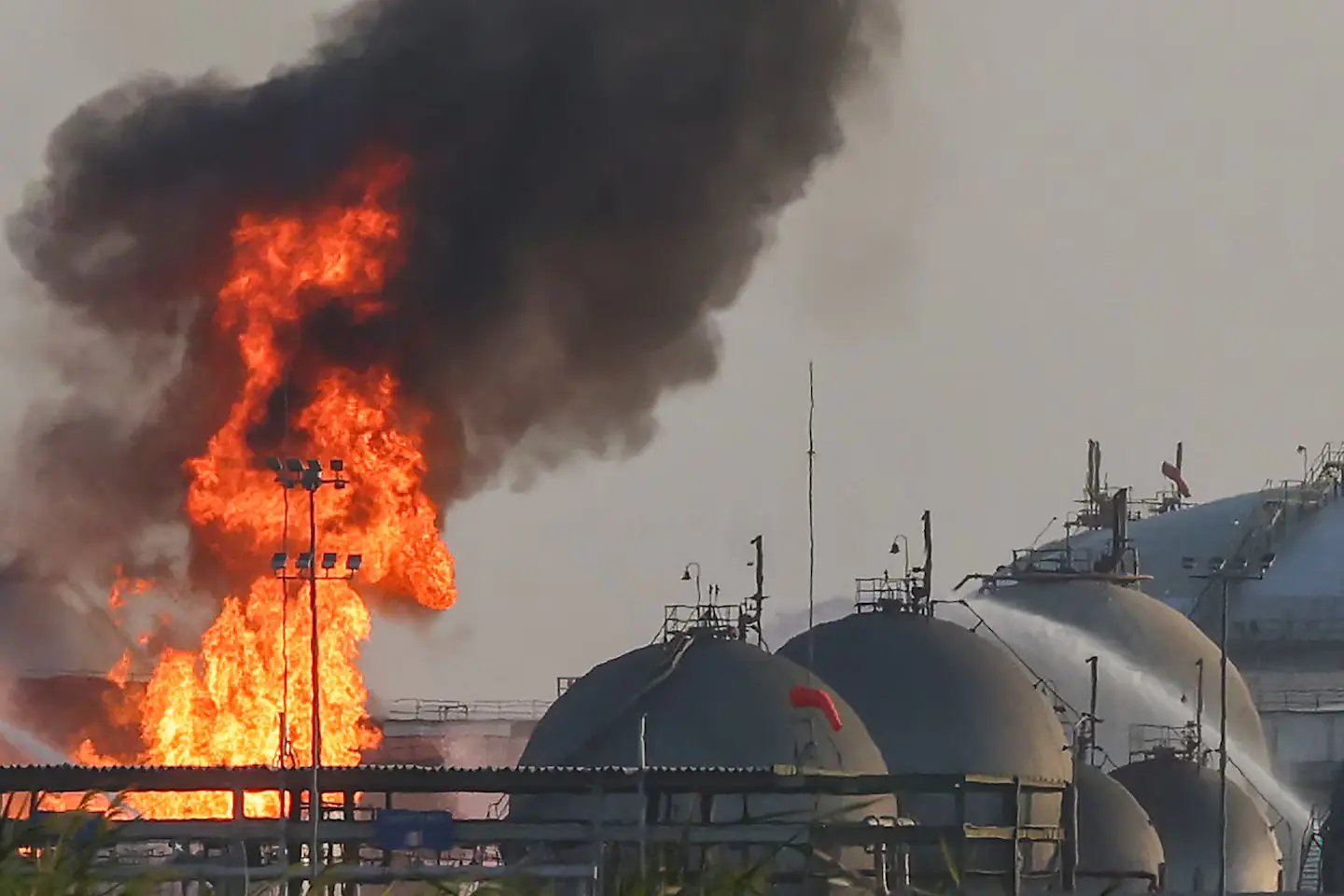
Yemen’s Houthi rebels have intensified attacks on Saudi Arabia. As of October 12, 2026, reports indicate that 16-17 people have been killed in Houthi attacks targeting Saudi airports over the past week, with several more injured. An Indian national is also among those killed in these attacks.
This raises a crucial question – Will Pakistan come to Riyadh’s defence under the Mecca Agreement, or will its commitment to collective security remain largely on paper?
The question has become urgent following deadly missile and drone attacks on Saudi locations, including Riyadh’s King Khalid International Airport. The attacks on October 10 and 11, 2026 highlighted the growing threat to Saudi civilian infrastructure.
The answer now depends on how Saudi Arabia, Pakistan and Türkiye interpret and implement their newly signed defence arrangement.
What is the Mecca Agreement
The Mecca Joint Defence Agreement, signed on August 7, 2026, by Saudi Crown Prince Mohammed bin Salman, Pakistani Prime Minister Shehbaz Sharif and Turkish President Recep Tayyip Erdoğan, establishes a framework for collective defence among the three countries.
Its central principle is that an armed attack against one member shall be regarded as an attack against all three. The agreement seeks to strengthen military cooperation, deter aggression and coordinate responses to security threats. Pakistan describes the pact as defensive rather than an instrument for attacking another country.
However, Pakistan and Türkiye haven’t yet offered any support to Saudi Arabia as it faced attacks from Iran, and now Iran’s proxy Houthis.
Will Pakistan come to Saudi Arabia’s aid
Following an emergency meeting in Riyadh on October 5, the three countries agreed to implement their collective-defence commitments practically, including providing agreed military forces and capabilities for rapid deployment in Saudi.
On October 9, Pakistan’s Foreign Office confirmed that Pakistani forces and resources were already present in Saudi Arabia. However, it rejected reports that Pakistani fighter jets were conducting cross-border airstrikes against the Houthis, reiterating that the alliance was defensive and would not send its forces across the border into Yemen to launch attacks.
This distinction is important. Pakistan could support Saudi Arabia through air defence, intelligence sharing, military logistics, training and the protection of critical infrastructure without directly entering the war in Yemen. However, it is choosing not to provide any direct support as of now.
Islamabad faces a difficult balancing act. It has longstanding defence and economic ties with Saudi Arabia, while it shares the border with Iran. A direct offensive campaign against the Houthis could widen the conflict and create additional diplomatic and security complications.
Türkiye, the third signatory, has also indicated that its support would focus on defence rather than offensive operations in Yemen.

