
India spends thousands of crores conducting elections. Thousands of government officials are deployed, electronic voting machines are transported, security personnel work overtime, and millions of voters queue up to choose their representatives. Political parties spend months campaigning, Parliament debates laws, and governments are formed after an exhausting democratic process.
But seriously, why put ourselves through all this trouble? We have Abhijeet Dipke and Saurav Das! Why not simply hand them the keys to South Block, give them access to the Prime Minister’s Office and let them decide everything? Think of the money we could save!
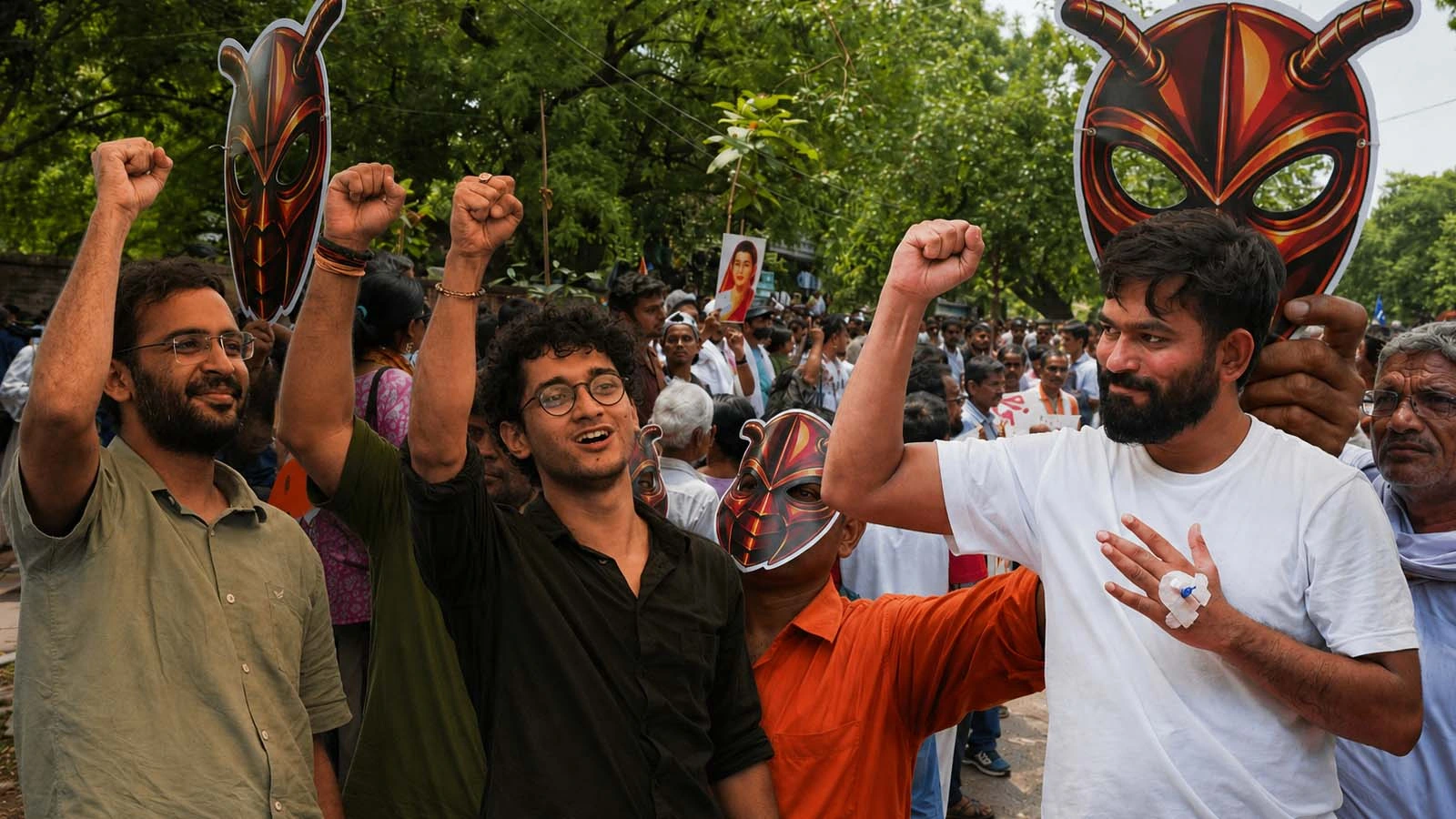
The two leaders of the Cockroach Janta Party (CJP) have demanded the resignation of Chief Election Commissioner Gyanesh Kumar, a halt to the Special Intensive Revision (SIR) of electoral rolls, an independent inquiry, and changes to the law governing the appointment of Election Commissioners.
Clearly, India needs to rethink its entire system of governance. Why should decisions require elections, parliamentary debates, consultations and legal procedures when a press conference can communicate demands much faster?
Need to change the economic policy? Ask Dipke. Need to decide India’s foreign policy? Consult Das.
Need to reform agriculture, education, taxation or defence? No need for committees, experts or parliamentary discussion. Just call a press conference, issue an ultimatum and demand somebody’s resignation. Governance has never been easier!
And imagine the savings. No election rallies, no campaign vehicles, no ballot arrangements, no counting centres. The Election Commission could perhaps be converted into a customer-service department handling complaints from whoever disagrees with the latest decision.
Naturally, there would be no need to ask 1.5 billion Indians what they think. That sounds terribly inefficient when two people can presumably figure everything out for everyone.
There is, however, one tiny technical problem – India is a democracy, not a housing society where the loudest resident gets to become chairman.
Activists have every right to question institutions, demand accountability and campaign for electoral reforms. Their criticisms can be valuable, and governments must answer legitimate questions. But making demands is not the same as receiving a public mandate to govern.
If Dipke and Das believe they have a better system for India, they can present their ideas to voters and seek their support. That is what elections are for.
Until then, perhaps we should resist the temptation to replace the world’s largest democratic exercise with a permanent press conference.
Because saving money is important, certainly. But saving money by eliminating the public’s right to choose its government is rather like saving money on a house by removing the foundation.
So, why bother with elections? Let Dipke and Das decide everything! And when something goes wrong, we can always organise an election to find out who authorised the experiment.
Oh, wait. We would have abolished those too!

