
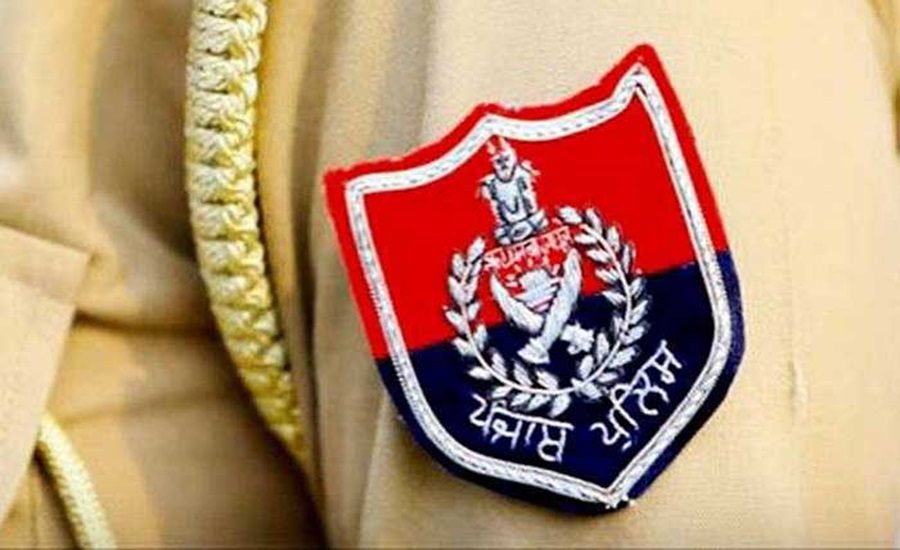
Punjab’s deteriorating security landscape entered a more dangerous phase in 2026 with the targeted killing of three Punjab Police personnel in two separate incidents – a pattern that security agencies increasingly view not merely as criminal violence, but as a calibrated attempt to intimidate the state apparatus itself.
Although Punjab has witnessed a series of targeted killings, grenade attacks, narcotics smuggling, and gang violence over the past decade, direct attacks targeting serving Police personnel represent a qualitatively different challenge aimed at undermining the authority and morale of the state.
In the early hours of May 24, 2026, Punjab Police Assistant Sub-Inspector (ASI) Joga Singh, posted in the Traffic Wing, was shot dead in a targeted attack near Majitha in Amritsar district, while travelling to duty on his scooter.
Shortly after the killing, social media handles linked to the little-known Tehreek-e-Taliban Hindustan (TTH) released posters claiming responsibility and warning of further attacks on the Police, Army, and intelligence personnel.
The group’s so-called Al-Burq Brigade threatened additional executions and warned government officials to resign “if they want to live.” On May 27, 2026, TTH-linked social media accounts circulated video footage of the attack, showing motorcycle-borne assailants shooting the officer – footage that closely matched images earlier released in the group’s claim of responsibility.
On February 22, 2026, two Policemen – ASI Gurnam Singh and Home Guard Ashok Kumar – were shot dead in an attack on the Adhian Police Outpost in Gurdaspur district, located in a highly sensitive sector near the International Border. As in the Majitha attack, TTH claimed responsibility, while Pakistan-based gangster Shahzad Bhatti amplified the incident by circulating videos of the attack and related propaganda through social media networks.
Police investigations later revealed that three local youths had allegedly been hired for a small amount of money to carry out the killings under the direction of Pakistan’s Inter-Services Intelligence (ISI). Two accused were arrested, while the third was killed in an encounter with the Police.
While Punjab Police officials have questioned the authenticity of TTH as a structured organisation, intelligence sources suspect it functions as a “pseudo-identity” or psychological warfare platform created by Pakistani handlers to mask coordinated modules operating under ISI’s direction. The adoption of a name resembling Tehreek-e-Taliban Pakistan (TTP) appears intended to maximise psychological impact against India, create confusion within Indian security institutions, and undermine the morale of security personnel as well as the general public.
These Police killings form part of a broader wave of violence in Punjab. Since September 2024, the state has witnessed more than 30 grenade attacks and explosions, most targeting Police stations, security establishments, or symbols of state authority. Although casualties in many of these incidents were limited, the strategic messaging was clear: to project the state as vulnerable and incapable of maintaining order. The shift from symbolic grenade attacks to targeted assassinations of Police personnel indicates a calibrated escalation in tactics.
The direct targeting of Police personnel is strategically significant, as it challenges the state’s coercive apparatus directly while seeking to demoralise the force, deter operational effectiveness, and project a sense of impunity. In a state already grappling with drug addiction, youth radicalization, and gang violence, such attacks risk undermining trust in governance. Public perception of deteriorating law and order can exacerbate political polarization and create space for separatist narratives.
Historically, Punjab has witnessed devastating attacks on Police and security forces. During the Khalistani insurgency of the 1980s and early 1990s, more than 1,700 Police personnel were killed as militants systematically targeted state institutions; Police stations, officers, informers, and political representatives became primary targets. Even after the decline of militancy, major attacks such as the 2015 Dinanagar Police Station assault, which killed four Policemen, and the 2016 Pathankot Air Force Station attack, which resulted in the deaths of seven security personnel, underscored the continuing vulnerability of security installations. However, these incidents were discrete, high-profile operations carried out by identifiable terrorist formations involving trained militants.
Punjab’s security environment has been further strained by radicalisation trends following the 2023 confrontation involving Amritpal Singh and his supporters. The storming of a Police station by armed followers, using religious symbolism to pressure authorities, became a turning point in Punjab’s radical ecosystem, amplifying online extremist narratives and influencing vulnerable youth.
The current threat landscape in Punjab is increasingly hybrid, with gangsters, smugglers, separatists, and foreign handlers – often linked to pro-Khalistan networks and supported by Pakistan – operating through interconnected ecosystems rather than as isolated actors. This convergence poses significant security risks. Repeated attacks on Police personnel can erode morale, particularly in border regions already affected by narcotics trafficking and drone-based smuggling. Simultaneously, extremist branding and propaganda may encourage copycat violence by criminal networks, while Pakistan-linked social media campaigns amplify fear and project perceptions of instability disproportionate to the actual scale of violence.
The recent Police killings are not isolated acts of violence, but strategic signals within an evolving proxy conflict. Without comprehensive countermeasures addressing both the operational and psychological dimensions of the threat, Punjab risks becoming a testing ground for Pakistan’s next-generation proxy warfare strategy.
Author Nijeesh N – Research Associate; Institute for Conflict Management

