
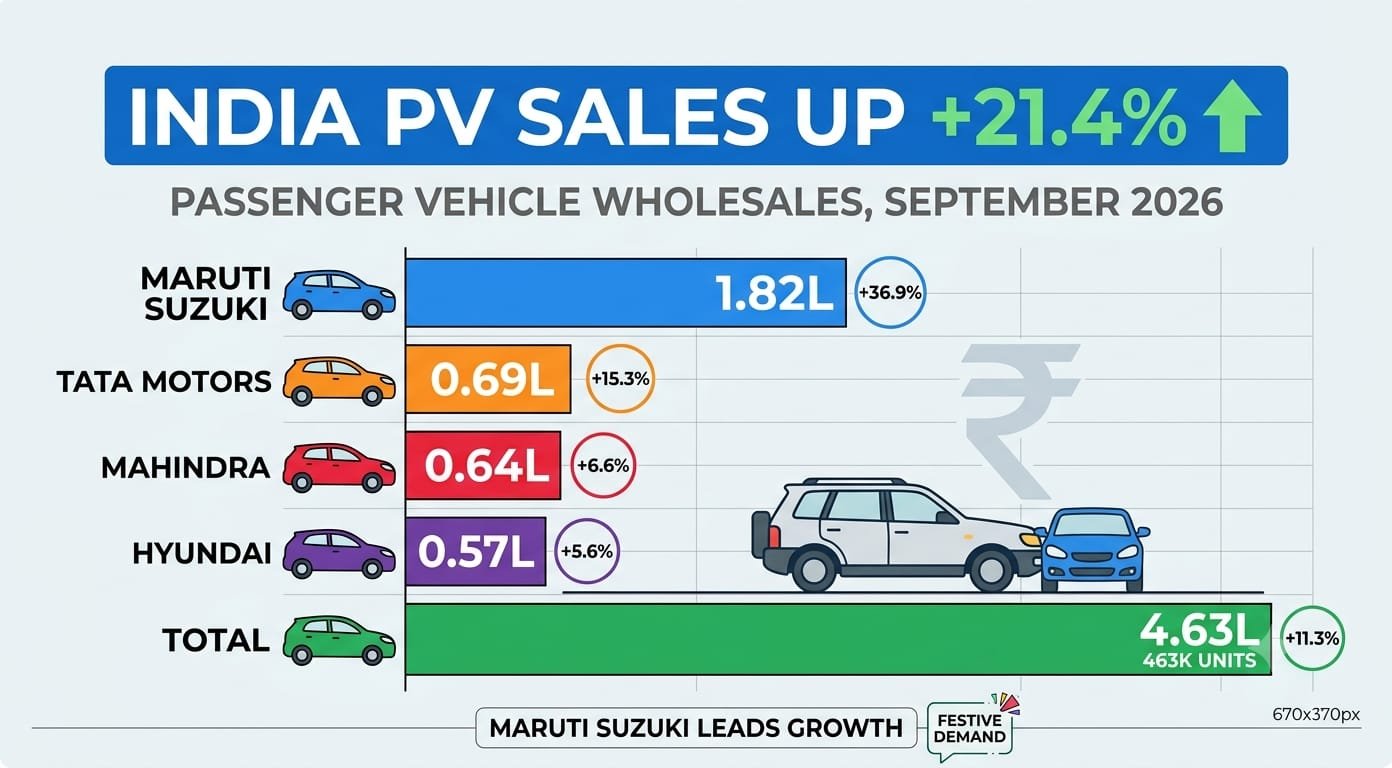
India’s passenger vehicle market recorded strong growth in September 2026. Domestic wholesales reached 4,63,081 units, compared with around 3.78 lakh units in September last year. This represents a year-on-year increase of 21.4%, showing that demand for cars and sports utility vehicles remained firm during the month.
The growth was visible across the country’s leading carmakers. Maruti Suzuki continued to remain the largest player in the market and recorded the strongest increase among the major companies. Its domestic passenger vehicle wholesales stood at 1,81,838 units in September, compared with 1,32,820 units in the same month last year. This marked a growth of 36.9%.
The rise in Maruti Suzuki’s sales was supported by demand for small cars and other popular passenger vehicle models. For many households, easier access to finance, better availability of vehicles and improved affordability have supported the decision to purchase a new car.
Tata Motors Passenger Vehicles remained in the second position during the month. The company recorded domestic wholesales of 68,810 units, compared with 59,667 units in September last year. Its sales increased by 15.3%. Tata Motors continued to receive attention for its SUV range, hatchbacks and electric vehicles. The company’s passenger vehicle numbers also included electric vehicle sales, reflecting the growing presence of electric mobility in the Indian market.
Mahindra and Mahindra reported domestic passenger vehicle sales of 64,092 units in September. The company recorded a year-on-year growth of 14%. Mahindra’s performance was largely supported by continued demand for its utility vehicles and SUVs. Buyers in both urban and rural markets have shown increasing interest in vehicles that offer more space, stronger road presence and better suitability for long-distance travel.
Hyundai Motor India recorded domestic sales of 57,166 units during the month. The figure was 10.9% higher than the 51,547 units sold in September last year. Hyundai also reported strong total sales, including exports. Its performance showed that demand remained steady across hatchbacks, sedans, SUVs and other vehicle categories.
The September numbers indicate that India’s passenger vehicle market is operating at a much stronger level than it was a year earlier. The market also benefited from the festive buying period, fresh model launches and improved customer sentiment.
The GST reform helped reduce the tax burden on several vehicle categories, making some models more affordable for buyers. The effect was visible in the overall demand environment, especially as manufacturers and dealers adjusted prices and promotional offers.
The latest figures also show that the market is not dependent on only one company. Maruti Suzuki delivered the sharpest growth, but Tata Motors, Mahindra and Mahindra, and Hyundai also posted double-digit increases. This broad-based performance suggests that consumers are considering a wider range of products before making a purchase.
The September performance is important for the automobile industry because vehicle sales influence a large network of businesses. Component manufacturers, dealers, transport companies, finance providers, service centres and insurance companies are all connected to the passenger vehicle sector. When demand improves, activity can increase across this entire chain.
The strong wholesale numbers also create a positive starting point for the coming months. With festive demand, new launches and increasing interest in SUVs and electric vehicles, the passenger vehicle market is expected to remain an important part of India’s consumption story.
The September data presents a clear picture: passenger vehicle demand is expanding, leading companies are growing together and the automobile sector is showing renewed strength.

