
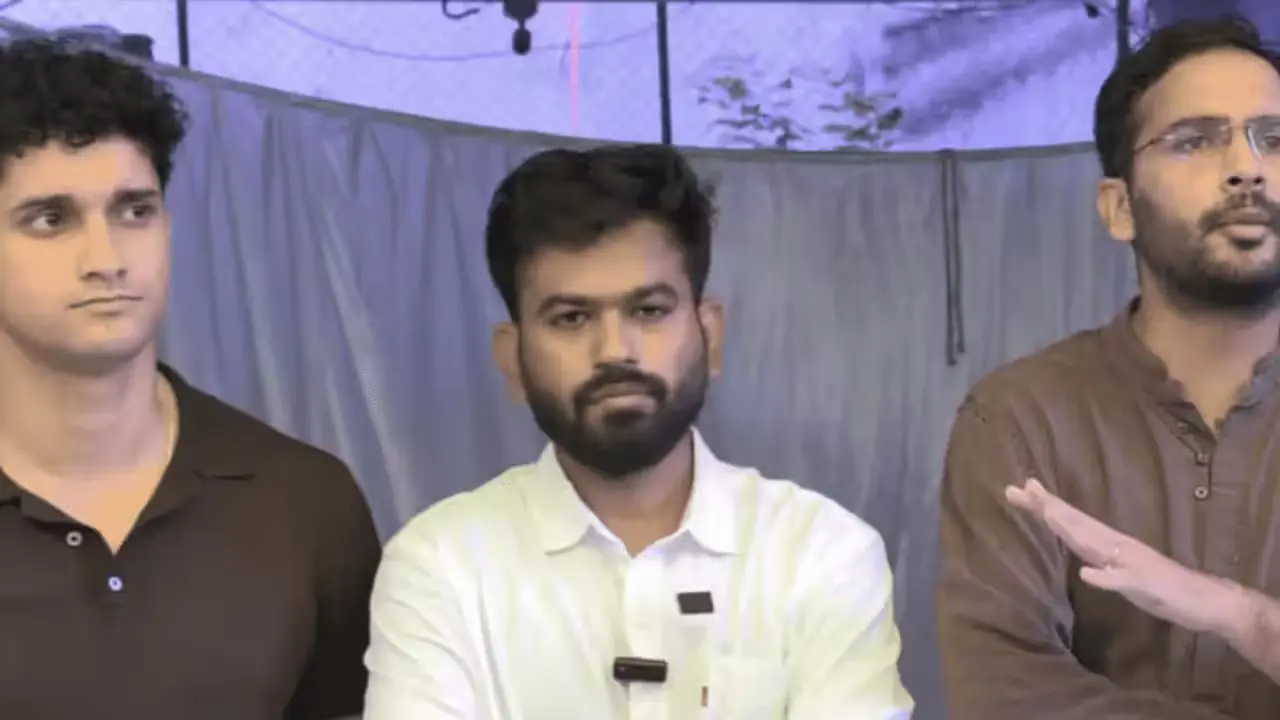
In a landmark move to simplify India’s democratic process, the government is considering cancelling Parliament’s upcoming Winter Session and forwarding all proposed bills directly to Abhijeet Dipke and Saurav Das for their final approval. The proposal, if implemented, could save taxpayers considerable money on parliamentary proceedings, provided the nation is also prepared to do away with the small inconvenience of having elected representatives make decisions.
Why spend crores of rupees bringing MPs to Delhi, arranging debates, conducting votes and maintaining parliamentary records when two individuals can apparently perform the same function from their preferred political commentary platforms? After all, what is the point of 543 elected representatives when every policy decision can be subjected to the approval of two self-appointed guardians of Indian democracy?
Under the proposed arrangement, every bill would first be sent to Dipke and Das. The Finance Bill would require their clearance, the defence budget would await their verdict, and even routine amendments would remain pending until the two had finished explaining why the government was either destroying democracy or failing to save it.
Sources familiar with this imaginary reform suggest that the arrangement would dramatically improve efficiency. Parliament currently requires hours of debate, committee scrutiny and voting. Under the new system, a bill could be approved or rejected within minutes, depending on how viral an Instagram post is or how many views a YouTube video has. Simplicity.
The system would also eliminate the tiresome practice of listening to opposing arguments. Why allow ministers, opposition MPs, economists, legal experts and affected citizens to participate in the legislative process when the correct interpretation can supposedly be established beforehand?
Of course, there would be some practical complications. What happens if Dipke approves a bill but Das rejects it? Would the government need a special session to resolve the disagreement? Would the country require a chief commentator to break the tie? Perhaps a joint press conference could be held, followed by a detailed explanation of why the other person misunderstood the issue.
There is also the question of accountability. Elected MPs face voters, political parties face elections, and governments can be removed by the public. But who exactly would voters approach if the new approval system went wrong? Would there be an election for the position of Supreme Political Commentator?
These are minor details, of course, apparently, in an age when expressing an opinion has increasingly been confused with exercising constitutional authority.
Parliament is not merely a building where politicians gather to deliver speeches. It is the institution through which elected representatives debate laws, scrutinise the executive and represent millions of citizens with competing interests.
If the Winter Session can simply be cancelled because two commentators are considered sufficient to judge every government decision, perhaps the next logical step is to cancel elections as well.
After all, why ask millions of Indians to vote when two people could presumably tell them what the country needs?
And think of the savings. No rallies, no ballot boxes, no counting centres. Just two approval stamps and a nation waiting for its next political verdict.

