
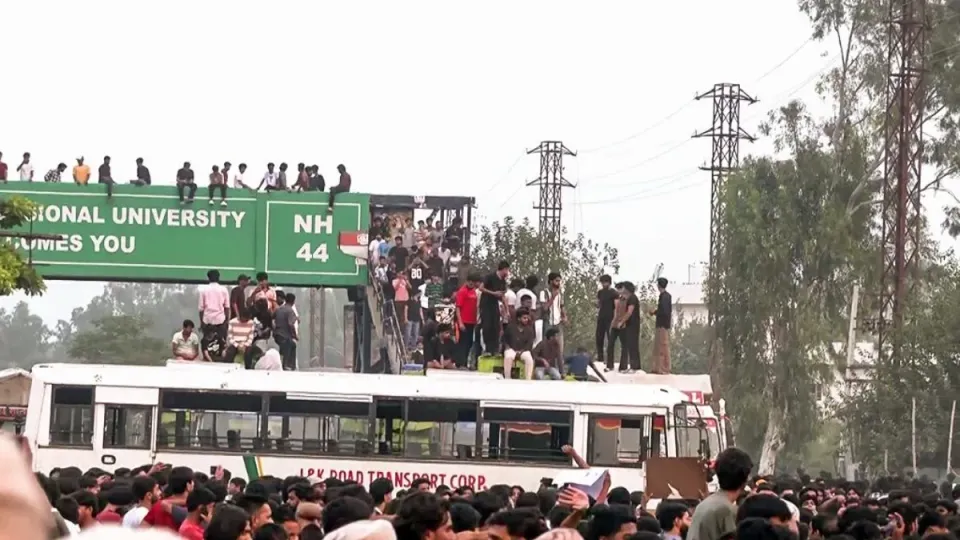
The violence at Lovely Professional University has brought a question back into public debate, how much access should outsiders have to places where young people study and live? There have been allegations floating around that outsiders entered the University campus and indulged in violence and vandalism of the property.
Even Cockroach Janata Party founder Abhijeet Dipke shared a post on X along similar lines. Dipke posted, “How were outsiders able to enter the university and create havoc? Many female students have spoken about feeling unsafe and scared because of the presence of these outsiders. Students’ safety and security cannot be compromised. Punjab Police must investigate and answer how this happened.”
Many are blaming the students, but it was outsiders who entered LPU and created chaos on campus.
How were outsiders able to enter the university and create havoc? Many female students have spoken about feeling unsafe and scared because of the presence of these outsiders.… pic.twitter.com/Is91EbGNBe— Abhijeet Dipke (@abhijeet_dipke) September 28, 2026
While the developments at LPU remain under investigation, this has hopefully made Cockroach Janata Party and Abhijeet Dipke realise why people oppose the unauthorised entry of outsiders inside schools. No matter which educational institution it is, they are supposed to be safe spaces for students, and the entry of outsiders puts their safety in jeopardy.
Notably, protests erupted in LPU after allegations circulated that a female student had been sexually assaulted by an outsider. Police registered an FIR against an unidentified person and constituted a Special Investigation Team, while the university has denied that the alleged assault took place on campus and described the claims as false and fabricated. The police are examining CCTV, forensic and phone evidence.
What has made the situation even more concerning is the question of outsiders entering the campus during the unrest. Punjab Police have said they are examining the possible involvement of outsiders, and walkie-talkies were reportedly recovered. More than 2,000 police personnel were subsequently deployed around the university.
None of this establishes that outsiders caused the violence. That remains a matter for investigation. But it does illustrate why controlled access to educational campuses is a legitimate safety concern.
And this is where the debate over the Cockroach Janata Party’s “School Thik Karo” campaign becomes relevant.
CJP workers have been seeking access to government schools to conduct their own inspections and document infrastructure problems. In Rajasthan, the government subsequently restricted outsider entry without permission from the principal and also regulated photography, videography and recording involving students.
The party has challenged such restrictions politically, arguing that citizens should be able to expose deficiencies in public schools. There is certainly a legitimate public-interest question in ensuring that government schools have functioning toilets, classrooms, drinking water, teachers and safe infrastructure.
A school is not simply another government building. It is a place where children spend their day. Parents reasonably expect strangers, political activists, journalists, campaigners and other visitors to be subject to rules governing entry, photography, interaction with children and collection of personal information.
The LPU episode makes that principle even more difficult to dismiss. If authorities and universities are expected to know who is entering a campus during a period of tension, the same basic principle can apply to schools.
The irony is difficult to miss. When outsiders potentially entering a university campus become a security concern, the concern is understandable. The same concern should not suddenly disappear when the institution is a government school.
CJP can demand accountability. It can document complaints through lawful channels, approach education authorities, speak to parents and seek official inspections. But a political campaign does not, by itself, create statutory inspection powers.

