
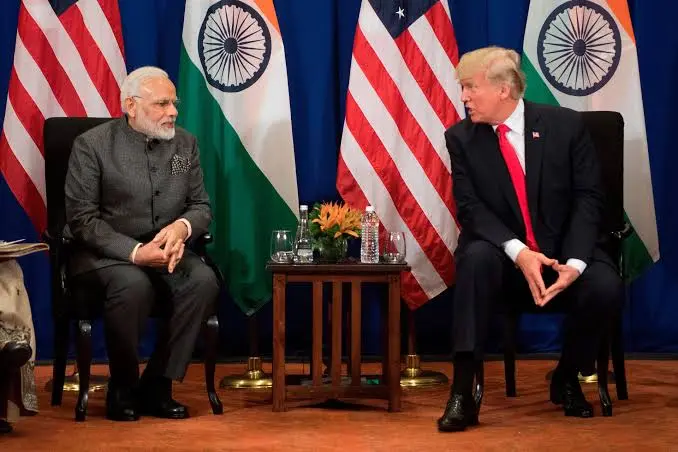
India has made it clear that its energy security will remain a core national priority, even as a new US sanctions law creates fresh pressure over its purchase of Russian oil. Responding to the passage of the Lindsey O. Graham Sanctioning Russia and Iran Act of 2026, the Ministry of External Affairs (MEA) said India would continue securing energy for its 1.4 billion people through diversified sources and according to changing global market conditions.
Our statement on passage of the Sanctioning Russia and Iran Act in the US Congress
🔗 https://t.co/kD0Yg9sWbU pic.twitter.com/rSc21AqwEh— Randhir Jaiswal (@MEAIndia) September 17, 2026
The statement came after the US House of Representatives passed legislation that gives President Donald Trump the authority to impose tariffs of up to 100% on countries purchasing Russian oil and gas. India and China are among the major buyers potentially exposed to the measure. The bill now awaits Trump’s signature.
New Delhi’s response once again places the availability and affordability of energy at the centre of India’s position. India imports a large share of its crude oil requirements, making access to reliable and competitively priced supplies critical for transportation, industry, manufacturing and household consumption. India has repeatedly said since the Russia-Ukraine war started that energy security for Indians remains its top priority and it will procure crude oil and natural gas from wherever it gets the best deal.
The MEA said the issue had already been discussed at senior levels with US interlocutors in recent months. India has conveyed that the possible consequences are not limited to bilateral relations but could also affect the international energy market.
MEA also said that India will protect its trade and economic interests. It said the government would work closely with Indian trade and industry bodies to deal with the implications of the new developments.
The MEA specifically highlighted diversified sourcing, indicating that India’s approach is to keep multiple supply channels open while responding to market conditions. Indian refiners have already been looking at additional supplies from countries including the US, Brazil, Canada, Venezuela and African producers.
The MEA’s response therefore underlines a straightforward principle, that India’s energy decisions will be guided by national interests, market realities and the need to secure affordable energy for its people.

