
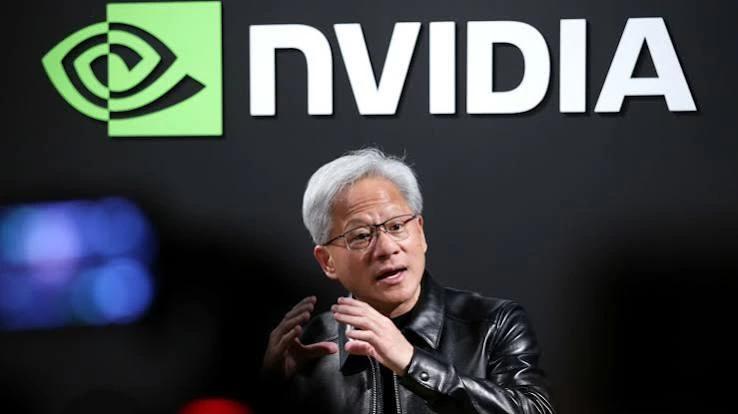
The controversy surrounding Nvidia and its CEO Jensen Huang has the potential to become much bigger than a story about an alleged affair. At its heart lies a far more disturbing question that how deeply has China penetrated the technology ecosystem of the United States, particularly industries working on the most strategically important technology of our times – Artificial Intelligence.
Reports surrounding an alleged relationship between Huang and a Chinese woman identified as Alice Huang have drawn attention to possible espionage concerns. The allegations have raised questions about whether personal relationships, social networks and business interactions can become instruments for gathering sensitive information about American technology companies.
Nvidia is not an ordinary technology company. Its graphics processing units (GPUs) power some of the world’s most advanced AI systems, data centres and supercomputing infrastructure. Its chips have become central to the global AI race, making the company strategically important to Washington and a major target of Beijing’s technological ambitions. The company is now worth trillions of dollars due to its expertise.
The latest reports make the controversy even more serious. According to a report by The Information, cited by Reuters, Alice Huang allegedly used her connections with Nvidia and its distributors to facilitate shipments of at least $7.5 billion worth of chips to Chinese companies. The report claims that approximately 240,000 advanced chips, including H100 and H200 processors, were moved into China through a network of companies.
This is precisely where the espionage angle becomes critical. Chinese intelligence operations have long been accused of exploiting business relationships, academic collaborations, corporate networks and personal connections to obtain commercially and strategically valuable information. In the semiconductor industry, even seemingly routine conversations can potentially reveal information about supply chains, product roadmaps, customers and technology development.
The United States has increasingly treated semiconductor technology as a national security issue, imposing restrictions on exports of advanced AI chips to China. If allegations that commercial networks were used to circumvent these restrictions prove true, the implications could extend far beyond Nvidia.
The controversy has already prompted Nvidia’s board to commission an independent investigation. The FBI is also reportedly examining the matter, while American lawmakers are seeking answers from Huang.
Beijing, meanwhile, has rejected the espionage allegations as unsubstantiated.
But one lesson is already evident, the battle for technological supremacy is no longer being fought exclusively in laboratories, boardrooms or government offices. It may also involve personal networks, corporate intermediaries and intelligence operations.
The Nvidia controversy, therefore, is not simply a story about a CEO’s alleged affair. It is a warning about how economic espionage could intersect with the global AI race, and how vulnerable even the world’s most powerful technology companies can become when national security and personal relationships collide.

