
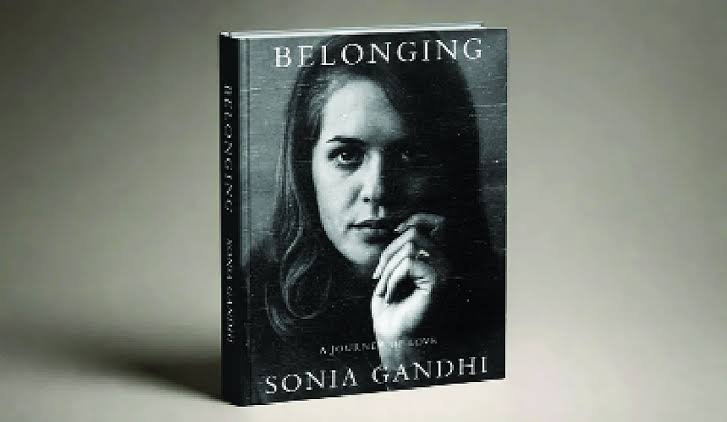
Sonia Gandhi’s newly released memoir, Belonging: A Journey of Love, promises readers an intimate account of her extraordinary journey from a small town in Italy to the centre of India’s most powerful political dynasty. But beneath the packaging of love, loss, sacrifice and belonging lies a rather familiar exercise in political image management. The book appears less interested in confronting the Nehru-Gandhi family’s troubled political legacy than in offering a sympathetic reinterpretation of its most controversial chapters.
The painfully long (at least the writer of this article thought so) memoir has plenty of room to explore history. Yet, when it comes to some of the darkest episodes associated with the Congress establishment, the narrative seems remarkably convenient.
Take the Emergency of 1975. Indira Gandhi’s decision to suspend civil liberties, jail opposition leaders, censor the press and undermine democratic institutions remains one of the darkest chapters in independent India’s history. Sonia Gandhi acknowledges that the Emergency was a mistake but suggests that much of the subsequent damage could have been avoided had Sanjay Gandhi been kept in check. The monumental assault on Indian democracy under Indira Gandhi was diverted to Sanjay? The responsibility, after all, rested with the Prime Minister who imposed it.
Then comes the question of the 1984 anti-Sikh riots. Following Indira Gandhi’s assassination, thousands of Sikhs were killed in organised violence across Delhi and other parts of the country. Rajiv Gandhi’s infamous remark about the earth shaking when a big tree falls became emblematic of the insensitivity that followed the carnage. In her memoir, Sonia describes the riots as a tragic and shameful chapter but insists that Rajiv Gandhi harboured no bigotry and was thrust into a situation where governance had broken down.
That may be her personal assessment of her husband. But it does little to address the larger questions surrounding the political establishment’s failure to prevent the killings, the alleged involvement of Congress leaders and the long struggle for justice. Personal affection cannot substitute for historical accountability.
The Bofors scandal is another uncomfortable chapter. The controversy surrounding alleged kickbacks in the Swedish howitzer deal during Rajiv Gandhi’s premiership damaged the credibility of his government and became a defining political issue of the late 1980s. The BJP has specifically accused Sonia Gandhi of remaining silent on Bofors while attempting to sanitise the family’s political record.
Her treatment of the Babri Masjid demolition, Operation Blue Star and other contentious political episodes has also invited criticism. The BJP argues that the memoir selectively revisits history to reinforce a particular political narrative while avoiding uncomfortable questions about Congress’s own conduct. Congress, naturally, has dismissed the criticism as an attempt to politicise a personal memoir.
There is also an interesting backstory to the book’s publication. Penguin Random House India initially withdrew from the project after disagreements over proposed editorial changes and deletions. HarperCollins subsequently took over its Indian publication. Reports suggested that some disputed passages concerned references to Narendra Modi, the RSS and contemporary political developments. The episode raises questions about how much editorial freedom was available to the publisher.
Of course, Sonia Gandhi is entitled to tell her story from her own perspective. A memoir is not a judicial inquiry, nor is an author obliged to write a prosecution brief against her own family. But when the author belongs to a dynasty that has dominated Indian politics for decades, personal recollections inevitably become part of the country’s political history.
The Nehru-Gandhi family has enjoyed enormous political privilege and influence. Its legacy deserves neither automatic vilification nor unconditional reverence. It deserves scrutiny.
And that is precisely what makes Belonging a missed opportunity. Instead of offering an unvarnished reckoning with the family’s triumphs, failures and controversial decisions, the book is an elaborate exercise in reputation management.
India does not need another carefully curated account of the Gandhi family’s greatness. It needs an honest account of its mistakes. History cannot be rewritten through nostalgia, and a memoir, however emotional, cannot whitewash the past.

