
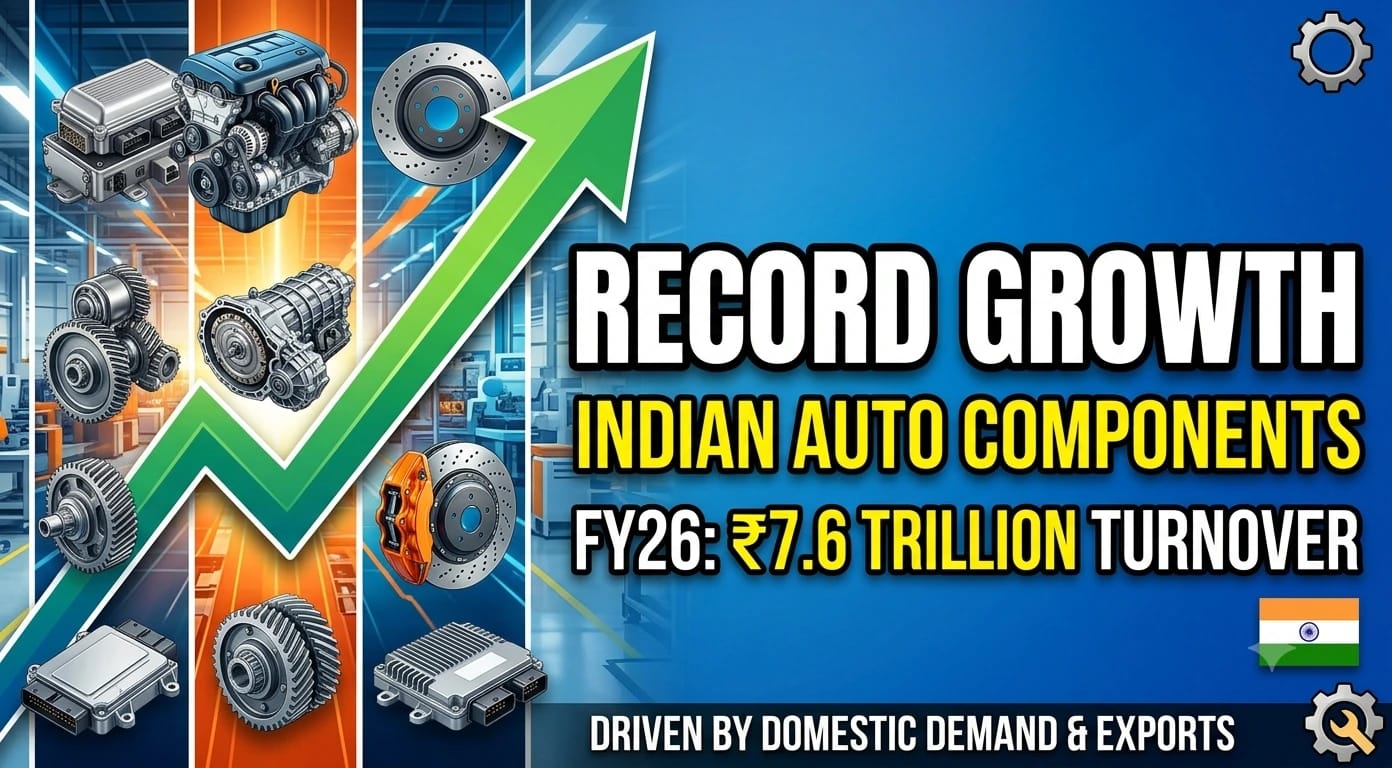
The auto component industry is expected to record strong growth in FY26, with turnover reaching about ₹7.6 trillion. This growth is being supported by rising demand from vehicle makers, better exports, and a gradual improvement in business confidence.
The sector has stayed resilient even after many changes in the global economy, and that has made it an important part of the wider manufacturing base.
In simple terms, the industry is moving forward because vehicles still need parts, upgrades, and regular replacement cycles, and this creates steady business for manufacturers.
A major reason behind this improvement is the healthy demand from original equipment manufacturers, often called OEMs. These are the companies that make cars, two-wheelers, trucks, and other vehicles.
When vehicle production grows, the demand for parts such as engines, electronics, brakes, suspension systems, and body components also rises. This creates a chain effect in the market. As more vehicles are made and sold, more component makers get orders, and that helps increase revenue.
The relationship between vehicle makers and component suppliers is therefore very close and very important.
Exports are also playing a strong role in the sector’s growth. Many auto component makers are sending products to foreign markets, especially as global supply chains become more stable.
This gives companies a chance to reach more customers and reduce dependence on one market alone. A better export environment also helps firms improve production quality, because global buyers usually expect high standards. In this way, export growth does not just increase sales, it also raises the overall strength of the industry.
Technology is another key factor. The auto component sector is changing quickly because vehicles are becoming more advanced. Electric vehicles, digital systems, safety features, and smart parts are creating new business opportunities. This means that component makers cannot depend only on old products.
They need to invest in research, design, and new manufacturing methods. Companies that upgrade their skills and production systems are more likely to stay competitive. This shift is especially important because modern vehicles need parts that are lighter, smarter, cleaner, and more efficient.
Another important point is the role of domestic manufacturing.
The sector is not only serving local vehicle makers but also building stronger local production capacity. This matters because a strong manufacturing base can support jobs, investment, and industrial growth. When parts are made locally, businesses can respond faster to market needs and reduce dependence on imports. It also helps create a stronger ecosystem where suppliers, producers, engineers, and logistics providers all work together.
At the same time, the industry still faces challenges. Raw material costs, changing demand patterns, and the need for constant innovation can create pressure on companies. The move toward electric mobility also brings both opportunity and uncertainty. Some traditional parts may become less important, while new categories of parts will grow.
This means that businesses must adapt carefully. Growth in this sector will depend not only on volume but also on the ability to match future vehicle technology.
The outlook for FY26 looks positive because the sector has several supports at once. Demand from vehicle makers is improving, exports are gaining strength, and companies are investing in new technologies. Such a combination is often a sign of stable growth. Still, long-term success will depend on how well the industry manages innovation, cost control, and global competition. The businesses that can balance these needs are likely to perform best.
In a broader sense, the auto component sector reflects the strength of manufacturing itself. When this industry grows, it often points to a healthier industrial economy. It also shows how connected modern production has become. A single vehicle depends on many parts, and each part depends on careful planning, skilled workers, and dependable suppliers. This makes the sector both complex and essential.
Overall, FY26 appears to be a promising year for auto component makers. Strong demand, better exports, and the move toward advanced technology are creating a favorable environment. The industry is not just growing in size; it is also changing in character. That change is important because future success will belong to companies that can combine reliability with innovation.

