
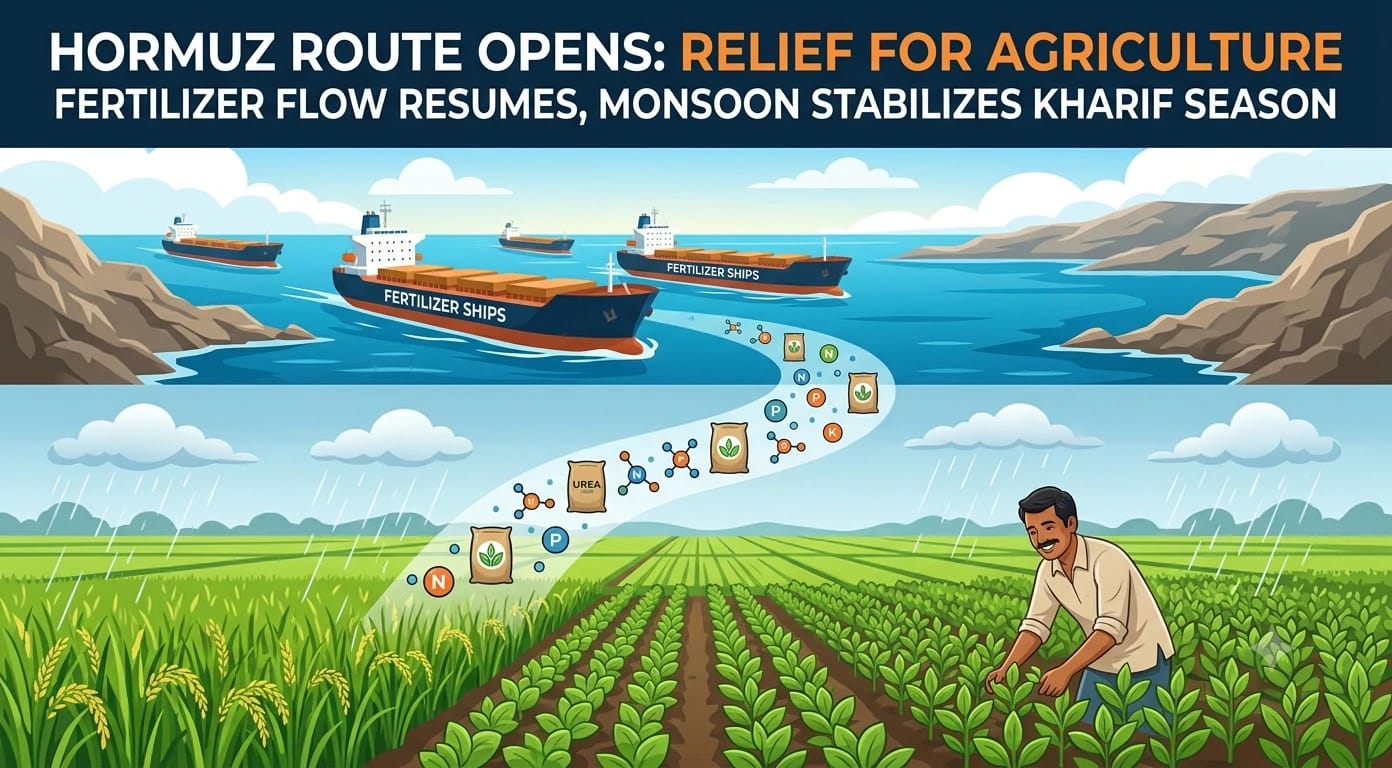
The year began with a lot of anxiety around the monsoon, because many people feared the El Nino pattern could weaken rainfall and hurt crop planning. Then the West Asia crisis added anxiety around Kharif sowing, as a lack of proper gas supply threatened fertilizer production. However, the current picture looks better than expected.
The rains have held up well in many areas, and that is important because good monsoon rain supports kharif sowing, which is the main crop season for many farmers. When rainfall is steady at the right time, farmers can sow on schedule, use inputs more confidently, and avoid the stress that comes with delayed planting.
The bigger relief is not only in the sky, but also in the supply chain. The government said 15 vessels carrying fertilisers and fertiliser inputs for the country have crossed the Strait of Hormuz after tensions between Iran and the United States eased.
These ships include cargoes of urea, di-ammonium phosphate, and sulphur, all of which are important for crop nutrition and for keeping farm activity smooth during the sowing period. Five more vessels are also expected to move soon, which suggests the overall flow of fertiliser supply is improving now after peace deal between US and Iran.
Why does this matter so much to a common household? Because fertiliser is one of those hidden things that affects the food on every plate. If fertiliser supply gets delayed, farmers may face trouble getting enough stock at the right time, and that can create pressure on crop output later.
When crop output comes under stress, food prices can rise, and that affects everyone, from rural families to city consumers. So when fertiliser shipments move normally, it is not just a trade story, it is a food security story too.
Earlier, there had been real concern because around 20 vessels carrying fertilisers and inputs for the country were reportedly stranded because of the conflict in West Asia.
The Strait of Hormuz is a critical route, so even a short disruption can create tension in the market and in government planning. Reuters reported that fertiliser shipments had started moving again after an interim deal eased the conflict, but also noted that it may take time before shipping fully returns to normal levels. That means the present improvement is encouraging, but not a reason to become careless.
The good news is that the government appears to have acted early. According to reports, domestic fertiliser production has been supported and stocks have been managed carefully to protect the sowing season.
That is important because the monsoon and fertiliser supply work like two sides of the same coin: if rainfall is good but fertiliser is missing, farmers still lose confidence; if fertiliser is available but rain fails, sowing also suffers. Right now, both sides are looking more balanced than they did a few weeks ago.
For farmers, the practical meaning is simple. They can enter the kharif season with less fear of an immediate shortage, and that supports timely sowing and better planning. For consumers, it may help reduce the risk of sudden price pressure later in the season.
And for policymakers, it is a reminder that agriculture depends not only on weather, but also on shipping routes, international tensions, and timely procurement. This is exactly why fertilizer management needs constant monitoring, especially during the monsoon months when demand is highest.
In simple terms, the story this season is one of partial relief. Rain has improved, sowing prospects are healthier, and fertilizer cargoes are moving again. The challenge now is to keep the supply chain steady so that this positive start turns into a stable harvest season.

