
A quiet but powerful change is moving through the passenger vehicle market. In June, alternative-fuel vehicles crossed the 40% mark for the first time, and that single number says a lot about how buying choices are changing in a market long shaped by petrol and diesel.
The shift is not just about new technology; it is also about the everyday pressure of fuel bills, running costs, and the search for more practical options. What once looked like a small change is now becoming a clear pattern, and the latest retail data shows that this pattern is gaining strength.
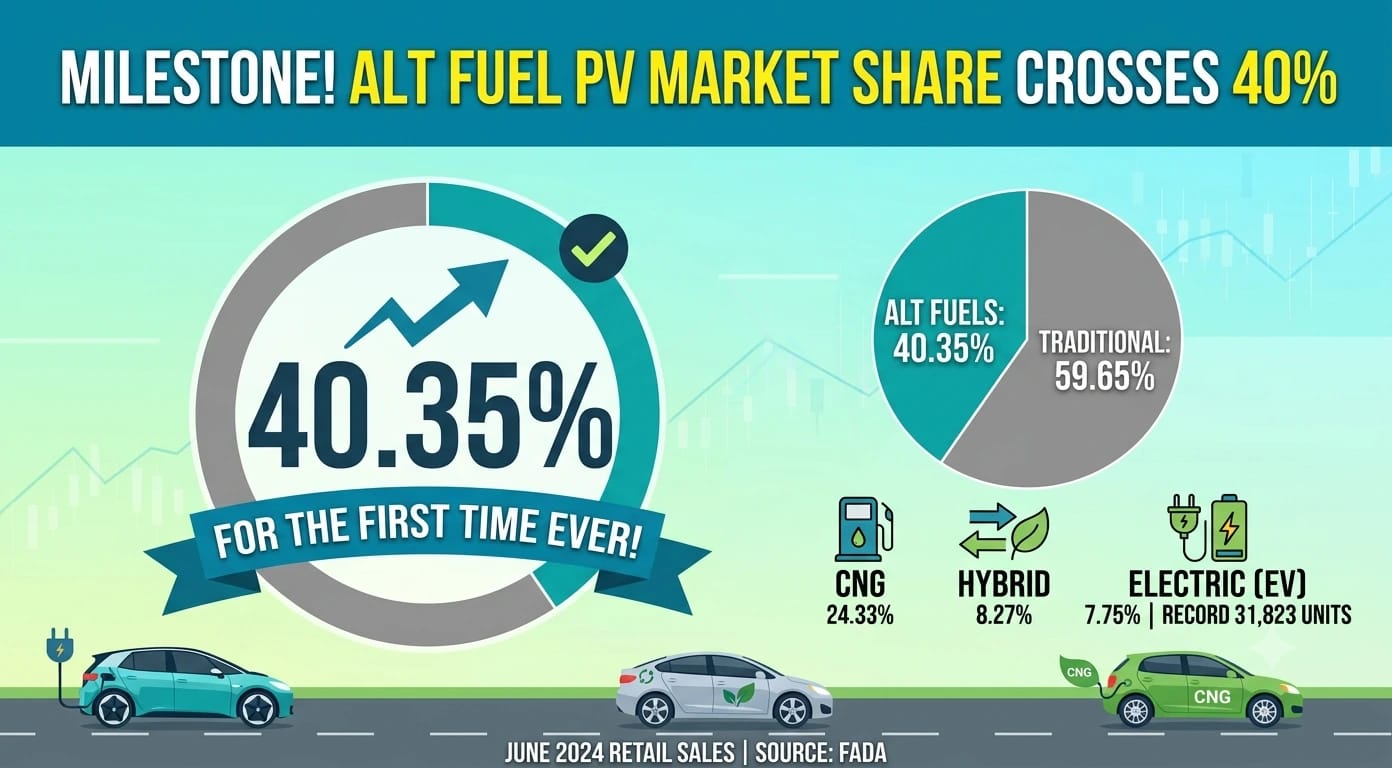
According to the Federation of Automobile Dealers Associations, alternative-fuel passenger vehicles, meaning CNG, hybrid, and electric models together, reached 40.35% of retail sales in June. This is the first time this category has gone beyond two-fifths of the market.
Within this group, CNG remained the strongest choice with a 24.33% share, which shows that many buyers still prefer a fuel option that feels familiar, economical, and easy to use in daily travel. Hybrids accounted for 8.27%, while electric vehicles rose to 7.75%, with EV retail sales touching an all-time high of 31,823 units. The message is simple: the market is no longer moving in one direction, but in several at once.
The figures also show a visible slide in petrol and ethanol-powered vehicles, whose share fell to 43.63% in June from 47.68% a year earlier. That does not mean petrol has disappeared from the market, but it does show that its once-comfortable dominance is being challenged more seriously than before.
Many buyers are now looking beyond the old formula of engine size and fuel type and paying more attention to the cost of ownership over time. In simple terms, the question is no longer only about buying a car, but about living with it every day without feeling a heavy cost burden.
The strongest driver behind this shift appears to be the appeal of lower running costs. When fuel prices rise, the search for value becomes sharper, and alternative-fuel vehicles gain attention more quickly. CNG has benefited the most because it offers a practical bridge between traditional cars and cleaner mobility.
Hybrids are also building space because they reduce dependence on fuel without asking buyers to change habits too sharply. EVs, meanwhile, are still in a smaller part of the market, but their growth is now visible enough to be taken seriously.
The larger auto market also had a strong month, which gives the fuel shift even more meaning. Passenger vehicle retail sales reached 410,853 units in June, the highest ever for that month, rising 28.63% year on year.
Overall auto retail sales across categories also touched a record 25.57 lakh units, showing that demand was firm even while the fuel mix was changing. This is important because it means the rise of alternative fuels is not happening in a weak market; it is happening inside a growing one. In other words, the change is structural, not temporary.
This shift may also signal where the road is heading next. If CNG continues to stay strong, hybrids keep expanding, and EV adoption keeps improving, the passenger vehicle market could become even more balanced across fuel types. The old clear divide between petrol and diesel is giving way to a more mixed and practical future. That future may not arrive overnight, but the direction is already visible in the numbers.
In the end, June may be remembered as more than just a strong sales month. It may be remembered as the point when the passenger vehicle market quietly crossed into a new phase, one where value, efficiency, and cleaner choice began to matter more than habit alone. The milestone is not only about 40.35%; it is about a market learning to think differently.

