
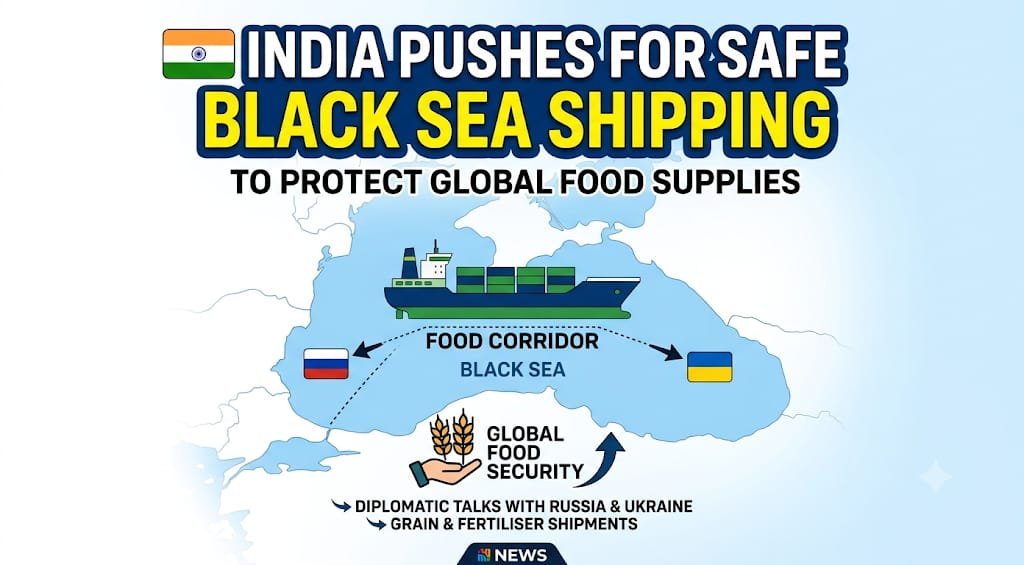
India is working with Russia and Ukraine to make shipping in the Black Sea safer and explore protected routes for food supplies. The effort aims to keep grain, fertilisers and other essential goods moving despite the continuing conflict. Speaking in New Delhi on Tuesday, External Affairs Ministry spokesperson Randhir Jaiswal said India had been discussing these concerns with both countries, with particular attention to the difficulties facing developing nations.
The issue connects a distant conflict with everyday concerns about food availability and farming costs. Ships carrying grain and fertilisers need safe passage to reach their destinations. Disruptions can make supplies less dependable, particularly for countries already facing economic pressure. India’s discussions therefore focus not only on the fighting but also on limiting its consequences for people elsewhere. Jaiswal said New Delhi had urged Russia and Ukraine since July to guarantee shipping safety and allow grain and energy exports, including fertilisers.
A central part of these discussions is the proposal for “food corridors”. These would provide safer routes for ships transporting food through the Black Sea. Jaiswal said India had exchanged ideas with both sides on establishing such arrangements. He also referred to proposals for avoiding attacks on facilities connected with food and energy supplies. These remain subjects of discussion, rather than a completed agreement or an operational corridor announced by India.
The diplomatic contacts have continued at several levels. Prime Minister Narendra Modi spoke by telephone with Ukrainian President Volodymyr Zelenskyy, while External Affairs Minister S. Jaishankar held talks with Russian counterpart Sergey Lavrov. Those conversations took place on Monday, ahead of three-way discussions involving Russia, Ukraine and the United States in the United Arab Emirates on Tuesday. Jaiswal linked India’s engagement to its stated interest in supporting peace.
India has also offered to help facilitate a resolution. After Modi’s conversation with Zelenskyy, Jaiswal said the prime minister had discussed India’s willingness to assist. During a meeting with Russian President Vladimir Putin in Bishkek in September, alongside the Shanghai Cooperation Organisation summit, Modi called for an immediate end to the conflict. He urged a shift away from continued war and towards peace. Jaishankar later visited Kyiv and met Zelenskyy on the sidelines of a BRICS summit in mid-September.
The urgency increased after attacks in July damaged grain facilities in both Russia and Ukraine and killed or injured Indian sailors, according to Jaiswal. He said Jaishankar raised the matter with both countries’ foreign ministers and sought clarity about ships, cargoes and grain exports that had almost stopped. During an October meeting with Ukrainian Foreign Minister Andrii Sybiha, Jaishankar again stressed safe grain and fertiliser shipments because of their importance to global food security.
Separately, the ministry rejected allegations against National Security Adviser Ajit Doval and former Research and Analysis Wing chief Samant Goel in a US civil lawsuit filed by Khalistani separatist Gurpatwant Singh Pannun. It described the allegations as fabricated and malicious.
On the US midterm elections, the ministry said these were an internal American matter and were unlikely to affect India-US ties. It added that the relationship enjoyed strong support from both Republicans and Democrats in Washington.

