
India’s direct-to-consumer, or D2C, brands have received a strong boost ahead of Diwali, with shoppers placing more orders and spending more money per purchase.
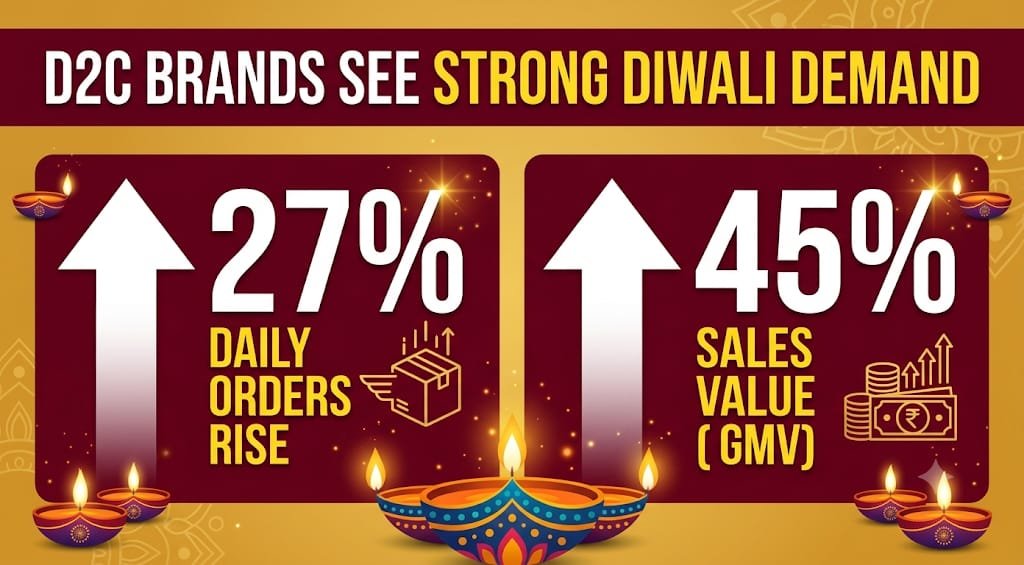
According to a report by ClickPost, an artificial intelligence-based logistics automation and post-purchase platform, D2C brands shipped 27 per cent more orders every day during the festive shopping period this year compared with the same period last year.
At the same time, the total value of goods sold, known as gross merchandise value or GMV, rose by about 45 per cent.
The report analysed more than 8 crore orders placed on the websites of nearly 400 D2C brands. It compared the festive shopping window from September 20 to November 5 this year with the period from September 1 to October 17 last year.
The findings suggest that the festive season has become an important growth period for online brands selling fashion, beauty, wellness, jewellery and other consumer products.
One of the most important findings is that the rise in sales value was much higher than the rise in the number of orders. GMV grew about 1.7 times faster than order volume. This means that shoppers were not only buying more products but were also choosing higher-priced items. Even though retail prices have increased, many consumers appear to have preferred premium products instead of shifting to cheaper alternatives.
Spending was especially strong in high-value categories such as luxury fashion, skincare, wellness and jewellery. This indicates that festive shopping is no longer limited to essential purchases or discounts. Many buyers are willing to spend more on quality products, personal care, gifts and lifestyle items during the Diwali season.
Jewellery remained the top festive gifting category, with the average value of a prepaid order rising 7.4 per cent to Rs 5,773. In nutrition and wellness, the average prepaid order value increased 11.1 per cent to Rs 936.
Beauty and personal care emerged as the largest category by order volume. Orders in this segment grew between 33 per cent and 39 per cent across all city tiers.
Fashion also performed well, with orders rising by about 33 per cent in Tier 3 cities and around 29 per cent in both Tier 2 cities and metro cities. This shows that demand for D2C products is expanding beyond large metropolitan markets and reaching consumers in smaller towns.
Delivery performance also improved during the festive rush, which is important because a large number of orders can often create pressure on logistics networks. Failed delivery attempts fell to 21 per cent of orders from 22 per cent last year.
The share of orders returned to sellers because they could not be delivered dropped from 11 per cent to 10 per cent. These improvements suggest that brands and logistics partners have become better prepared to handle high festive demand.
Interestingly, smaller cities performed better than metros in terms of punctual deliveries. Tier 2 and Tier 3 cities received 83 per cent of festive orders on time, compared with 78 per cent in Tier 1 metro cities. Tier 3 cities recorded the sharpest improvement, with on-time deliveries rising from 74 per cent last year. The average delivery time across the country also fell from more than three days to about two and a half days.
The festive season was also spread over a longer period this year. Dussehra, Karwa Chauth and Diwali fell within 18 days, creating more than 10 high-volume shopping and shipping days in late October. Many of these days matched or exceeded last year’s single peak shipping day. This wider festive window gave brands more opportunities to attract buyers and manage deliveries smoothly.
Another major change is the growing role of quick commerce. Brands are now offering fast delivery through their own websites and apps, while also selling through platforms such as Blinkit, Swiggy Instamart and Zepto. Hyperlocal deliveries rose to 5 per cent of orders on brand-owned platforms, up from 2.6 per cent last year. This reflects changing consumer expectations, as shoppers increasingly want faster access to products during the festive season.
Overall, the report points to a healthy festive season for India’s D2C sector. Higher order volumes, rising average spending, better delivery performance and stronger demand from smaller cities show that consumers are actively participating in online festive shopping.
For D2C brands, the challenge ahead will be to maintain product quality, manage costs and continue improving delivery experiences beyond the festive period. If this momentum continues, smaller cities and premium categories may play an even bigger role in the growth of India’s direct-to-consumer market.

