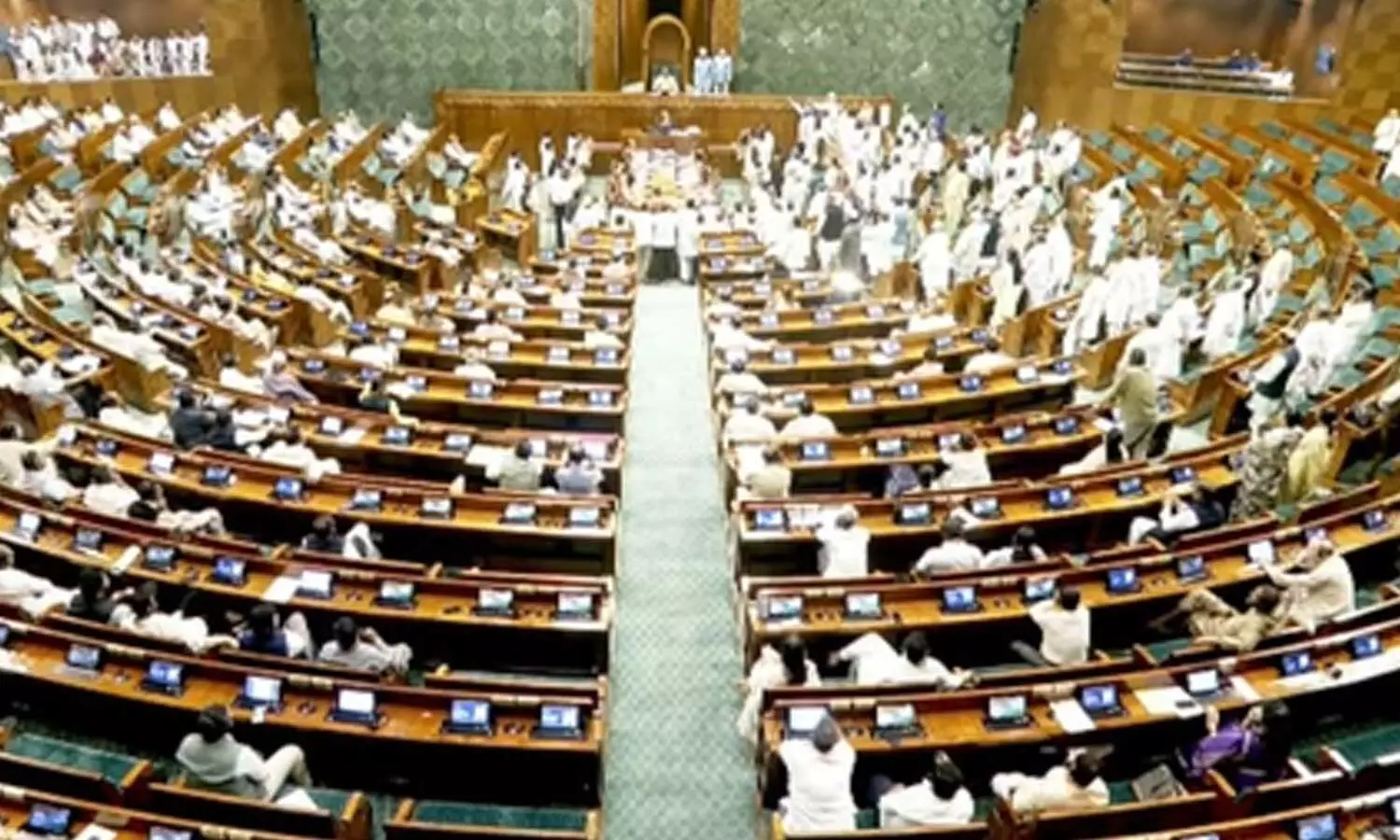
The government’s attempt to address the growing problem of examination paper leaks through legislation faced an immediate hurdle in the Lok Sabha, as the House was adjourned amid uproar by Opposition members before any meaningful discussion could take place.
The government introduced the Public Examinations (Prevention of Unfair Means) Bill, aimed at curbing malpractice and organised cheating in public examinations. The proposed legislation seeks to strengthen the legal framework against paper leaks, impersonation, cheating and other unfair practices that undermine the integrity of competitive and recruitment examinations.
However, proceedings in the Lok Sabha were disrupted as Opposition members raised slogans and pressed their demands on a range of issues. The uproar eventually led to the adjournment of the House, leaving little scope for a detailed debate on the anti-paper leak legislation.
The disruption is significant because examination leaks have become a major concern for millions of students across India. Competitive examinations are often seen as the primary route to government jobs and higher education, and any leak can force thousands or even millions of aspirants to face cancellations, postponements and the uncertainty of appearing for an examination all over again.
The Opposition has repeatedly demanded that the government take stronger and more effective measures to prevent paper leaks. Students and young job aspirants have also raised concerns over the repeated disruption of examinations, arguing that those who prepare for months or even years should not be made to suffer because of the actions of organised cheating networks.
There is, therefore, an apparent contradiction in the political response to the issue. While the Opposition has demanded that something concrete be done to stop examination leaks and protect students, a Bill specifically aimed at preventing unfair means in public examinations could not be taken up for substantive discussion in the House amid the uproar.
The issue is particularly sensitive among the youth, for whom a fair examination system is closely linked to trust in institutions. A strong anti-paper leak law, however, is only one part of the solution. Effective investigation, swift prosecution, secure examination infrastructure and accountability for officials and institutions responsible for lapses are equally important.
–

