
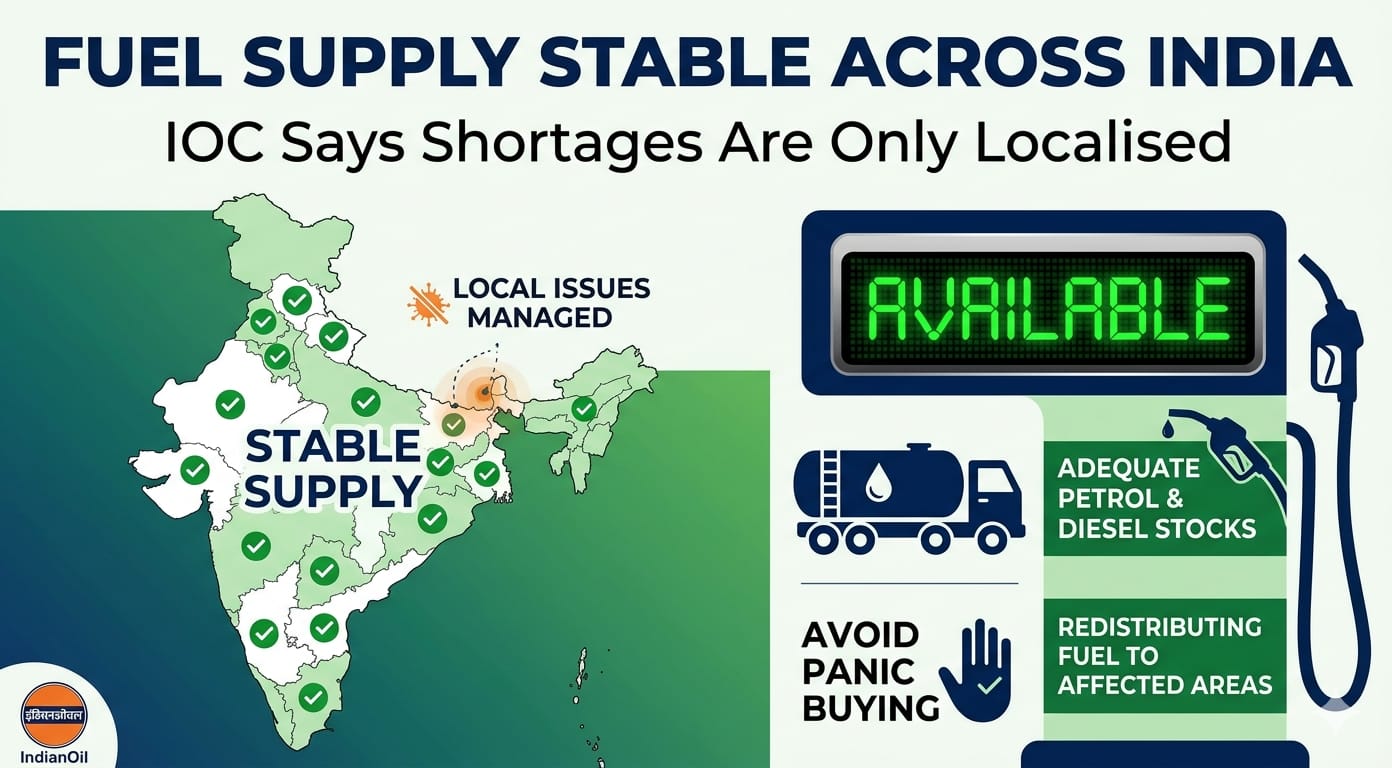
Indian Oil has reassured people that there is no nationwide shortage of petrol or diesel and that overall stocks remain adequate, while only a very small number of retail outlets have seen temporary, localised disruptions.
The reasons behind these pocketed outages include a seasonal rise in diesel demand during harvesting, customers switching from some private pumps where prices were higher, and increased institutional purchases at public-sector outlets, which together changed sales patterns and created short-term mismatches between supply and demand in certain areas.
Supplies at most fuel stations are normal, and state-owned oil companies are actively monitoring and redistributing stocks to restore smooth service at the affected outlets.
People in affected areas might have experienced queues or an empty pump nozzle because demand rose sharply in a small cluster of locations; this is not the same as a national shortage but rather a quick local imbalance that is being corrected by moving fuel from nearby depots or by scheduling extra tanker deliveries to the specific pumps concerned.
Officials have emphasized that the national network of retail outlets is extensive and that only a tiny fraction out of tens of thousands of stations has had temporary disruptions, so most motorists need not change their normal refuelling plans or start stockpiling fuel at home.
The advice being shared is simple: avoid panic buying, continue routine consumption, and rely on official updates rather than rumours, since panic behaviour can worsen local pressure on supplies and prolong the disruption.
For those who depend on diesel during the harvesting season, transporters, farmers and agricultural businesses the temporary higher drawdown at certain pumps is understandable and is being met by targeted logistical responses such as rerouting tanker supplies and prioritising high-demand routes until normal flow is restored.
Retail price differences between private and public pumps have also caused some migration of customers, temporarily raising demand at public-sector outlets; this has been noted as a contributing factor and is being handled operationally rather than by limiting sales.
Meanwhile, public-sector companies continue to maintain strategic inventories and are coordinating deliveries to ensure that essential services, emergency vehicles and commercial users receive uninterrupted supplies.
Practical steps being taken include close monitoring of sales and stock at retail outlets, fast redistribution of fuel where needed, and communication with depot and transport teams to increase frequency of deliveries in hotspots; these measures are intended to keep interruptions short and predictable so everyday life and business activity are not affected.
The public is encouraged to check with nearby pumps or official channels if a local outlet is reporting an outage, but to refrain from hoarding fuel since that can cause ripple effects and make local shortfalls worse for neighbours and essential services. Consumers will likely see the situation normalise quickly as supplies are rerouted and as seasonal demand patterns stabilise after the peak harvesting period.
An easy way for individuals to respond calmly is to fill up based on immediate need rather than fear, to keep a small reserve if travel plans require it but avoid bulk buying, and to report extended outages to the pump operator or local authorities so corrective action can be arranged promptly; cooperative, measured behaviour will help speed restoration of normal supplies for everyone.
Indian Oil has assured the public that fuel stocks are adequate at the national level, while the few disruptions reported are temporary and limited to specific locations. The company is actively working to restore normal supply in these areas, ensuring that the issue does not spread beyond the affected outlets.

