
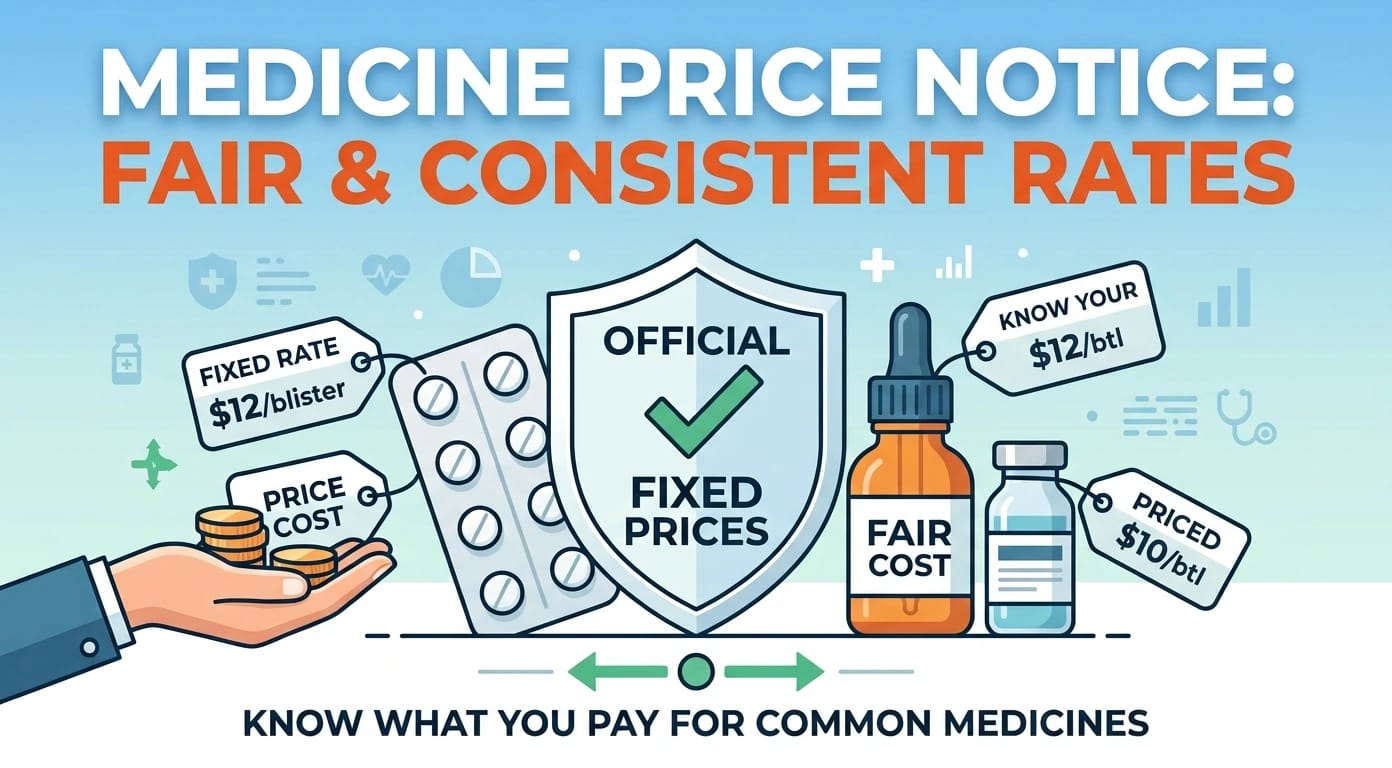
Imagine walking into a pharmacy to buy a monthly supply of blood pressure tablets, and the price seems to change on every visit. Confusing, right? This is exactly the kind of problem that a recent pricing notice, issued on the 8th of July, 2026, tries to solve.
Released by the National Pharmaceutical Pricing Authority, working under the Ministry of Chemicals and Fertilizers, this order puts a clear price tag on a long list of medicines that millions of people use every single day.
Think of this notice as a rulebook. It doesn’t tell doctors what to prescribe or tell what to buy. Instead, it tells manufacturers exactly how much they are allowed to charge for certain medicines, so that nobody is overcharged and every patient gets a fair deal. The notice draws its authority from the Drugs (Prices Control) Order of 2013, a set of rules that has been guiding medicine pricing for over a decade now.
So what kind of medicines are we talking about? Quite a variety, actually. There are tablets for high blood pressure, like combinations of Amlodipine, Telmisartan, and Metoprolol, priced around twelve rupees a tablet. There are antibiotics such as Amoxicillin combined with Potassium Clavulanate, useful for treating infections, priced at roughly twenty-seven rupees per tablet.
For people managing cholesterol and heart risk, there are Atorvastatin combinations mixed with Clopidogrel or Ezetimibe, ranging anywhere from about fifteen to thirty-two rupees per tablet.
Diabetes care also gets attention here. Combinations like Dapagliflozin with Telmisartan, or Empagliflozin mixed with Sitagliptin and Metformin, have been priced between roughly fifteen and nineteen rupees per tablet, making these newer-generation diabetes medicines a bit more predictable in cost.
Even something as ordinary as Cetirizine drops for allergies, priced under nine rupees, or Clobazam oral suspension used for seizure management, priced under three rupees, finds a spot on this list.
Now here comes the part that really shows how wide this notice reaches. It doesn’t just cover daily-use tablets. It also fixes prices for far more specialized and expensive treatments. Tenecteplase injection, a critical clot-busting medicine used during heart attacks, has been priced at over sixty thousand rupees per vial, reflecting how life-saving emergency drugs can carry a heavy cost.
Similarly, Imatinib oral solution, used in certain cancers, comes in at nearly sixty rupees per millilitre. There’s also a combination kit containing Darunavir, Ritonavir, and Dolutegravir, medicines used in HIV treatment, priced at over three hundred rupees per kit.
Eye care hasn’t been left out either, with glaucoma drops like Netarsudil and Latanoprost priced above three hundred and sixty rupees, and infection-fighting eye drops like Nepafenac with Moxifloxacin priced under seventy rupees.
In total, thirty-nine different medicine formulations were addressed, each with its own strength, packaging unit, and named manufacturer or marketing company. Big pharmaceutical names are mentioned throughout, including well-known manufacturers who now have a clear ceiling price they cannot cross.
But the notice doesn’t stop at just listing prices. It lays out a few important ground rules too. First, whichever company is named as the manufacturer must not sell above the fixed retail price.
Second, if any other company wants to launch the very same medicine within twelve months of this notice being published, they are allowed to do so, but only at the same price ceiling, and they must file proper documentation through an online system called IPDMS 2.0.
Third, taxes like GST can only be added on top if the company has actually paid it to the government, meaning no hidden tax padding. Fourth, every retailer and pharmacy must display these price lists openly, so that any curious customer can walk up and check the rates themselves.
Perhaps the most reassuring part of this notice is the accountability it builds in. If any manufacturer or seller charges more than the fixed price, they are required to return the extra money collected, along with interest, under strict legal provisions. This isn’t just a suggestion; it carries real financial consequences for anyone who breaks the rule.
This notice is really about trust. It’s a reminder that behind every tablet swallow or every injection administered in a hospital, there’s a whole system working quietly to make sure the price on the label is fair, consistent, and doesn’t change based on where you’re standing or which pharmacy you walk into.
For patients managing chronic conditions like diabetes, heart disease, or even something as serious as cancer or HIV, this kind of price stability can make a real difference in how affordable ongoing treatment feels over time.

