
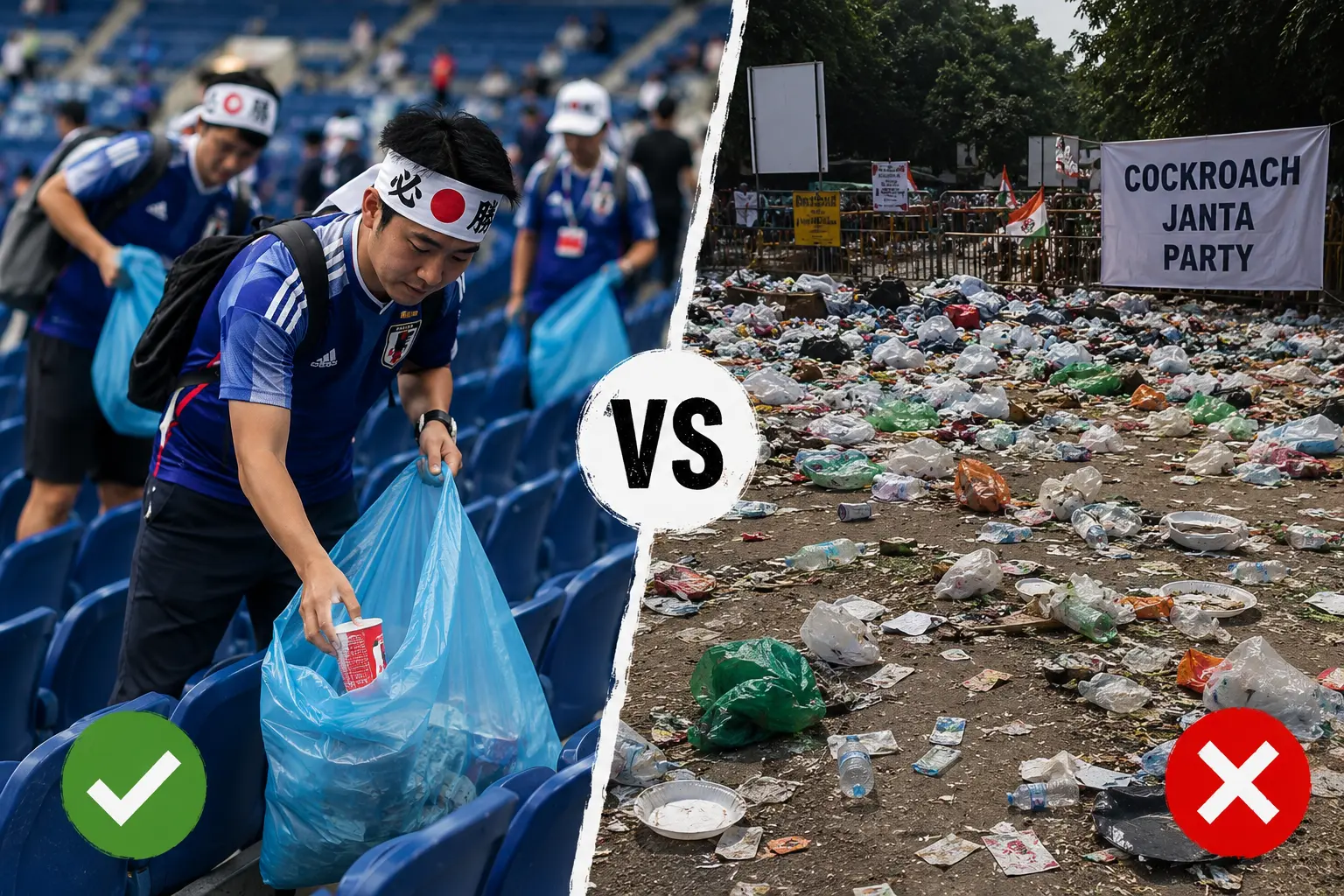
There are some images from around the world that force us to ask a very simple question, why can’t we learn from them? and Japanese football supporters are among them from whom we should learn.
During the FIFA World Cups, Japanese football supporters have always won admiration for staying back after their team’s match to collect garbage from their own seating areas. Instead of simply walking away after the final whistle, they pick up cups, wrappers and other waste and put it into bags. For them, cleanliness is not a publicity stunt. It is a matter of personal responsibility and respect for the place they have visited. The tradition has been associated with Japanese football supporters since the 1998 World Cup.
Now compare that example with the reports emerging from Jantar Mantar after the Cockroach Janta Party protest. According to the figure cited in reports and social media discussions surrounding the aftermath, the protest site was left with around 60 metric tonnes of garbage to be cleared.
The contrast could not be more striking.
On one side, ordinary football fans are willing to bend down and clean the seats they occupied. On the other, a large protest gathering allegedly leaves behind mountains of waste for sanitation workers and authorities to deal with.
The question is not about politics. It is not about which party or protest one supports. It is about basic civic responsibility.
If you gather thousands of people at a public place, you have every right to protest, raise slogans and demand accountability. But with those rights come responsibilities. The moment the protest ends, the responsibility does not disappear. The people who used the space should be the first to ensure that it is left clean.
India has spent years talking about cleanliness. PM Modi launched Swachh Bharat Abhiyaan after coming to power, and repeatedly told citizens that keeping public spaces clean is everyone’s duty. Yet, too often, the same people who demand better governance forget that civic sense begins with individual behaviour.
The Japanese example shows that cleanliness is ultimately a habit. It is taught, practised and expected. No one needs to be ordered to pick up their own trash.
Perhaps that is the lesson we need to learn. Whether it is a football stadium, a railway station or a protest site like Jantar Mantar, public spaces do not belong to someone else. They belong to all of us.
Before demanding a cleaner India, perhaps we should first learn to leave behind a cleaner India.

