
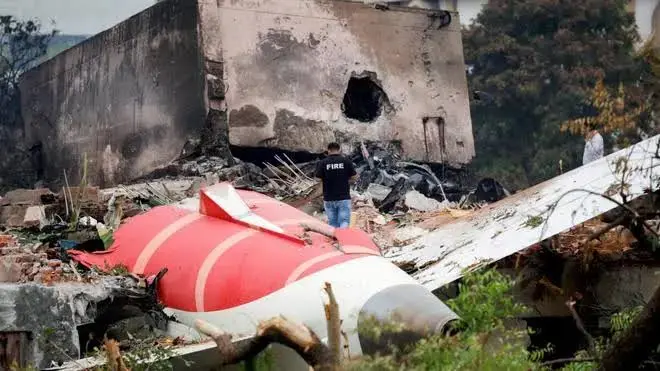
The investigation into the Air India AI-171 crash has found no abnormality in the aircraft’s fuel control switch locking mechanism, shifting attention away from a possible mechanical defect as the cause of the disaster. The Directorate General of Civil Aviation (DGCA) conducted OEM-level testing in Seattle as part of its continuing investigation and found no fault in the mechanism.
The testing follows preliminary findings that both fuel control switches moved from the “RUN” to “CUTOFF” position shortly after take-off, cutting fuel supply to the engines and resulting in a catastrophic loss of thrust.
The latest findings are significant because the fuel switches have been at the centre of questions surrounding the crash. However, investigators have yet to establish conclusively why the switches moved to the cutoff position. The Aircraft Accident Investigation Bureau (AAIB) has maintained that its probe is ongoing and that no final conclusions should be drawn until the investigation is complete.
The Boeing 787-8 Dreamliner crashed shortly after departing Ahmedabad for London Gatwick on June 12, 2025, killing 260 people, including those on board and people on the ground. The tragedy remains one of India’s worst aviation disasters. With the fuel-switch mechanism now showing no abnormality in testing, investigators are expected to focus more closely on cockpit actions, human factors, flight-recording data and other possible explanations.
The development also underscores the importance of waiting for the final AAIB report before assigning responsibility. While the absence of a mechanical fault may narrow the field of possibilities, it does not by itself establish whether the switches were moved accidentally, deliberately or under circumstances that investigators have yet to determine.
The probe remains closely watched by the aviation industry and the families of those who lost their lives. Its final findings are expected to provide clarity on the sequence of events that led to the sudden loss of engine power and the crash. The investigation could also have wider implications for aviation safety, particularly concerning cockpit controls, switch-locking mechanisms and procedures designed to prevent inadvertent or unauthorised changes during critical phases of flight.

