
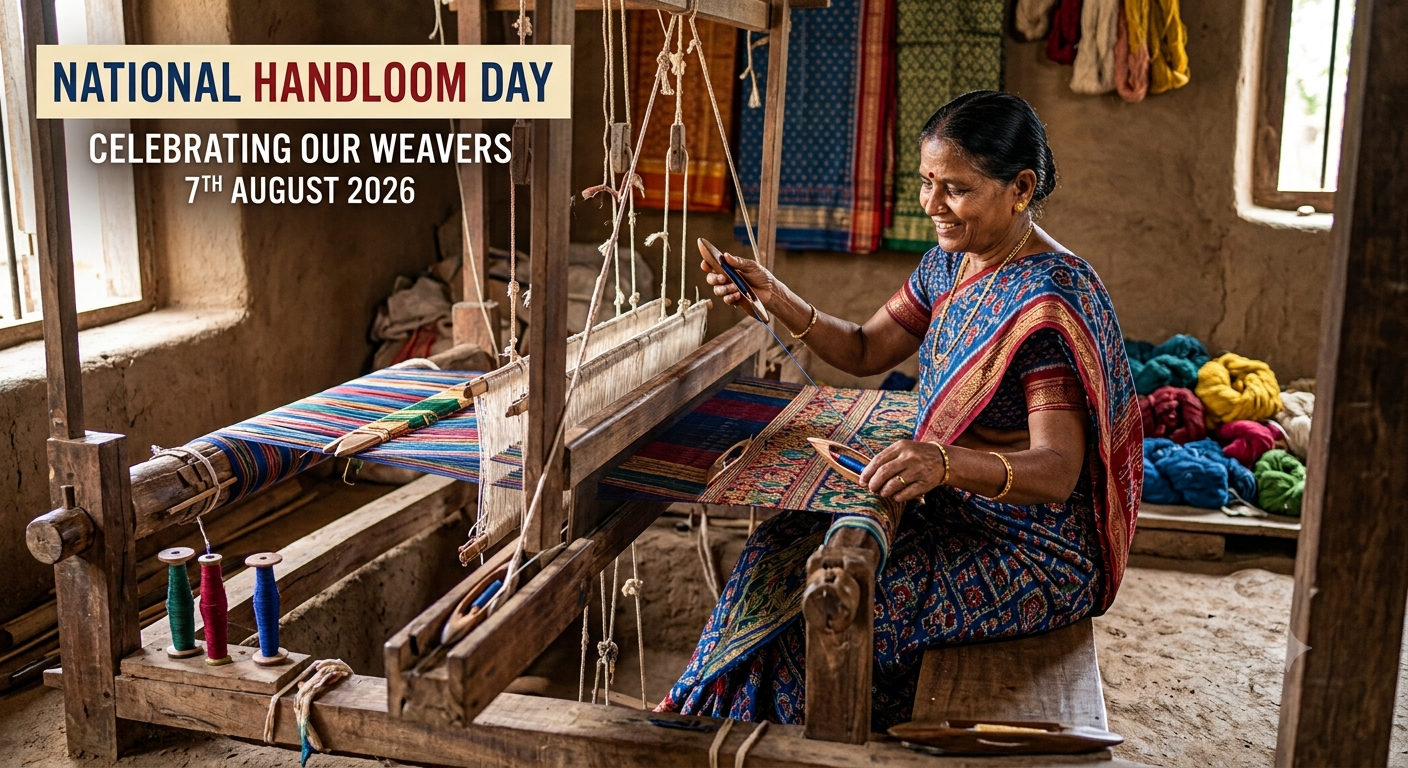
Today, on August 7, India celebrates National Handloom Day to honour the country’s rich handloom heritage and the millions of weavers who keep this centuries-old tradition alive. In July 2015, PM Modi’s government decided to celebrate this day as National Handloom Day, to honour the Swadeshi movement launched in 1905. The inaugural event was held on August 7, 2015, 11 years ago, by Prime Minister Modi at the Centenary Hall of the University of Madras in Chennai.
This was the day 121 years back when Indians boycotted foreign goods and promoted domestic products, including handwoven textiles. This also highlights the global efforts to recognise the importance of traditional weaving through World Handloom Day, which highlights the cultural and economic significance of the handloom sector worldwide.
India’s handloom industry was facing a steady decline for decades due to competition from power looms, cheap imports, changing consumer preferences, and poor market access. The traditional weavers struggled with low incomes, outdated technology, and a lack of financial support. However, over the past decade, the Narendra Modi government has launched several initiatives aimed at reviving this labour-intensive sector, preserving India’s textile heritage while creating sustainable livelihoods.
One of the most significant interventions introduced by the Modi government has been the National Handloom Development Program (NHDP), which serves as the umbrella scheme for the comprehensive development of the handloom sector. The program focuses on increasing production, improving quality, expanding market access, promoting innovation, and enhancing the incomes of weavers. Under the NHDP, handloom clusters across the country receive financial assistance for modern equipment, dye houses, design development, common facility centres, and skill upgradation.
Notably, most of the people gaining employment through the revival of the Handloom sector are women or people from the backward castes. This revival of the sector is not just preserving India’s ancient heritage but also providing gainful employment to the sections of society who were getting increasingly marginalised.
The program has also strengthened marketing support by enabling weavers to participate in national and international exhibitions, trade fairs, and buyer-seller meets. These initiatives have helped artisans connect directly with consumers, reducing dependence on middlemen and ensuring better returns for their products. Digital marketing platforms and e-commerce integration have further expanded the reach of traditional handloom products to customers across India and abroad.
Recognising that design innovation is essential for survival in modern markets, the government has partnered with leading design institutes to introduce contemporary patterns while preserving traditional craftsmanship. This has enabled products like Banarasi silk, Kanchipuram sarees, Pochampally ikat, Chanderi, Maheshwari, and Assam’s Muga silk to appeal to younger consumers without compromising their authenticity.
Financial inclusion has been another key pillar of the revival strategy. The government has expanded access to institutional credit through the Weaver MUDRA Scheme and concessional loans. Various social security measures, including life insurance, health coverage, and pension schemes, have provided greater financial stability to weaving families. Direct Benefit Transfer (DBT) mechanisms have improved transparency and ensured that government assistance reaches beneficiaries without delays.
The Modi government has also focused on branding and awareness. Campaigns such as “Vocal for Local” and “Atmanirbhar Bharat” have encouraged Indians to buy domestically produced handloom products. Prime Minister Narendra Modi has repeatedly urged citizens through his Mann Ki Baat broadcasts to support local artisans and wear handloom garments, particularly during festivals and national celebrations. Such public appeals have significantly increased consumer awareness about the value of indigenous textiles.
The annual celebration of National Handloom Day itself has become a powerful platform for recognising master weavers, promoting traditional crafts, and encouraging youth participation in the sector. Various ministries, state governments, educational institutions, and industry bodies organise exhibitions, fashion shows, workshops, and awareness campaigns that showcase India’s extraordinary weaving traditions.
The handloom industry today remains one of India’s largest rural employers after agriculture, supporting millions of households, particularly women. It is not merely an economic activity but also a repository of India’s cultural diversity, with every region producing unique weaving styles that reflect local history and traditions.
While challenges such as rising raw material costs, competition from machine-made textiles, and climate-related disruptions continue to affect the sector, sustained government support has helped reverse years of decline. Programs like the National Handloom Development Program, combined with improved market access, digital outreach, infrastructure development, and growing consumer awareness facilitated by the government, have infused new life into India’s handloom ecosystem.
As India observes National Handloom Day each year, it serves as a reminder that preserving traditional craftsmanship is not only about protecting cultural heritage but also about empowering millions of artisans whose skills continue to weave the fabric of the nation’s identity.

