
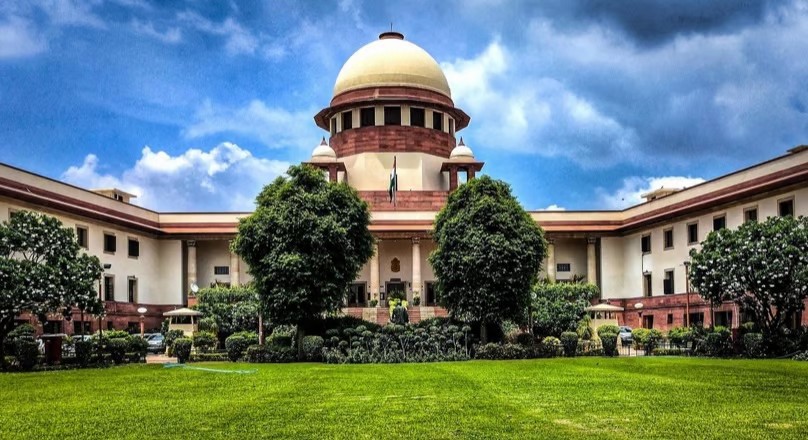
The Supreme Court of India has said that state governments are free to withdraw or close First Information Reports (FIRs) registered against protesters belonging to the “Cockroach Janta Party,” leaving the decision to the discretion of the respective state authorities. The Court clarified that such decisions fall within the executive domain and must be taken in accordance with the law and the facts of each case.
The observation came during the hearing of petitions related to criminal cases filed against party workers who had participated in various demonstrations and protests across different states. Some of the protests held in the second half of July had turned violent, leading to registration of several FIRs in various states.
The bench noted that while courts can examine the legality of criminal proceedings, the power to withdraw prosecutions or close FIRs primarily rests with the concerned state governments, subject to the provisions of the Code of Criminal Procedure and applicable legal standards.
The Court did not issue any blanket direction to quash all FIRs or order states to withdraw cases. Instead, it emphasized that every case must be assessed on its own merits, taking into account the nature of the alleged offences, the available evidence, and the larger public interest. If a state government believes that continuing a prosecution is unnecessary or unjustified, it may take appropriate legal steps in accordance with established procedures.
The ruling reinforces the principle of separation of powers by recognizing the executive’s authority in matters relating to prosecution, while preserving the judiciary’s role in ensuring that such decisions comply with the law.
The Supreme Court’s remarks are expected to influence pending cases involving protest-related FIRs, although the immediate impact will depend on the decisions taken by individual state governments. Any move to withdraw prosecutions or close FIRs may still be subject to judicial scrutiny wherever required, ensuring that due process and the rule of law are upheld.

