
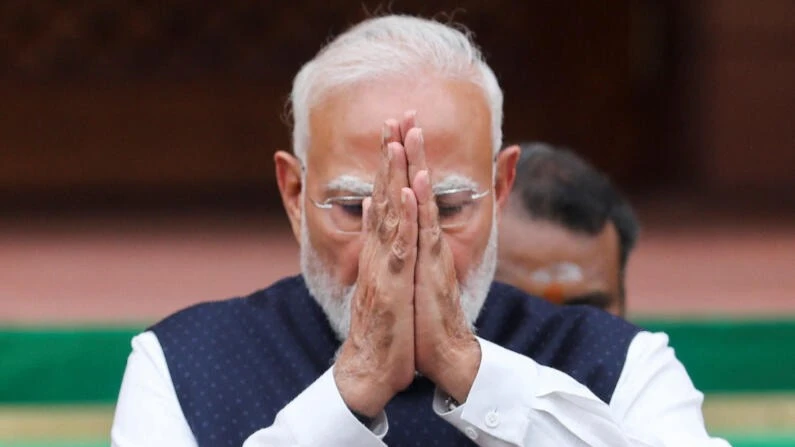
PM Narendra Modi’s recent remarks about forgiving the student protesters who abused him have once again highlighted the quality that has often defined his public life—magnanimity. Speaking about the protests and the abusive slogans directed against him, the Prime Minister stated that he harboured no bitterness and had forgiven those who targeted him. His response stands in contrast to the increasingly hostile and polarised nature of modern political discourse.
PM Modi said, “What happened at Jantar Mantar has been seen by the country and the world. Some misguided youngsters used language that has no place in any civilised society. I was abused, and even my late mother was abused.”
The Prime Minister then added that abuses never solve anything and urged society to guide, rather than punish, those who had gone astray.
Democracy thrives on disagreement and debate. Students, like all citizens, have the right to express dissent and question those in power. India’s freedom movement itself was powered by young voices who challenged the status quo. However, there remains a clear distinction between constructive criticism and personal abuse. Healthy democratic engagement requires arguments, ideas and discussions, not hatred or dehumanisation.
Despite being at the receiving end of intense criticism and often deeply personal attacks over the years, PM Modi’s decision to respond with forgiveness sends a message that leaders must rise above anger and retaliation. Political differences are inevitable in a vibrant democracy such as India, but the ability to maintain composure in the face of provocation reflects maturity and confidence. Restraint is not weakness; rather, it demonstrates strength of character.
Forgiveness also has a larger social significance. In an era dominated by social media outrage, where disagreements frequently turn into hostility, calls for reconciliation and understanding can help lower tensions. A society that constantly seeks revenge or remains trapped in cycles of anger finds it difficult to move forward. Forgiveness, when accompanied by accountability and dialogue, creates space for healing and mutual respect.
The Prime Minister’s remarks can therefore be viewed not merely as a personal response to criticism but as an appeal for a healthier democratic culture. India is home to diverse ideologies, beliefs and aspirations. Such diversity inevitably produces disagreements, but these differences should not destroy the spirit of national unity.
Forgiveness and restraint are virtues deeply rooted in India’s civilisational ethos. By choosing not to respond with resentment, PM Modi has underscored the importance of civility even in the most heated political moments. In a democracy, dissent is essential, but respect and humanity are equally indispensable.

