
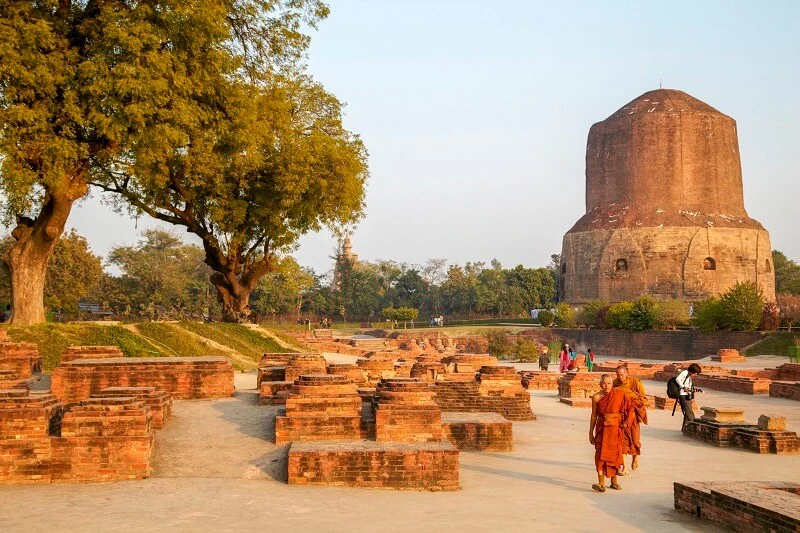
The ancient Buddhist site of Sarnath, located in Varanasi, Uttar Pradesh, has been inscribed on the UNESCO World Heritage List. The decision was taken during UNESCO’s 48th world heritage committee session
The ancient Buddhist site achieved the major global recognition, highlighting the historical, spiritual and cultural significance of one of Buddhism’s most sacred sites. The inscription places Sarnath among the world’s most significant heritage destinations and strengthens India’s position as the centre of humanity’s shared civilisational legacy.
Prime Minister Narendra Modi welcomed the decision taken by UNESCO, and posted on X, “A proud moment for every Indian! Delighted that Sarnath in Uttar Pradesh has been inscribed on the UNESCO World Heritage List. Sarnath has a close association with Lord Buddha, whose timeless message of wisdom, compassion and harmony inspires the world. This recognition celebrates India’s profound civilisational and spiritual heritage. It will also inspire more people across the world to come to Sarnath and connect with the ideals of Lord Buddha.”
A proud moment for every Indian!
Delighted that Sarnath in Uttar Pradesh has been inscribed on the UNESCO World Heritage List.
Sarnath has a close association with Lord Buddha, whose timeless message of wisdom, compassion and harmony inspires the world.
This recognition… https://t.co/KkdMOg6g0d— Narendra Modi (@narendramodi) July 25, 2026
Sarnath holds a unique place in Buddhist history. It is traditionally regarded as the site where Gautama Buddha delivered his first sermon after attaining enlightenment, setting in motion the “Wheel of Dharma.” It was also here that he met his earliest disciples. Recognised in Buddhist tradition as one of the four principal pilgrimage sites, Sarnath has attracted devotees and travellers from across the world for centuries.
The UNESCO-recognised property encompasses important architectural and archaeological remains that reflect the site’s evolution over several centuries. Its monuments include the iconic Dhamek Stupa, Chaukhandi Stupa, the remains of monasteries and temples, the stupas and the remains associated with the Ashokan period. Together, these structures illustrate the growth of Sarnath as a major centre of Buddhist learning, religious activity and artistic expression.
The site’s history, however, also reflects the rise and decline of great civilisations. Sarnath flourished under royal patronage before declining in the 12th century CE and subsequently falling into obscurity. Its archaeological remains were rediscovered centuries later, allowing historians and archaeologists to reconstruct its important role in India’s religious and cultural history.
The UNESCO inscription is more than a recognition of ancient monuments. It is an acknowledgement of Sarnath’s enduring influence on Buddhism and its importance as a living centre of pilgrimage. For India, the recognition also offers an opportunity to promote country’s Buddhist legacy.

