
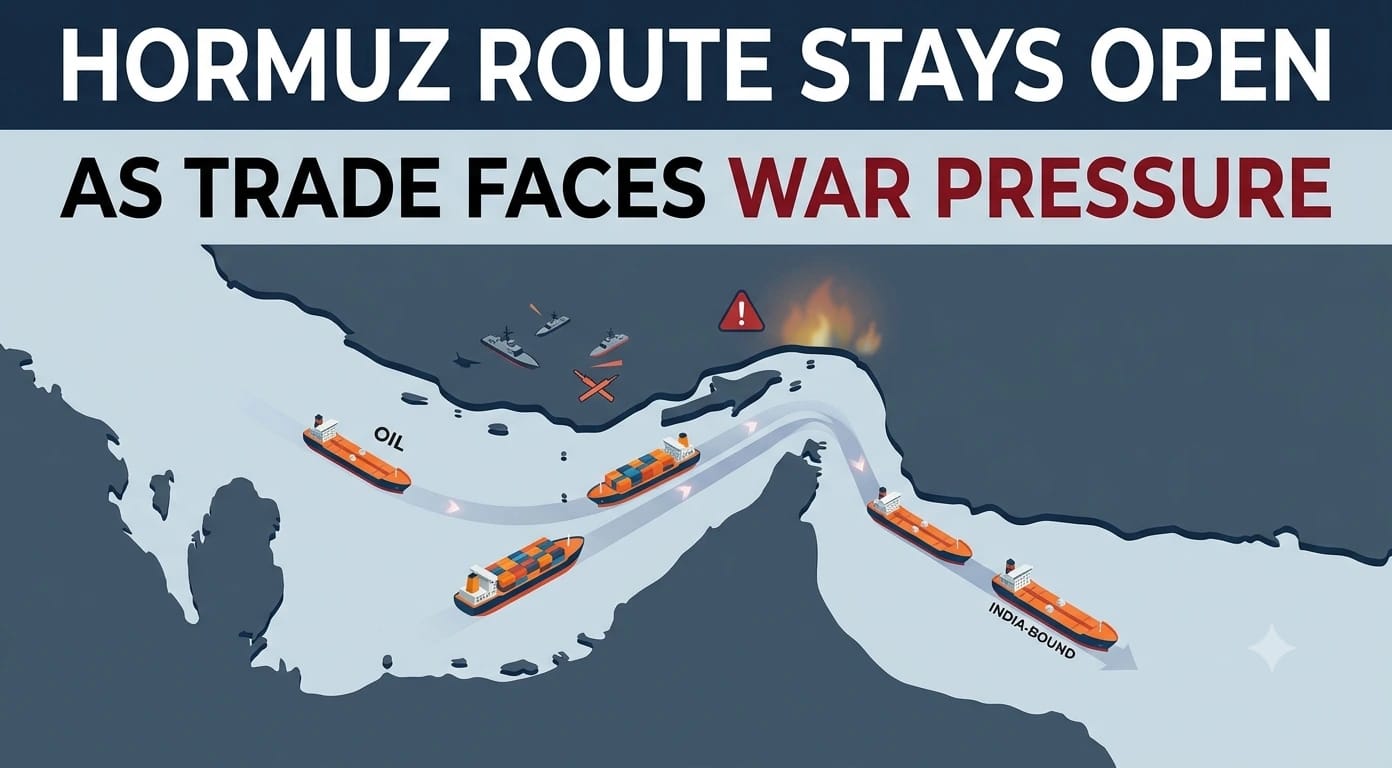
The Strait of Hormuz remains one of the world’s most closely watched shipping routes, and recent movement through it shows how trade continues even in tense times.
A report notes that 59 India-bound vessels transited the Strait of Hormuz since the war began, showing that commercial shipping has not stopped completely despite growing caution in the region.
Shipping Minister Sarbananda Sonowal said in a written reply to the Rajya Sabha that the situation in the Strait of Hormuz is being closely monitored because it is important for India’s energy security and trade movement, and that all possible steps are being taken to ensure the safe passage of Indian vessels through this sensitive route.
This situation matters because the route is vital for energy supplies, cargo movement, and everyday trade across Asia and beyond. The image of ships passing through a narrow and sensitive waterway naturally raises one simple question in many minds: how long can trade keep moving smoothly when tension stays high?
The shipping companies are still trying to keep operations running, but they are doing so with greater care than before. Many vessels are moving under strict safety planning, while some are adjusting routes, timings, and loading schedules to reduce risk.
Even when ships continue to sail, the atmosphere is no longer normal, because every journey now carries extra concern about delays, costs, and possible disruption. In simple terms, trade has not paused, but it has become more cautious and more expensive to manage.
The Strait of Hormuz has long been important because it connects major energy exporters with global buyers. Any tension in this area can affect oil transport, shipping insurance, and freight charges almost immediately.
That is why even a partial slowdown in movement can create pressure on markets far away from the conflict zone. The current situation shows how a regional war can spread its effects into business decisions, shipping prices, and supply chains in many different countries.
For India-linked trade, the issue is especially important because a large share of imports and exports depends on smooth maritime movement. When vessels face uncertainty, companies may need to pay more for insurance, maintain extra safety margins, or accept longer travel times.
This can create stress for firms that depend on predictable delivery of fuel, raw materials, and finished goods. The real impact is not only seen at sea; it can also be felt later in factories, ports, markets, and household prices.
What makes the report notable is that it reflects both resilience and risk. The fact that dozens of vessels still passed through the strait shows that trade networks remain active and adaptable. At the same time, the need for caution shows that the system is under pressure and could change quickly if the security situation worsens.
This balance between movement and anxiety is now a defining feature of the route, and it explains why shipping news from the region is being watched so closely by traders, policymakers, and businesses.
The broader lesson is clear: even one narrow waterway can influence trade across multiple sectors. Oil, chemicals, containers, industrial goods, and consumer products all rely on reliable sea routes.
When a strategic passage becomes unstable, the effect can spread much farther than expected. That is why discussions about the Strait of Hormuz are never only about geography; they are also about economic stability, business confidence, and the cost of keeping global trade moving.
At this moment, the main message is not that trade has stopped, but that it has become more vulnerable. Ships are still moving, but every voyage now reflects a world where conflict and commerce exist side by side.
The main message from this situation is clear. Trade has not stopped, but it has become more careful, more fragile, and more uncertain. The fact that India-bound vessels are still crossing the Strait of Hormuz shows that commercial movement is continuing, yet the pressure around the route also shows how quickly global trade can feel the impact of conflict.
This is not only a shipping story; it is also a reminder that one narrow waterway can affect fuel supply, business costs, and market confidence across many countries. For now, the ships are still moving, but the risk around them has turned every crossing into a sign of both resilience and concern.

