
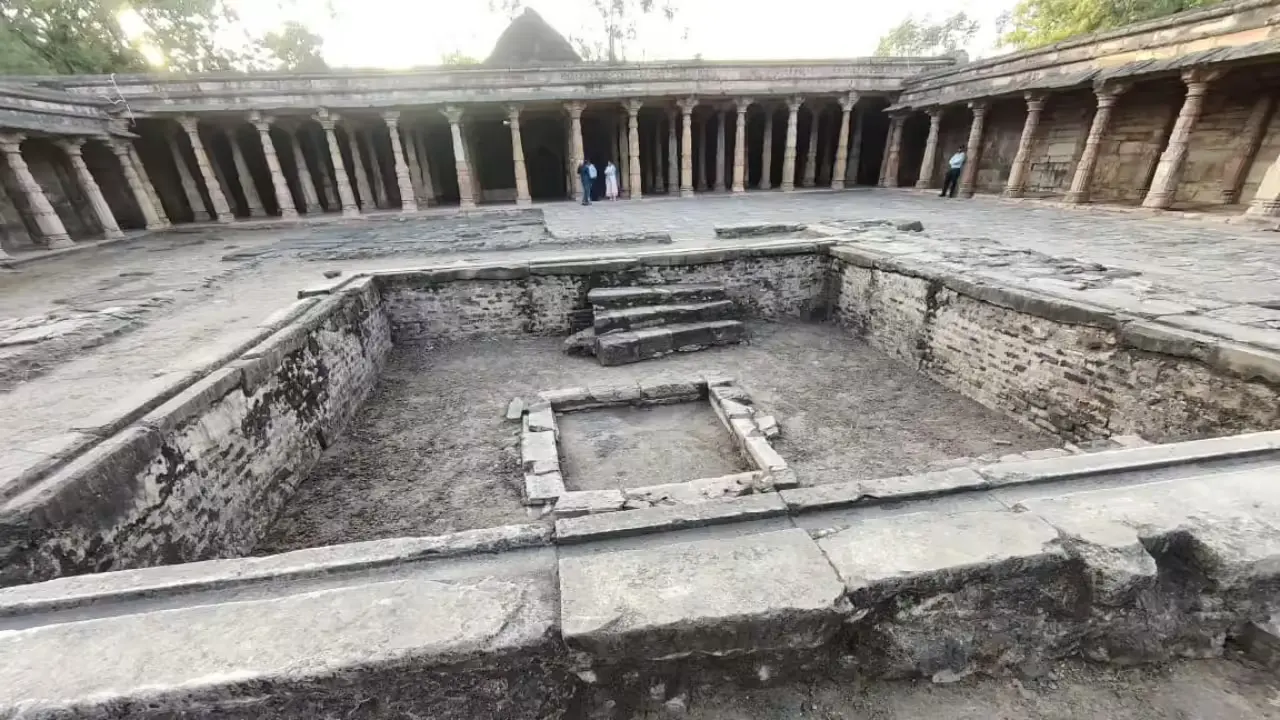
On May 15, 2026, the Madhya Pradesh High Court declared the historic Bhojshala-Kamal Maula complex in Dhar, Madhya Pradesh, a temple dedicated to Goddess Saraswati (Vagdevi). Looking at the evidence, the court observed that archaeology is a science and findings emerging from scientific studies could be relied upon while deciding the dispute. The sheer weight of the evidence convinced the court that the Bhojshala was a temple.
In response, the Muslim parties appealed in the Supreme Court against the Madhya Pradesh High Court order. However, the apex court refused to pass any interim order to permit Namaz at the temple site. Further, the top court has directed the Madhya Pradesh government to make available an open space, adjacent to the site, for Muslims to offer Namaz on Fridays between 1 PM and 3 PM.
The Supreme Court noted that this is a sensitive issue and asked both Hindu and Muslim sides to observe patience while the issue is resolved. The court will have day to day hearings on the matter till a peaceful resolution can be reached.
The court also directed Archaeological Survey of India (ASI) that they should not make any structural changes at Bhojshala without the Court’s permission.
A Supreme Court bench comprising Chief Justice Surya Kant and Justices Joymalya Bagchi and V Mohna heard the matter before deciding that they can’t pass an interim order to once again allow Namaz at the premises of Bhojshala.
Notably, the Muslim side referred to Bhojshala as the Kamal Maula Mosque and asserted its religious rights over the site. However, the Indore bench of the Madhya Pradesh High Court overruled their claim and looking at the evidence, declared it a Hindu temple.

